Analysis of QA-Z Core Components
Deterministic QA Gates
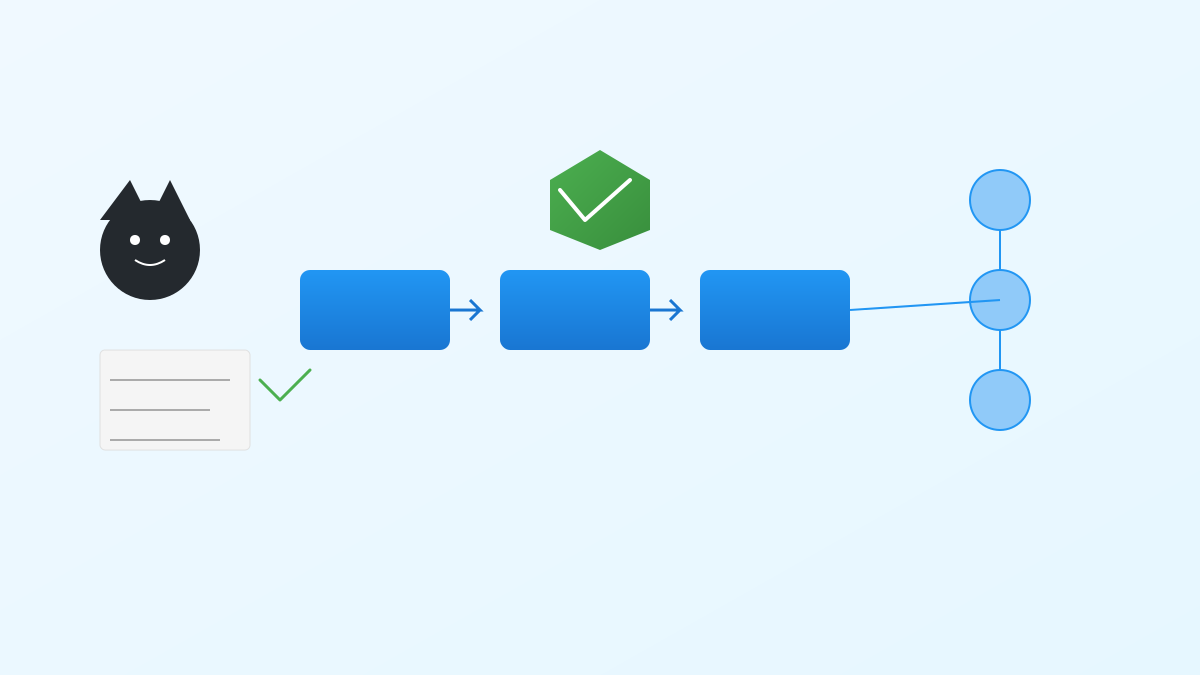
QA gates are the entry criteria for code to enter the next development phase. Unlike traditional manual reviews, qa-z's QA gates are fully automated and produce reproducible results. The system defines a series of preset check rules, including code style consistency, static analysis warnings, unit test coverage thresholds, etc. Only code that passes all gate checks is allowed to be merged or deployed. This mechanism ensures that AI-generated code meets the basic quality baseline.
Repair Packets System
When QA gates detect issues, qa-z not only reports errors but also provides 'repair packets'—structured repair suggestions and automated patches. A repair packet includes problem description, root cause analysis, proposed modification plan, and confidence score. For AI programming agents, repair packets can be directly fed back to the model for iterative improvement, forming a closed-loop optimization process of 'generate-detect-repair'.
Verification Workflows
The project supports configurable verification workflows, allowing teams to customize quality check processes according to project characteristics. Workflows can combine multiple verification tools such as type checkers, security scanners, performance analyzers, etc., and support conditional branching and parallel execution. This flexibility enables qa-z to adapt to different scenarios from small scripts to large enterprise-level projects.