Topic Guide
LLM Answers & Content Strategy
17421 reads · start with the picks, then keep browsing
Start Here
Read these first to understand what this topic is most worth opening.

AI-driven Text Adventure Game: Lost-Kingdom-AI-RPG - An Innovative Practice Combining LLM and Classic RPG
Lost-Kingdom-AI-RPG is an AI text adventure game built using large language models (LLM), LangGraph, RAG, and tool calling technologies. It combines traditional RPG game mechanics with modern AI techniques to create a dynamic and immersive gaming experience.

Hardware Guardian for Local LLM Inference: Lightweight Resource Monitoring Tool Ensures Safe Operation of Laptops
local-llm-hardware-guardian is a lightweight hardware monitoring tool designed specifically for local large language model (LLM) inference. It helps users run LLMs safely on resource-constrained laptops by real-time monitoring of CPU, memory, and GPU status and providing threshold alerts, avoiding hardware overheating and performance degradation.
跨平台 LLM 对话历史搜索工具:统一管理 ChatGPT 与 Gemini 聊天记录
llm-search-conversation-cli-tool 是一款命令行工具,帮助用户在多个大语言模型账户(包括 ChatGPT 和 Google Gemini)之间统一搜索和管理对话历史,解决多平台 AI 工具使用中的信息碎片化问题。
Keep Browsing
Use search, sorting, and pagination to keep following the direction you care about.

A Zero-to-Hero Learning Roadmap for Large Language Models: Sharing the llm-learning-journey Project
llm-learning-journey is an open-source learning record project where the author systematically documents the complete learning journey from LLM basic theory to engineering practice, providing a clear learning path reference for learners who want to get started in the large language model field.

Complete Solution for Deploying Large Language Models on Rockchip Edge Devices: An Analysis of the reComputer-RK-LLM Project
The reComputer-RK-LLM project provides a complete deployment solution for large language models (LLMs) and multimodal models (VLMs) on Rockchip platforms. Through Docker containerization and OpenAI-compatible APIs, it enables developers to easily run LLM and VLM models on edge devices.
nano-vllm-qos: A QoS-Aware Scheduling System for LLM Inference
This article introduces the nano-vllm-qos project, a Service Level Objective (SLO)-aware scheduling system based on nano-vLLM. It integrates Radix prefix caching and Mooncake remote KV caching technologies to optimize latency and throughput for large language model (LLM) inference.
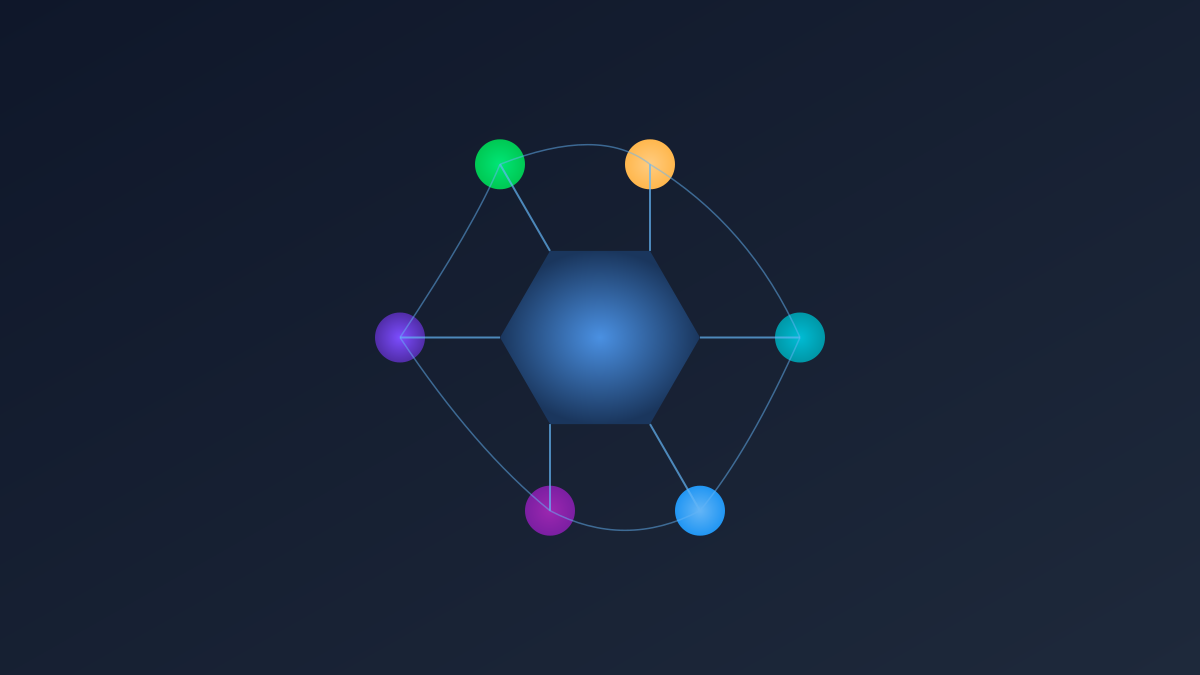
ZEGA: Analysis of the Zero-Friction Enterprise-Grade Generative AI Agent Execution Platform
This article introduces the ZEGA platform, an enterprise-oriented agent execution platform that supports organizations in deploying, orchestrating, governing, and monetizing AI agents. It deeply analyzes its architectural design, core functions, and application value in enterprise workflow automation.

EMMATE Medical Report Interpretation Assistant: Multimodal AI Makes Medical Test Indicators Easy to Understand
This article introduces the EMMATE project, an intelligent medical report interpretation system based on Google Gemini's multimodal large model. Users only need to upload lab test sheets, imaging reports, or paste text, and the system will automatically extract indicators, analyze their status, and explain them in plain language, allowing ordinary people to easily understand complex medical test results.
RAG Level 1 Experiment Platform: Comprehensive Comparison of Embedding Models, Inference LLMs, and Document Chunking Strategies
This article provides an in-depth analysis of the RAG Level 1 experimental project, a systematic retrieval-augmented generation (RAG) experiment platform. By comparing different embedding models, inference large language models (LLMs), and document chunking strategies, the project offers a data-driven practical guide for optimizing RAG systems.

Medical AI Quality Assurance Engineering Platform: Practice of End-to-End Test Automation and Intelligent Defect Analysis
This article deeply analyzes the healthcare-ai-qa-engineering project, an end-to-end quality assurance engineering platform for the medical AI domain. The project integrates cutting-edge technologies such as production-grade frontend, Playwright+Cucumber BDD automated testing, RAG retrieval augmentation, MCP protocol, and LangGraph agents, demonstrating a new paradigm of software testing in the AI era.
HLS Generator Agent: AI-Assisted Workflow for AMD/Xilinx Vitis HLS and FPGA Design
This article introduces the hls-generator project, an agent skill for AMD/Xilinx Vitis HLS and FPGA design. The project demonstrates how to use AI agents to assist in high-level synthesis code generation and FPGA design workflows, providing intelligent support for hardware acceleration development.
AI-Powered YouTube Video Intelligent Summarization: Large Language Models Enable Efficient Video Content Consumption
This article introduces the Automatic-Youtube-Summarizer project, an intelligent YouTube video processing system based on large language models. The project implements three core functions: video summary generation, intelligent note extraction, and review video synthesis, helping users efficiently obtain the core content of long videos.

AI Legal Document Assistant: An NLP and Large Language Model-Driven Intelligent Legal Text Processing Platform
This article provides an in-depth analysis of the AI-Legal-Documentation-Assistant project, an intelligent legal document processing system based on NLP and large language models. The project demonstrates how modern AI technologies can be used to understand, analyze, summarize, and generate legal documents, offering technical references for the digital transformation of the legal industry.

Localized RAG Technical Support Agent: A Privacy-First Solution for Enterprise Customer Service Automation
This article provides an in-depth analysis of the RAG-Support-Agent project, a fully locally-run technical support agent prototype. The project demonstrates how to build an enterprise-level customer service system using Retrieval-Augmented Generation (RAG) technology without relying on cloud LLM APIs, while addressing key challenges such as privacy protection and data desensitization.

Building an Edge AI Tiny Large Language Model from Scratch: A PyTorch Practical Guide
This article provides an in-depth analysis of the Edge-AI-Tiny-LLM project, a complete implementation of a tiny large language model for edge AI scenarios. Based on PyTorch, the project systematically demonstrates the full workflow from data preprocessing to model training, offering valuable practical references for developers who wish to understand the underlying principles of LLMs.

When Should Large Language Models Stop Thinking: A Study on Reasoning Behaviors in Semantic Missing Tasks
This article provides an in-depth interpretation of a cutting-edge study on the reasoning behaviors of large language models, exploring how different models exhibit their reasoning processes, confidence levels, and stopping strategies when tasks lack necessary semantic information. The study found that GPT-5.6 remains concise on invalid tasks, while some open-weight reasoning models engage in lengthy searches.
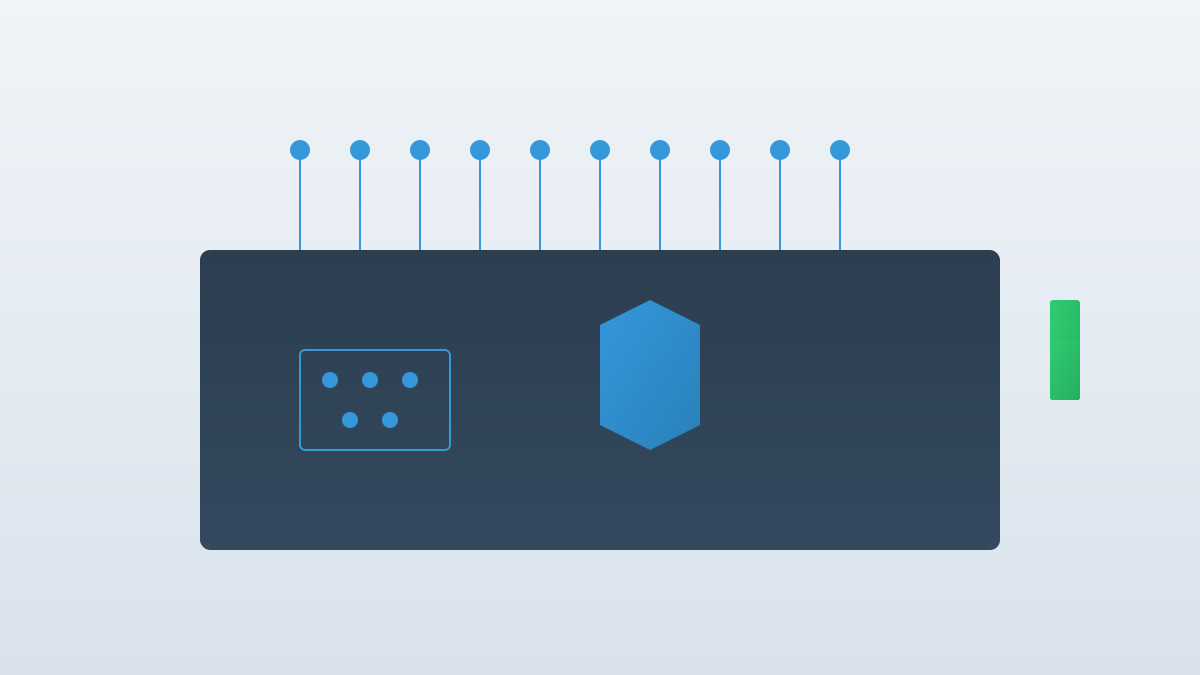
Building a High-Concurrency LLM Inference Server: Practical Analysis of the Multi-Request AI Server
This article introduces a high-performance multi-request AI inference server project based on FastAPI. It details how the project uses technical approaches such as asynchronous processing, dynamic batching, caching mechanisms, and request scheduling to improve the throughput of LLM services, reduce latency, and optimize GPU utilization under real-world workloads.
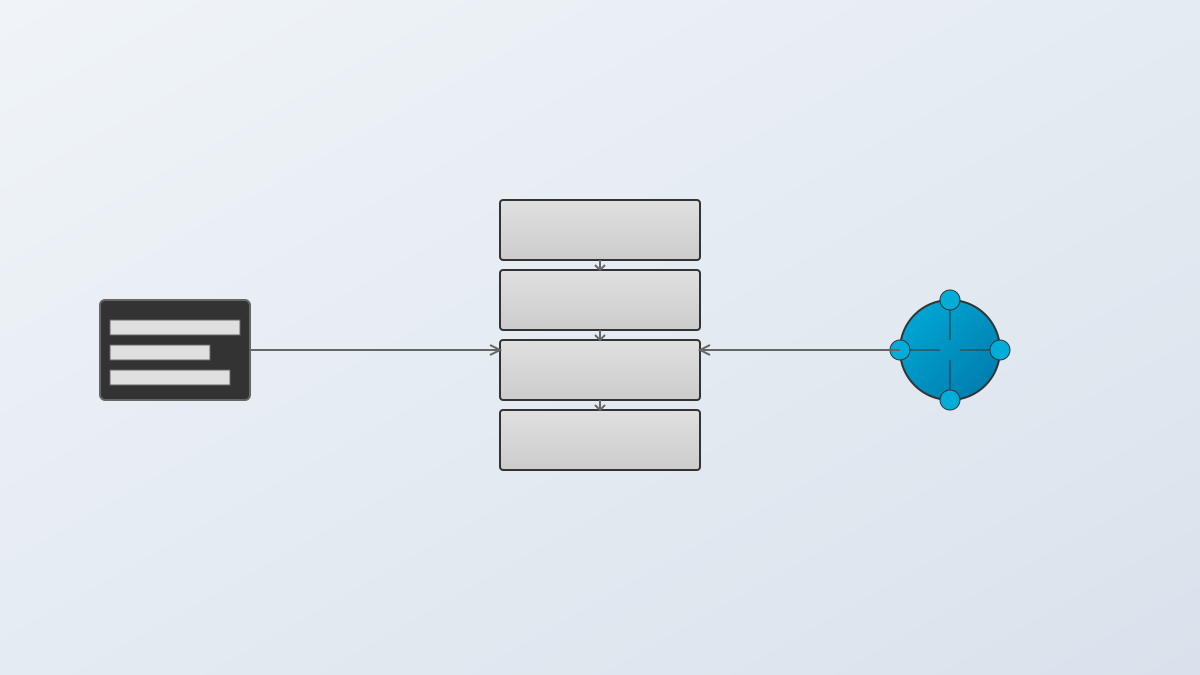
Go Workflow State Management: In-Depth Analysis of the go-workflow-stack Project
This article introduces the go-workflow-stack project, a reusable CLI tool and state pattern library designed for Go language Agent workflows. It analyzes its architectural design, core features, and application value in local workflow management.
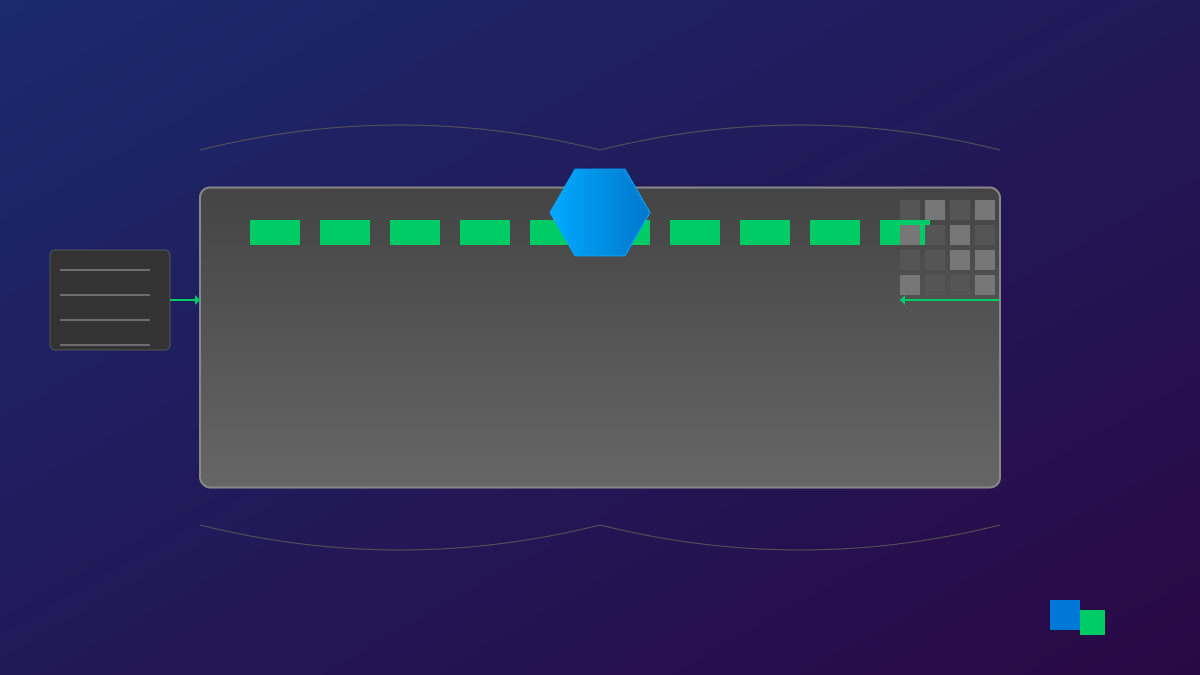
RTX 5080 Blackwell Architecture LLM Inference Optimization: Analysis of Custom llama.cpp Version
This article introduces the custom llama.cpp version tailored for NVIDIA RTX 5080 Blackwell architecture, analyzing its optimization strategies for the new-generation GPU, performance improvements, and Windows platform adaptation solutions.
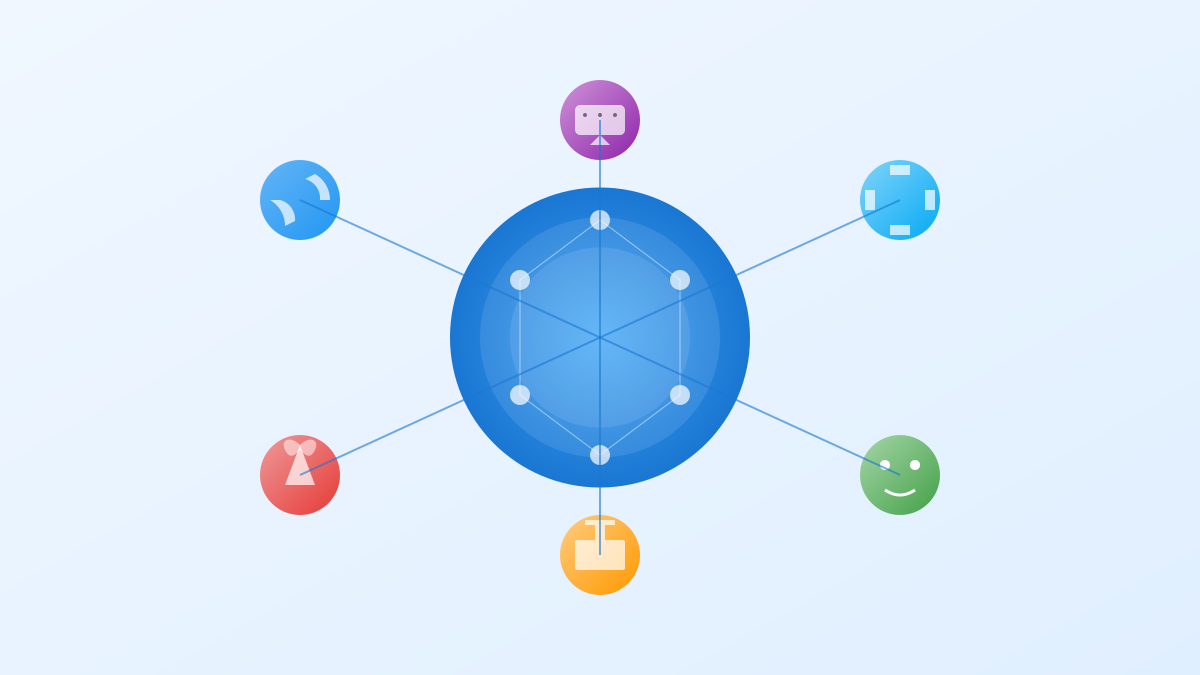
Hands-On Practice for Enterprise-Level Large Model Fine-Tuning Chatbot Based on QLoRA
This article deeply analyzes the My_Company_Bot project, introducing how to build an enterprise-level fine-tuned large language model chatbot using QLoRA technology, Hugging Face Transformers, and PyTorch, covering various training strategies and deployment solutions.
Previous Theme
Geo Ai Search Market Analysis
Next Theme