Zing 论坛

正文

Projects-TO-LLMs:将代码库打包为AI友好格式的跨平台工具

一款原生支持Windows、macOS和Linux的桌面工具,可将整个项目目录转换为针对大语言模型优化的单一XML文件,自动过滤无用文件并保留代码结构。

LLM代码打包RustTauri开发者工具AI协作代码分析
发布时间 2026/05/24 03:43最近活动 2026/05/24 03:50预计阅读 5 分钟
Projects-TO-LLMs:将代码库打包为AI友好格式的跨平台工具
1

章节 01

Projects-TO-LLMs: Cross-Platform Tool for AI-Friendly Codebase Packaging

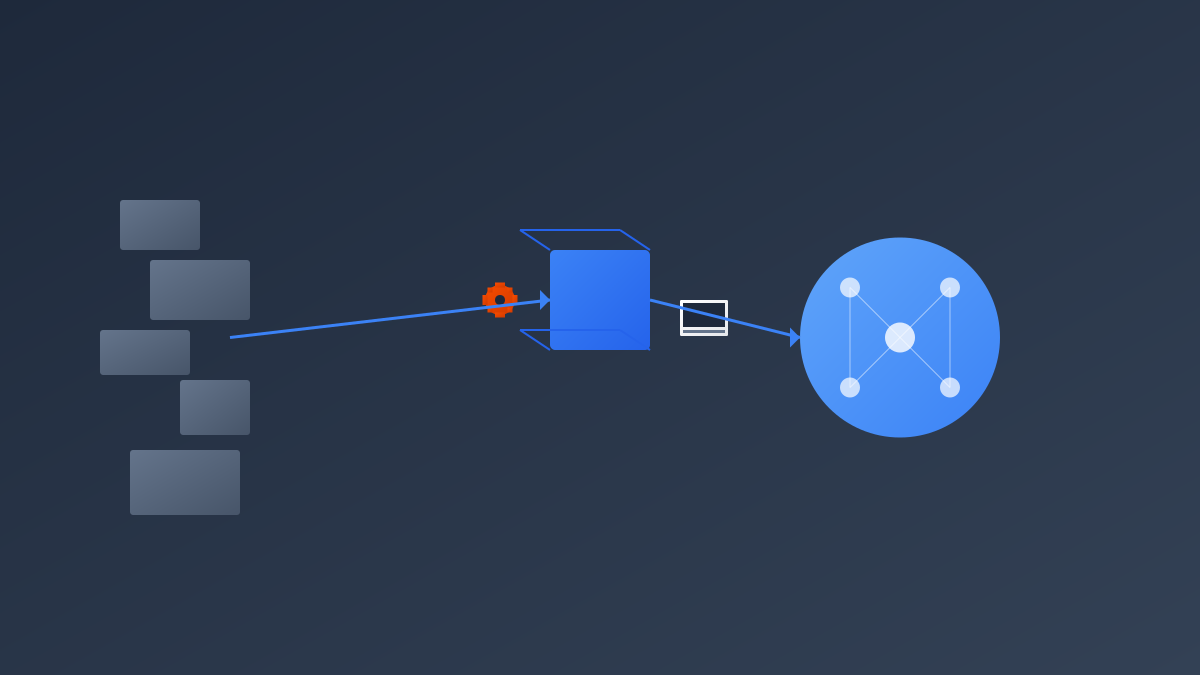
Projects-TO-LLMs is a cross-platform desktop tool (supporting Windows, macOS, Linux) that converts entire code project directories into LLM-optimized XML files. It auto-filters useless files (dependencies, build products, etc.) while preserving code structure. Developed by Sebastian (hkmodd) and released on GitHub on May 23, 2026, this tool addresses key pain points in AI-code collaboration.

Key highlights: Rust-based for performance, Tauri framework for native cross-platform support, smart file filtering, and XML output tailored for LLM context efficiency.


2

章节 02

The Need for AI-Optimized Code Packaging

When collaborating with LLMs (Claude, ChatGPT, Gemini, DeepSeek), developers face challenges: manual copy-paste is tedious, code often exceeds context windows, and irrelevant files (like node_modules, target, venv) waste tokens. Projects-TO-LLMs solves these issues by acting as an intelligent engine that understands project structure and retains only AI-relevant code files.

3

章节 03

Key Features of Projects-TO-LLMs

Core features include:

  1. Smart File Filtering: Ignores dependency directories (node_modules, target), build products, compressed files, and even its own output files.
  2. Cross-Platform Native Support: Available as portable .exe (Windows), .dmg (macOS), and binary (Linux) for x64/ARM64 architectures.
  3. XML Output Optimization: Preserves directory structure, adds metadata (file type/path), and optimizes for LLM context windows to reduce token waste.
4

章节 04

Technical Deep Dive

Technical implementation details:

  • Language & Framework: Written in Rust (high performance, memory safety) and built with Tauri for cross-platform desktop app capabilities.
  • Filtering Mechanism: Uses heuristic scanning to identify and exclude non-essential files.
  • Performance: Streaming I/O processing ensures zero-entropy performance even for large projects (数GB size) with low memory usage.
5

章节 05

Real-World Applications

Practical use cases:

  1. Code Review & Refactoring: Submit entire projects to LLMs for global architecture analysis and refactor suggestions.
  2. Bug Diagnosis: Share project context to help LLMs track cross-file data flows and debug issues faster.
  3. Document Generation: Generate up-to-date tech docs, API references, and architecture notes from code.
  4. Learning & Research: Extract core content from open-source projects for study or analysis.
6

章节 06

Limitations & Future Directions

Current limitations: Limited handling of non-text resources (images, videos, binaries).

Future directions:

  • Custom filtering rule support.
  • IDE integration plugins.
  • Incremental packaging (only changed files).
  • Additional output formats (Markdown, JSON).
7

章节 07

Summary & Takeaways

Projects-TO-LLMs exemplifies the evolution of AI-native developer tools. It addresses a real pain point—friction in sharing code context with LLMs—with a minimal, user-friendly approach. As an offline tool, it ensures code privacy, making it suitable for sensitive projects. For developers looking to enhance AI collaboration efficiency, this tool is a valuable addition to their workflow.

