Zing Forum

Reading

Multi-Agent Marketing Automation System: Modular Architecture and Real-Time Human-Machine Collaboration

This article introduces a marketing automation system based on a multi-agent architecture, which combines large language models, human-machine collaboration interfaces, and real-time data layers to provide scalable automation solutions for marketing teams.

多智能体系统营销自动化LLM人机协作GroqFastAPIGoogle Sheets工作流自动化
Published 2026-05-31 22:45Recent activity 2026-05-31 22:48Estimated read 7 min
Multi-Agent Marketing Automation System: Modular Architecture and Real-Time Human-Machine Collaboration
1

Section 01

Multi-Agent Marketing Automation System: Core Architecture and Value Guide

Project Basic Information

Core Insights

The multi-agent marketing automation system introduced in this article integrates an LLM agent layer (powered by Groq), a human-machine collaboration review interface (built with FastAPI), and a real-time data layer (integrated with Google Sheets) to provide scalable automation solutions for marketing teams, addressing issues such as rigid traditional tools and difficulties in LLM integration.


2

Section 02

Background and Motivation: Challenges and Opportunities in Digital Marketing

Background and Motivation

Today's digital marketing faces challenges in massive content creation, multi-channel publishing, and data tracking. Traditional tools are rigid and struggle to adapt to market changes; the rise of LLMs brings new possibilities, but their effective integration into workflows remains unresolved. Multi-agent systems demonstrate greater flexibility and scalability by breaking down complex tasks into collaborative professional agents, and this project is the practice of this concept in the marketing field.

3

Section 03

System Architecture Overview

Core Architecture Components

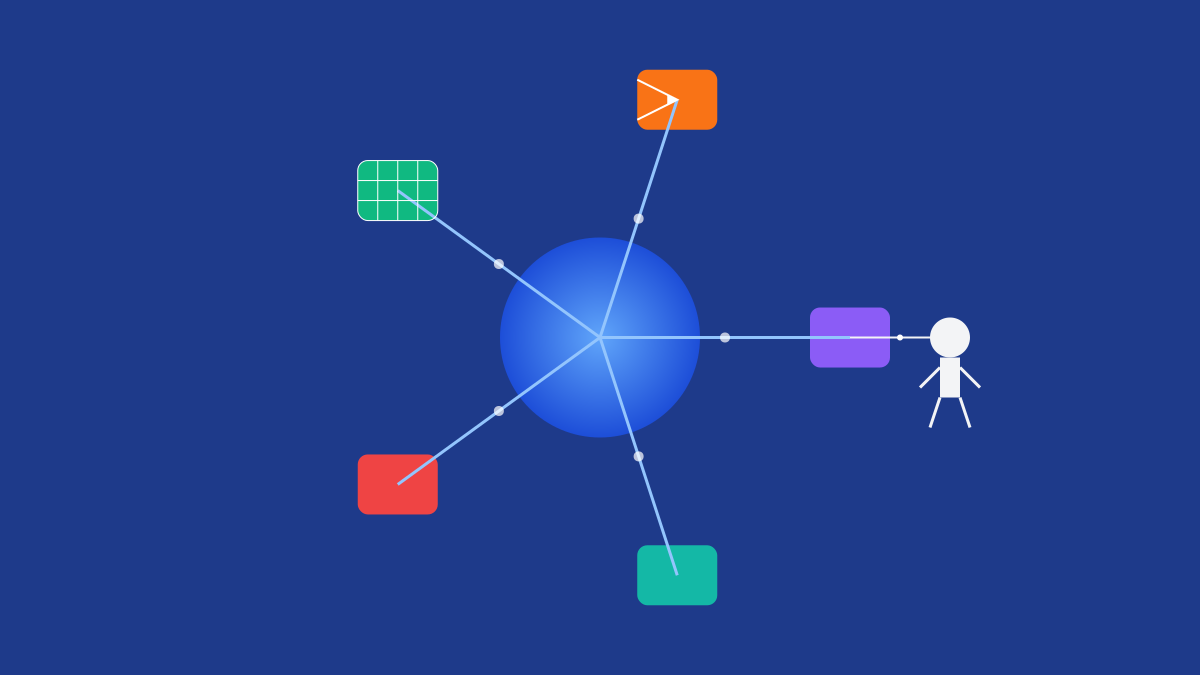
  1. LLM Agent Layer: Powered by Groq, it supports parallel operation of multiple professional marketing agents (content generation, audience analysis, etc.) covering the entire marketing process.
  2. Human-Machine Collaboration Review Interface: Built with FastAPI, it allows marketers to review and modify content to ensure brand consistency and compliance.
  3. Real-Time Data Layer: Integrated with Google Sheets, it lowers the barrier to use, supports real-time collaboration, and enables data-driven decision-making via APIs.
4

Section 04

Highlights of Technical Implementation

Technical Advantages

  • Modular Design: Agents are pluggable, easy to replace and expand (e.g., adding new channel agents).
  • Event-Driven Architecture: Asynchronous communication between agents improves throughput and fault tolerance; a single agent failure does not interrupt the overall process.
5

Section 05

Detailed Explanation of Typical Workflow

Four Stages of Workflow

  1. Data Collection and Preparation: Agents read audience data and historical performance metrics from Google Sheets.
  2. Content Generation and Optimization: Agents create copy, email subjects, etc., and adjust styles according to brand guidelines.
  3. Human-Machine Review and Feedback: Content is submitted to the review interface; the team reviews and modifies it, and feedback data is used to optimize the agents.
  4. Execution and Tracking: Approved content is published, and execution data flows back to Sheets to form a closed-loop tracking system.
6

Section 06

Application Scenarios and Value

Applicable Scenarios

  • Multi-channel content marketing (email, social media, blogs, etc.)
  • Personalized marketing campaigns (large-scale personalized content generation)
  • Rapid iteration testing (frequent A/B testing, strategy adjustments)

Core Value

Automates repetitive tasks, freeing up marketing teams to focus on high-value activities such as strategy formulation and creative ideation.

7

Section 07

Limitations and Improvement Directions

Current Limitations

  1. Primarily targeted at technical users; usability for non-technical marketers needs improvement.
  2. Insufficient transparency in agent decision-making; users find it hard to understand the generation logic.

Improvement Directions

  • Introduce an intuitive visual workflow editor
  • Enhance agent interpretability
  • Explore model fine-tuning techniques to improve content quality and consistency
8

Section 08

Summary and Industry Insights

Summary

This project demonstrates the practice of building a marketing automation system by combining LLMs, human-machine collaboration interfaces, and traditional data tools. Its modular and scalable architecture provides a reference paradigm for similar applications.

Insights

As multi-agent technology matures, more similar intelligent solutions will emerge in various fields in the future.

