Zing Forum

Reading

Drowned Terminal: Retro-Futuristic Terminal Dashboard and Distributed LLM Inference Mesh Network

An open-source project that combines retro sci-fi aesthetics with modern distributed AI architecture. It uses a Textual-built TUI dashboard paired with a self-developed Netscape mesh network to achieve intelligent inference load balancing across devices.

分布式推理LLMTUITextualOllamaTailscale网格网络终端仪表盘异步架构开源项目
Published 2026-05-31 04:11Recent activity 2026-05-31 04:17Estimated read 5 min
Drowned Terminal: Retro-Futuristic Terminal Dashboard and Distributed LLM Inference Mesh Network
1

Section 01

Introduction: Core Overview of the Drowned Terminal Project

Drowned Terminal is an open-source project that combines retro-futuristic aesthetics with modern distributed AI architecture. It uses a Textual-built TUI dashboard paired with a self-developed Netscape mesh network to achieve intelligent inference load balancing across devices. The project's core consists of a retro sci-fi style terminal interface and a distributed LLM inference system, providing both a unique visual experience and solving the technical challenges of multi-device collaborative inference.


2

Section 02

Project Background and Design Aesthetics

Original Author and Source

Design Inspiration

The visual design is inspired by Fallout's Pip-Boy and Alien's Nostromo terminal, adopting CRT style. It offers three phosphor themes (amber, green, cyan) switchable via F1-F3, and the low-contrast color scheme reduces eye fatigue.

Interaction Design

3x2 modular grid layout, supporting direction key navigation and letter key module assignment. The "portal wormhole" transition effect enters full screen, balancing classic tribute and modern efficiency.

3

Section 03

Detailed Explanation of the Netscape Distributed Inference Architecture

Architecture Pattern

Coordinator-Agent pattern:

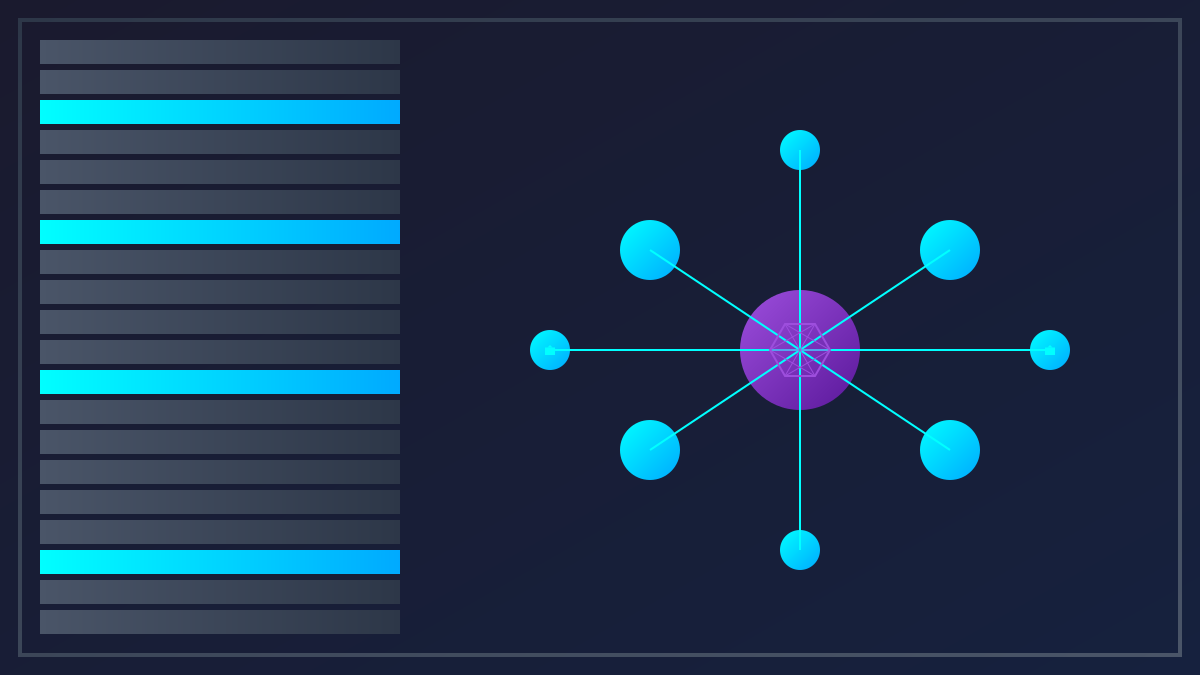
  • Coordinator: Maintains node registry, intelligently routes requests, and provides a unified endpoint; if the coordinator is unavailable, the agent falls back to local Ollama.
  • Agent: Sends heartbeats to report GPU load and model information, supporting load balancing (prioritizing nodes that have loaded the target model).

Deployment Method

Builds secure connections via Tailscale and provides Systemd templates: the coordinator is deployed on a server, agents can run on any device, supporting heterogeneous cluster formation.

4

Section 04

Technical Implementation Details of the TUI Dashboard

Technical Foundation

Based on Python Textual + Rich libraries, the fully asynchronous architecture ensures smooth interface response.

Module System

Built-in 3D animation renderer, 3D room map, and Pip-Boy statistics tracker; modules use a registry pattern for easy expansion.

Sound Engine

Provides navigation and event audio feedback, enhancing the multi-sensory interaction experience of the terminal.

5

Section 05

Tech Stack and Application Scenarios

Tech Stack

  • Python asynchronous programming
  • Textual + Rich
  • aiohttp
  • Ollama
  • Tailscale

Application Scenarios

  1. Researchers: Private distributed inference cluster, protecting privacy and utilizing idle hardware;
  2. Retro enthusiasts: Unique visual terminal environment;
  3. Developers: Reference for distributed system learning.
6

Section 06

Summary and Future Outlook

The project combines aesthetics and practicality. The Netscape component solves key issues in distributed inference, and the modular architecture facilitates expansion. As edge computing and local AI demand grow, such tools will become increasingly important, proving that command-line interfaces can also create powerful experiences.

