Zing Forum

Reading

Arogya-AI: A Health System Integrating Traditional Ayurvedic Wisdom and Modern AI

Arogya-AI is a hybrid intelligent healthcare system that combines machine learning, large language models, and traditional Ayurvedic medical principles to provide personalized health assessments and preventive health recommendations.

医疗AIAyurveda传统医学健康管理知识图谱可解释AI个性化医疗混合智能
Published 2026-05-05 01:44Recent activity 2026-05-05 01:52Estimated read 4 min
Arogya-AI: A Health System Integrating Traditional Ayurvedic Wisdom and Modern AI
1

Section 01

Arogya-AI: Introduction to the Health System Integrating Traditional Ayurveda and Modern AI

Arogya-AI is a hybrid intelligent healthcare system that combines machine learning, large language models, and traditional Ayurvedic medical principles. It bridges traditional medicine and modern technology, providing personalized health assessments and preventive recommendations while balancing the holistic health concept and the precision medicine concept.


2

Section 02

Background of the Intersection Between Traditional Medicine and Modern AI

In the global healthcare field, there is tension between traditional medicine (such as Ayurveda) and modern AI: the former has thousands of years of practical experience but lacks standardized verification, while the latter excels in pattern recognition but lacks an understanding of holistic health. Arogya-AI attempts to integrate the advantages of both to provide personalized and interpretable health services.

3

Section 03

Core Concepts of Ayurvedic Medicine

Ayurveda is centered on three energies (Doshas): Vata (wind type, associated with movement and change), Pitta (fire type, associated with metabolic transformation), and Kapha (water type, associated with structural stability). Constitution (Prakriti) is a combination of these three, health depends on balance, and traditional assessment relies on doctors' experience, which limits accessibility.

4

Section 04

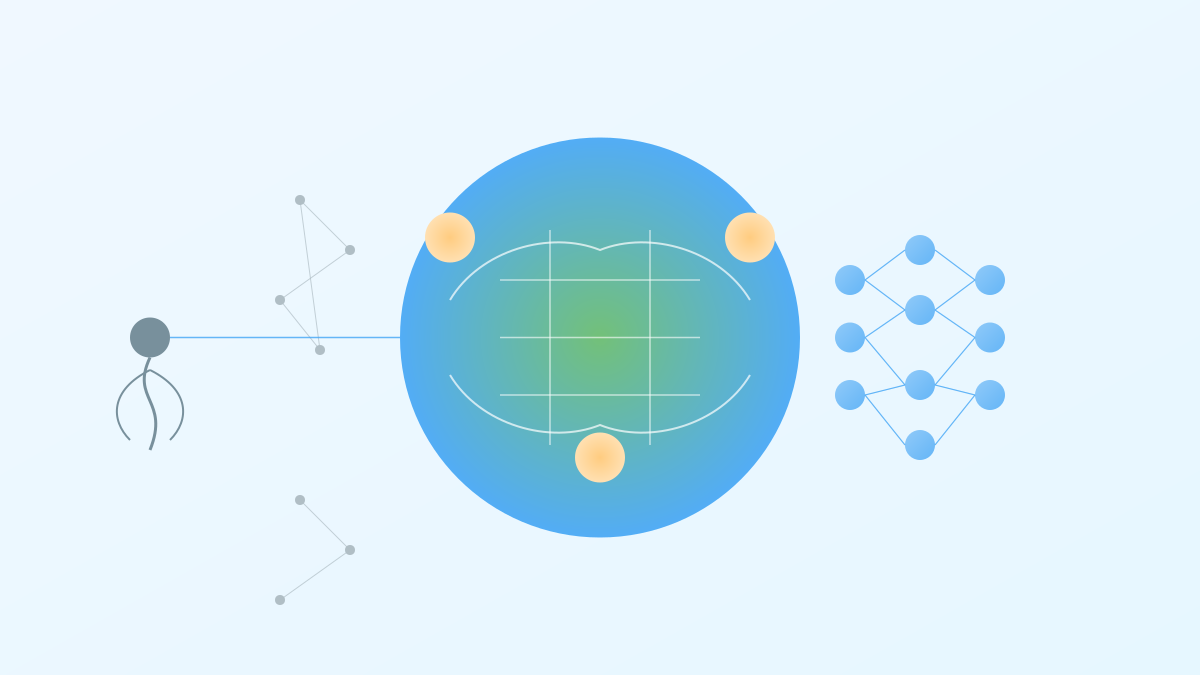
System Architecture of Arogya-AI

Layered architecture:

  1. Knowledge layer: Convert Ayurvedic literature into structured knowledge graphs (constitution classification, symptom associations, etc.);
  2. Reasoning layer: Machine learning processes structured data, and large language models understand natural language symptoms;
  3. Interaction layer: Collect information through dialogue to generate personalized reports and explain the basis.
5

Section 05

Key Technical Implementation Points of Hybrid Intelligence

Core technologies include: knowledge graph construction (handling many-to-many relationships), multi-modal data fusion (integrating heterogeneous health information), interpretability design (transparent recommendation principles), and safety boundaries (distinguishing between health recommendations and medical diagnosis).

6

Section 06

Application Scenarios and Social Value

Application scenarios: Personal health management, health education popularization, auxiliary medical decision-making, cross-cultural health bridge. The social value lies in inheriting traditional wisdom and improving the accessibility of health services.

7

Section 07

Challenges and Future Directions

Challenges: Scientific verification, cultural sensitivity, regulatory compliance, data privacy. Future implications: AI should respect cultural diversity, be embedded in specific contexts, and promote the integration of traditional wisdom and modern technology.