Zing Forum

Reading

AntSeed: Decentralized P2P AI Inference Network, Building a Gatekeeper-Free Open Market

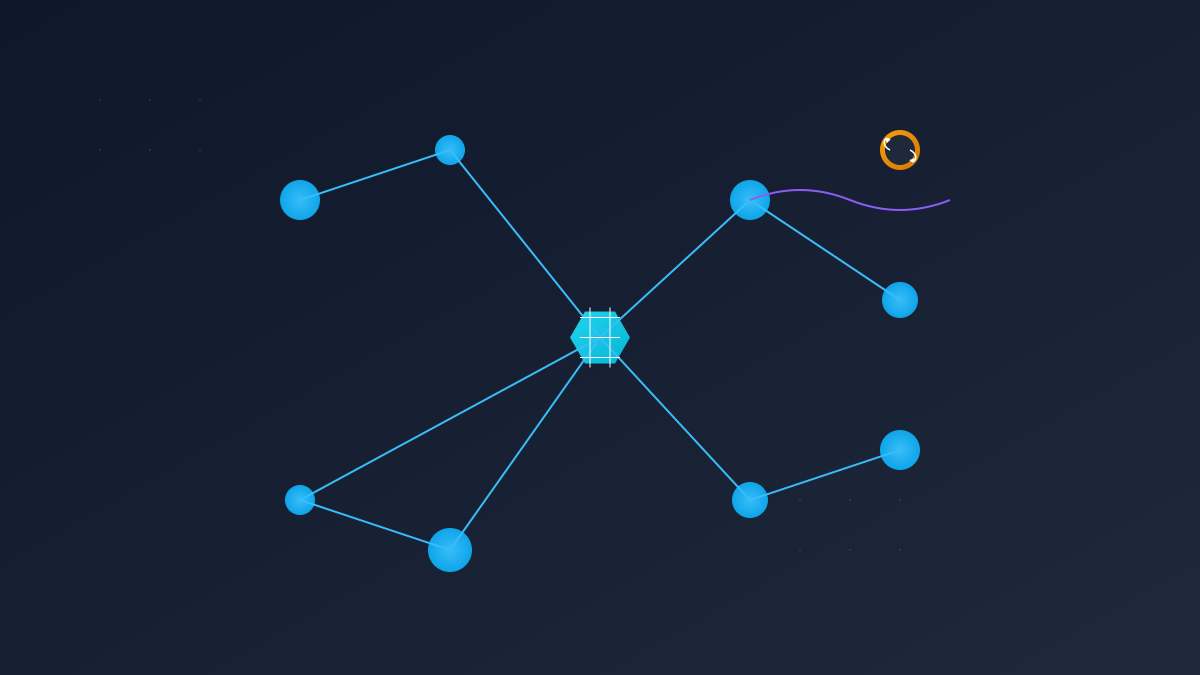
AntSeed is a peer-to-peer AI service network that allows computing power providers to publish services via DHT networks, and demanders to discover and route requests through encrypted P2P connections—creating an AI inference market without centralized platform intermediaries.

P2P网络去中心化AI推理DHTWebRTCUSDC支付开放市场
Published 2026-04-05 17:45Recent activity 2026-04-05 17:51Estimated read 7 min
AntSeed: Decentralized P2P AI Inference Network, Building a Gatekeeper-Free Open Market
1

Section 01

AntSeed: Decentralized P2P AI Inference Network - Core Overview

AntSeed is a peer-to-peer (P2P) AI service network aiming to build a gatekeeper-free open market for AI inference. It connects computing power providers and demanders directly without relying on centralized platforms. Key features include: DHT-based service discovery, encrypted WebRTC connections for data transmission, USDC payments on Layer 2 networks (Base/Arbitrum), and an extensible plugin ecosystem. Its core vision is to create an open market where anyone can provide or access AI services without permission.


2

Section 02

Background: The Problem of Centralized AI Compute Distribution

In today's digital landscape, AI capabilities are increasingly core, but access to them is highly concentrated. A few cloud service providers control most AI compute distribution, forcing developers to accept their pricing, censorship, and usage restrictions. AntSeed was created to address this issue by enabling direct connections between computing power providers and users, eliminating the need for centralized intermediaries.

3

Section 03

Technical Architecture: DHT, Encrypted P2P, and Chain-based Payments

AntSeed's tech stack leverages mature P2P technologies:

  1. Service Discovery: Uses BitTorrent DHT (distributed hash table) for decentralized discovery—providers publish service info (supported models, price, location) to DHT, while demanders query it to find providers.
  2. Communication: Encrypted P2P connections via WebRTC data channels ensure low-latency, private data transmission.
  3. Payments: Chain-based USDC settlement on Layer 2 networks (Base/Arbitrum) balances permissionless access and price stability for small, frequent transactions.
4

Section 04

Core Roles & Plugin Ecosystem: Extensibility and Flexibility

AntSeed defines two core roles:

  • Providers: Own AI compute (commercial APIs or local models) and use provider plugins (e.g., provider-anthropic, provider-local-llm) to publish services to DHT.
  • Routers: Demanders use router plugins (e.g., router-local) to discover providers, select optimal nodes (based on price/latency/reputation), and proxy requests via local HTTP endpoints.

The plugin ecosystem is key to extensibility—official plugins cover various use cases, and developers can create new ones using antseed plugin create following clear interface specs.

5

Section 05

Differentiated Value: Beyond API Resale to Value-Added Services

AntSeed explicitly prohibits API key resale (violating upstream terms) and focuses on value-added services. Providers are encouraged to offer differentiated services like:

  • Domain-specific fine-tuned models.
  • TEE (Trusted Execution Environment) protected privacy-preserving inference.
  • RAG systems integrated with domain knowledge.

This approach ensures sustainable business models and avoids legal risks associated with simple API arbitrage.

6

Section 06

Developer Experience & Deployment Scenarios

AntSeed offers multiple tools for developers:

  • CLI: @antseed/cli for quick setup (e.g., antseed seed to provide services, antseed connect to consume).
  • GUI: Electron-based desktop app and Fastify+React web dashboard.
  • SDK & Docs: Full protocol specs and SDK interfaces for deep integration.

Deployment scenarios include:

  • Personal sharing of API credits (e.g., Claude Code/OpenAI) to earn USDC.
  • Enterprise private AI clusters for internal load distribution.
  • Local optimized models for low-cost inference.
  • TEE nodes for security-sensitive applications.

Router plugins are compatible with existing tools (Claude Code, Aider, Continue.dev) via local HTTP endpoints.

7

Section 07

Challenges & Future Considerations

AntSeed faces typical P2P system challenges:

  • Reputation System: Designing anti-cheating mechanisms for provider reputation.
  • Dispute Resolution: Handling payment disputes between providers and demanders.
  • Network Resilience: Ensuring service availability during network partitions.

Compliance is another key issue—balancing decentralized features with regulatory requirements (data privacy, export controls, content moderation). The project currently focuses on technical implementation; social-economic mechanisms (like reputation) need more documentation and iteration.

8

Section 08

Conclusion: AntSeed's Role in Decentralized AI Infrastructure

AntSeed is an important attempt in the decentralized AI infrastructure trend. It doesn't replace cloud AI services but provides an alternative for users seeking more choice, lower costs, or higher privacy. By combining P2P discovery, encrypted transmission, and chain-based payments, it lays a solid technical foundation for an open AI market. For developers and researchers interested in AI democratization and infrastructure diversity, AntSeed is a project worth following.

