Zing Forum

Reading

Academic-Extraction-GenAI-Pipeline: A Multi-Model Intelligent Extraction System for Academic Metadata

An academic information extraction tool supporting multi-model comparison of GPT-4o, LLaMA, and Gemini, which can automatically extract structured metadata from research papers and provide academic researchers with an efficient literature analysis solution.

学术提取大语言模型文献分析元数据GPT-4oLLaMAGemini研究工具PDF解析
Published 2026-03-29 20:43Recent activity 2026-03-29 20:51Estimated read 14 min
Academic-Extraction-GenAI-Pipeline: A Multi-Model Intelligent Extraction System for Academic Metadata
1

Section 01

Introduction: Academic-Extraction-GenAI-Pipeline Multi-Model Academic Metadata Extraction System

Title: Academic-Extraction-GenAI-Pipeline: A Multi-Model Intelligent Extraction System for Academic Metadata Abstract: An academic information extraction tool supporting multi-model comparison of GPT-4o, LLaMA, and Gemini, which can automatically extract structured metadata from research papers and provide academic researchers with an efficient literature analysis solution.

This tool aims to address the pain point of low efficiency in traditional literature reading. By automating the extraction of structured metadata, it helps researchers focus their energy on creative thinking. Its core values include two major functions: automatic academic information extraction and multi-model comparison and evaluation.


2

Section 02

Efficiency Pain Points in Academic Research

Efficiency Pain Points in Academic Research

For scholars, researchers, and lifelong learners, reading and analyzing large amounts of academic literature is a core part of daily work. However, traditional literature reading methods are inefficient: researchers need to read papers one by one and manually extract key information such as research questions, methods, results, and conclusions. Faced with massive academic outputs, this manual processing method has become a major bottleneck in research efficiency.

Academic-Extraction-GenAI-Pipeline is an open-source tool developed to solve this pain point. It uses advanced large language model technology to automate the process of extracting structured metadata from academic papers, allowing researchers to devote more energy to truly creative thinking.

3

Section 03

Core Functions of the Project and Multi-Model Features

Core Functions of the Project

Automatic Academic Information Extraction

Users only need to upload research papers in PDF or text format, and the system can automatically extract key academic information, including structured metadata such as research topics, methodology, experimental results, and core conclusions.

Multi-Model Comparison and Evaluation

Supports the comparative use of multiple large language models. Users can select different AI models or compare the extraction effects of multiple models on the same paper to obtain more comprehensive and reliable analysis results.

Supported AI Model Features

GPT-4o: Benchmark for General Language Understanding

The latest generation language model developed by OpenAI, which performs excellently in understanding and generating human-like text. It can accurately grasp the complex semantics of academic papers and extract nuanced research insights, making it suitable for deep language understanding tasks.

LLaMA: Professional Optimization for Academic Context

A model developed by Meta, optimized for academic and scientific contexts. It has excellent ability to handle professional terms, mathematical formulas, and technical descriptions, and has higher extraction accuracy for STEM field papers.

Gemini: A Versatile Choice for Multi-Modal Analysis

Google's model with strong multi-modal analysis capabilities, which can handle non-text elements such as text, charts, and formulas, making it suitable for academic papers containing a large number of charts.

4

Section 04

System Architecture and Workflow

System Architecture and Workflow

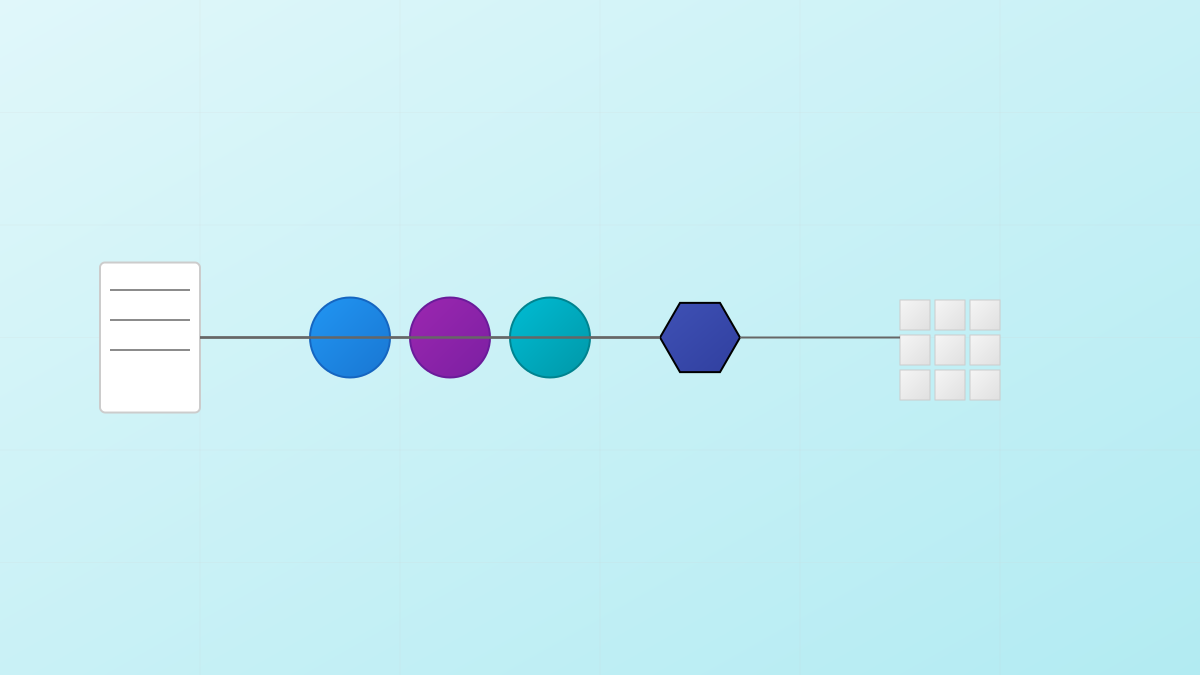
Input Processing Layer

Supports PDF and plain text input. PDF documents are first parsed to extract text, tables, and chart information, preparing for subsequent AI analysis.

Model Selection Layer

Users can select a single or multiple models according to paper type and needs. The system supports parallel calls to multiple models for comparative analysis, evaluating the performance differences of different models in specific fields.

Information Extraction Layer

Executes extraction tasks, including structured metadata such as research background and motivation, methodology description, core findings, conclusions and prospects, and citation networks.

Result Output Layer

The extraction results are presented in a structured format, supporting copying, saving, and exporting in multiple formats, which is convenient for further analysis or integration into literature management systems.

5

Section 05

Usage Scenarios and Practical Applications

Usage Scenarios and Practical Applications

Accelerating Literature Reviews

Quickly scan dozens or even hundreds of papers, extract the core contributions of each, and help researchers quickly build a domain knowledge graph.

Research Trend Analysis

Batch process a large number of papers in a certain field, identify research hotspots, method evolution trends, and unsolved problems, and provide data support for determining research directions.

Cross-Language Literature Processing

Use the multi-language capabilities of the model to extract key information from foreign literature, reducing the impact of language barriers on research.

Metadata Standardization

Automate the metadata extraction process to ensure the consistency and completeness of data formats, suitable for institutions building standardized literature databases.

6

Section 06

Technical Implementation and Deployment Requirements

Technical Implementation and Deployment

System Requirements

  • Operating System: Windows 10 or above, macOS Catalina or above, mainstream Linux distributions
  • Memory: Minimum 4GB (8GB recommended)
  • Disk Space: At least 250MB of available space
  • Python: Version 3.8 or higher

Installation and Configuration

  • Windows Users: Download the .exe file and double-click to run the installation wizard
  • macOS Users: Download the .dmg installation package and drag it to the Applications folder
  • Linux Users: Download the tarball compressed package, extract it, and run it in the terminal

After installation, configure the API key of the selected AI model to use the tool.

7

Section 07

Result Quality and Best Practice Recommendations

Result Quality and Accuracy

Influencing Factors

  1. Input Document Quality: Clear and well-formatted PDF documents have better extraction effects. Scanned versions or documents with messy formats may affect accuracy.
  2. Model Selection: Different models are good at handling different types of content. Choosing a model that matches the paper's field can improve extraction quality.

Best Practice Recommendations

  • Review Papers: GPT-4o's general understanding ability performs best
  • Technical Method Papers: LLaMA's professional term processing ability is better
  • Papers with a Large Number of Charts: Gemini's multi-modal ability is indispensable
  • Important Literature: Use multi-model comparison and integrate the results of various models

Community Support and Continuous Updates

Open Source Contribution

The community is welcome to report issues, suggest features, or submit code improvements via GitHub Issues. Maintainers actively respond to feedback to optimize performance.

Regular Updates

  • Support more AI models and APIs
  • Optimize PDF parsing algorithms to improve format compatibility
  • Add more output format options
  • Improve the user interface to enhance the user experience
8

Section 08

Academic Impact, Limitations, and Future Directions

Impact on Academic Research Methods

  • Lowering the Threshold for Literature Research: Junior researchers can quickly establish domain cognition and grasp the research context
  • Improving Cross-Disciplinary Research Efficiency: Cross-disciplinary researchers can quickly understand core concepts and paradigms in unfamiliar fields, accelerating knowledge transfer
  • Promoting Open Science: Automated metadata extraction helps build a complete academic knowledge graph and supports the open science movement

Limitations and Future Directions

Current Limitations

  • Extraction quality is affected by PDF format quality
  • Understanding of highly specialized terms needs to be improved
  • Multi-language support needs to be完善 (perfected)

Future Development Directions

  • Integrate more pre-trained models for professional fields
  • Develop visual analysis tools to support knowledge graph construction
  • Add collaboration features to support team literature management
  • Explore deep integration with literature management software

This tool provides a powerful automated tool for academic researchers, which is expected to significantly improve the efficiency and quality of literature research. With the progress of large language model technology, it will play a more important role in the academic ecosystem.

