Zing Forum

Reading

ZEGA: Analysis of the Zero-Friction Enterprise-Grade Generative AI Agent Execution Platform

This article introduces the ZEGA platform, an enterprise-oriented agent execution platform that supports organizations in deploying, orchestrating, governing, and monetizing AI agents. It deeply analyzes its architectural design, core functions, and application value in enterprise workflow automation.

企业AI智能体平台生成式AI工作流自动化AI编排AI治理ZEGA多智能体系统AI变现
Published 2026-08-11 22:54Recent activity 2026-08-11 22:59Estimated read 10 min
ZEGA: Analysis of the Zero-Friction Enterprise-Grade Generative AI Agent Execution Platform
1

Section 01

ZEGA Platform Guide: Core Analysis of the Zero-Friction Enterprise-Grade Generative AI Agent Execution Platform

Original Author/Maintainer: siabang35 Source Platform: GitHub Original Link: https://github.com/siabang35/zega.ai Publication Time: August 11, 2026

ZEGA (Zero-friction Enterprise Generative AI & Automation) is an enterprise-oriented agent execution platform that corely supports organizations in zero-friction deployment, orchestration, governance, and monetization of AI agents. This article analyzes its architectural design, core functions, and application value in enterprise workflow automation, providing a practical path for enterprises to embrace generative AI.


2

Section 02

Paradigm Shift in Enterprise AI: Evolution from Tools to Agents

With the maturity of generative AI technology, enterprise-level applications are shifting from single-function tools to the autonomous agent paradigm. Traditional AI tools require users to explicitly instruct each step of operation, while agent systems can autonomously plan, execute complex tasks, and make decisions. ZEGA addresses the core pain points of enterprise AI implementation: transforming AI capabilities into reliable, controllable, and scalable business value, positioning itself as an enterprise-grade agent execution platform.

3

Section 03

ZEGA Platform Architecture: Four-in-One Agent Lifecycle Management

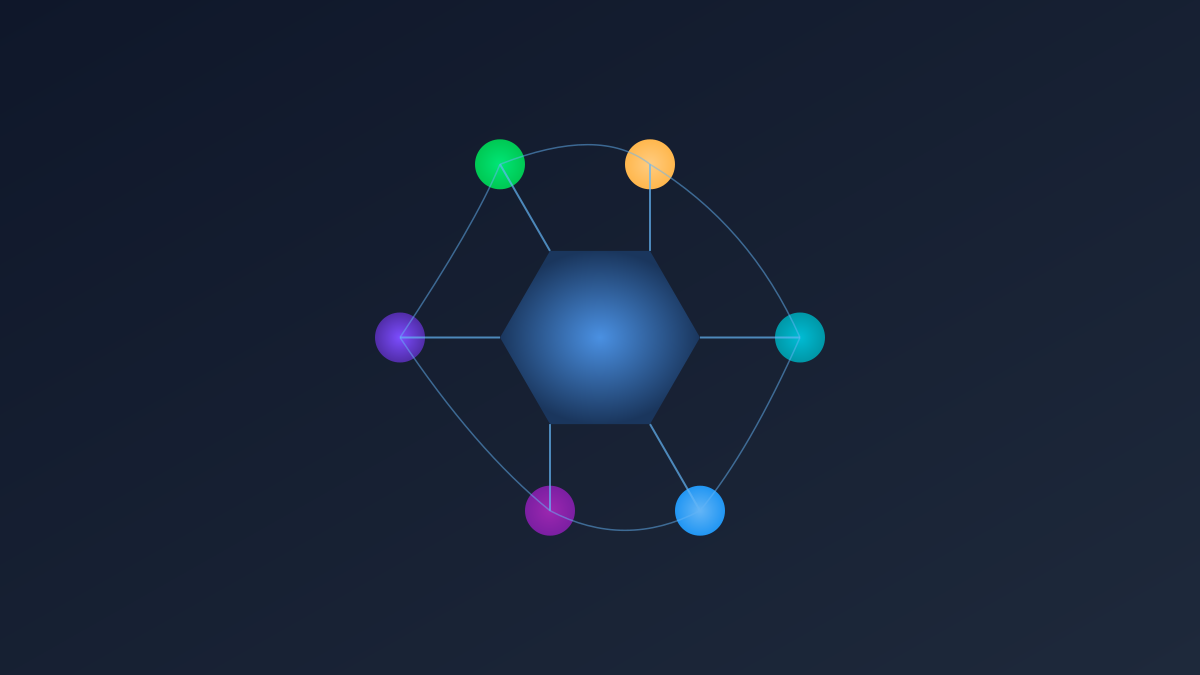
ZEGA is designed with a four-in-one architecture around the complete lifecycle of agents:

  1. Deployment: Simplified mechanisms support multiple agent architectures and model backends, with standardized interfaces lowering technical barriers, and can integrate with existing enterprise infrastructure (identity authentication, data warehouses, etc.).
  2. Orchestration: Supports multi-agent collaborative workflow design, solving collaboration challenges such as task delegation, information sharing, and state synchronization, including mechanisms for task allocation, dependency management, error recovery, etc.
  3. Governance: Built-in comprehensive framework covering access control, audit logs, compliance monitoring, and cost tracking, ensuring agent usage complies with enterprise policies and regulations, which is a prerequisite for large-scale deployment.
  4. Monetization: Provides metering and billing infrastructure, supporting billing models based on usage volume, tasks, value, etc., helping enterprises package agent capabilities into services for external monetization and creating new revenue sources.
4

Section 04

Technical Highlights: Design Philosophy of Zero-Friction Experience

ZEGA's 'zero-friction' concept is reflected in three major technical highlights:

  1. Abstract Layer Design: Hides underlying complexity, allowing developers to focus on agent logic without caring about details such as model differences and infrastructure configuration.
  2. Declarative Configuration: Users describe desired states and behaviors, and the platform handles implementation details, reducing configuration errors and improving maintainability and collaboration efficiency.
  3. Observability Integration: Built-in real-time monitoring, performance metrics, log aggregation, and tracking analysis functions, helping operation and maintenance teams troubleshoot problems and continuously optimize.
5

Section 05

Application Scenarios: Innovative Practices in Enterprise Workflow Automation

ZEGA is suitable for various enterprise scenarios:

  1. Customer Service Automation: Build intelligent customer service that handles complex queries and calls backend systems, with multi-agent collaboration processing requests such as technical support and order inquiries.
  2. Content Generation and Review: Orchestrate content generation, review, and revision workflows to ensure quality and efficiency; governance functions ensure content complies with brand guidelines and regulations.
  3. Data Analysis and Reporting: Automate data collection, cleaning, analysis, and visualization, integrate multiple data sources to extract insights, generate customized business reports, and support scheduled/event-triggered execution.
  4. Software Development Assistance: Assist in code generation, review, document writing, and test case generation, integrating with DevOps toolchains.
6

Section 06

Competitive Advantages and Market Positioning: ZEGA's Differentiated Value

ZEGA's differentiated advantages in the enterprise AI platform market:

  1. End-to-End Completeness: Covers the entire chain from development to monetization, reducing integration costs and providing a consistent user experience.
  2. Enterprise-Ready: Considers enterprise needs such as security, compliance, scalability, and reliability from the beginning, avoiding migration challenges from consumer-grade platforms.
  3. Openness and Flexibility: Supports multiple model providers, deployment options, and integration methods, protecting technical investments, avoiding vendor lock-in, and facilitating integration with existing systems.
7

Section 07

Technical Challenges and Future Outlook: Development Direction of Enterprise Agent Platforms

Challenges and prospects for enterprise-grade agent platforms:

  1. Reliability and Consistency: Need to ensure consistent performance of agents in edge cases, design fault recovery mechanisms, and handle agent conflicts.
  2. Security and Privacy: Implement the principle of least privilege, prevent prompt injection attacks, and protect the privacy of sensitive data.
  3. Cost Optimization: Balance functional richness and cost efficiency through technologies such as intelligent caching, model routing, and request batching. In the future, the maturity of agent technology and increased enterprise acceptance will drive platforms like ZEGA to play a more important role in digital transformation.
8

Section 08

Conclusion: The Significance of ZEGA for Enterprise AI Evolution

ZEGA represents an important direction in the evolution of enterprise AI applications: from single tools to agent ecosystems, from experimental projects to production platforms, from technology-driven to value-oriented. Its zero-friction design and complete lifecycle coverage provide a practical path for enterprises to embrace generative AI. As a driver of organizational intelligent upgrading, ZEGA is a noteworthy reference framework for enterprises exploring AI agent applications.