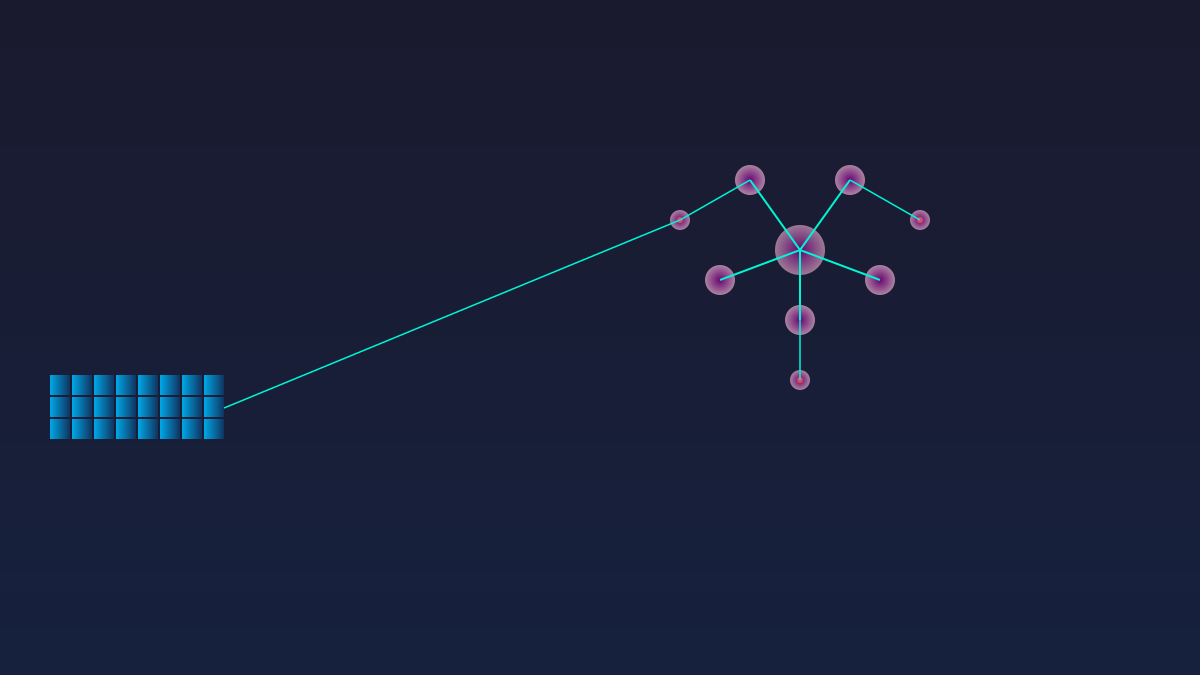
Modern robotic systems increasingly rely on GPS for positioning and navigation, but in indoor spaces, underground areas, urban canyons, or hostile environments, GPS signals may be completely unavailable or severely attenuated. For robot teams that need to collaborate on tasks, how to achieve reliable visual navigation without global positioning is an urgent technical problem to solve.
Traditional visual navigation methods usually rely on the local perception of a single robot and struggle to leverage collective team-level knowledge. While centralized learning methods can integrate multi-robot data, they bring privacy risks and communication bottlenecks. The core innovation of WAVN lies in proposing a decentralized learning framework combined with topology-aware scene understanding, which not only protects data privacy but also enables knowledge sharing.