Zing Forum

Reading

Ultima-AI: A Multi-Model Collaborative AI Workspace for Complex Software Systems

Introducing Ultima-AI, an AI workspace supporting multi-model collaboration, designed specifically for building, debugging, and reasoning about complex software systems, exploring the application of multi-agent collaboration in software development.

多模型协作AI工作空间软件开发智能调试复杂系统智能体
Published 2026-05-03 13:39Recent activity 2026-05-03 13:51Estimated read 6 min
Ultima-AI: A Multi-Model Collaborative AI Workspace for Complex Software Systems
1

Section 01

[Introduction] Ultima-AI: A Multi-Model Collaborative Intelligent Development Space for Complex Software

Ultima-AI is a multi-model collaborative AI workspace for complex software systems. It aims to provide developers with comprehensive intelligent assistance in building, debugging, and reasoning about complex software systems by integrating the capabilities of multiple professional AI models. Its core concept is to address the limitations of single AI models when dealing with complex systems, covering multiple stages of the software development lifecycle, and serving as an intelligent development partner.


2

Section 02

[Background] Challenges in Complex Software Development and the Need for AI Assistance

Modern software systems are becoming increasingly complex, involving multiple modules, dependencies, and runtime behaviors. Developers need to handle multi-level issues such as architectural design and code implementation. Traditional development tools lack sufficient intelligent assistance, while single large language models (LLMs) excel in code understanding and generation but struggle to meet the comprehensive needs of complex systems. Different models have their own specialties, so integrating these capabilities to build a collaborative intelligent development environment has become an important research direction.

3

Section 03

[Methodology] Multi-Model Collaborative Architecture Design of Ultima-AI

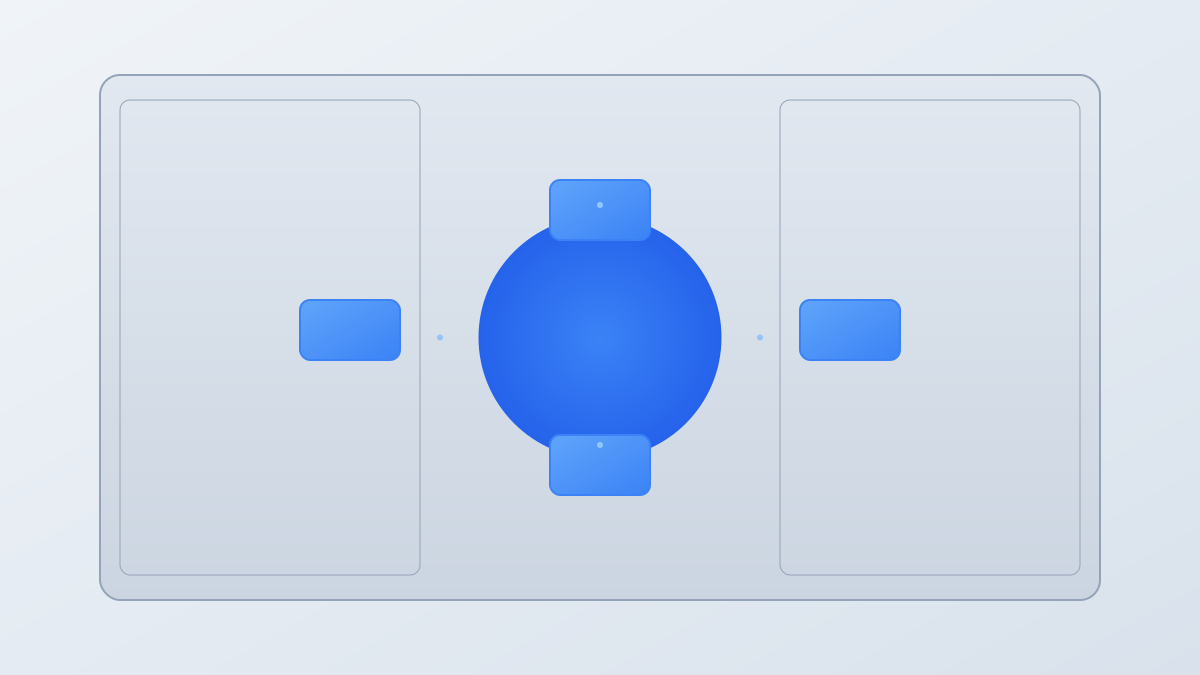
Ultima-AI adopts a multi-model collaborative architecture: the system can integrate multiple AI models and assign specific roles (e.g., architect, developer, debugging expert); models collaborate via a structured message-passing mechanism, automatically coordinating relevant models to handle tasks; it provides a shared context environment including project knowledge bases, code repositories, and historical conversation records to ensure collaboration coherence.

4

Section 04

[Functional Scenarios] Applications of Multi-Model Collaboration in Various Development Stages

  1. System Construction Phase: Multi-model collaboration supports requirement analysis, architectural design, and technology selection (architecture models propose solutions, domain experts evaluate feasibility, security models review risks);
  2. Debugging Phase: Multi-models conduct in-depth error analysis (trace execution paths, analyze log anomalies, propose repair solutions);
  3. Reasoning & Analysis Phase: Explore system behaviors, performance characteristics, and dependencies from multiple perspectives, and comprehensively answer complex questions.
5

Section 05

[Comparative Advantages] Differences from Traditional Tools and Single AI Assistants

  • vs Traditional IDE: Ultima-AI is proactive and intelligent, capable of actively analyzing problems and proposing suggestions instead of providing passive support;
  • vs Single AI Assistant: Multi-model collaboration offers professional division of labor and comprehensive perspectives, expanding the scope and depth of problem handling;
  • Structured Workspace: Organizes and manages project information, supports long-term knowledge accumulation and team sharing, making it suitable for engineering applications.
6

Section 06

[Prospects & Impact] Application Value and Future Trends of Ultima-AI

Application Value:

  • For teams: Reduce tool switching costs, improve development efficiency and quality;
  • For learning and research: Observe collaboration processes to learn systematic methods, and cultivate comprehensive technical thinking through model discussions. Future Trends: Will support more professional models, flexible collaboration modes, and rich interaction methods, pushing human-machine collaboration to a new stage.
7

Section 07

[Summary] Significance and Outlook of Ultima-AI

Ultima-AI represents an important attempt in the development of AI-assisted software development towards collaboration and specialization, addressing the limitations of single models and providing comprehensive intelligent support. In the future, such multi-model workspaces will further evolve, promoting closer collaboration between human developers and AI systems, and driving the upgrade of software engineering practices.