Zing Forum

Reading

SilicaCluster: An Open-Source Solution to Turn Android Devices into Decentralized AI AI Nodes

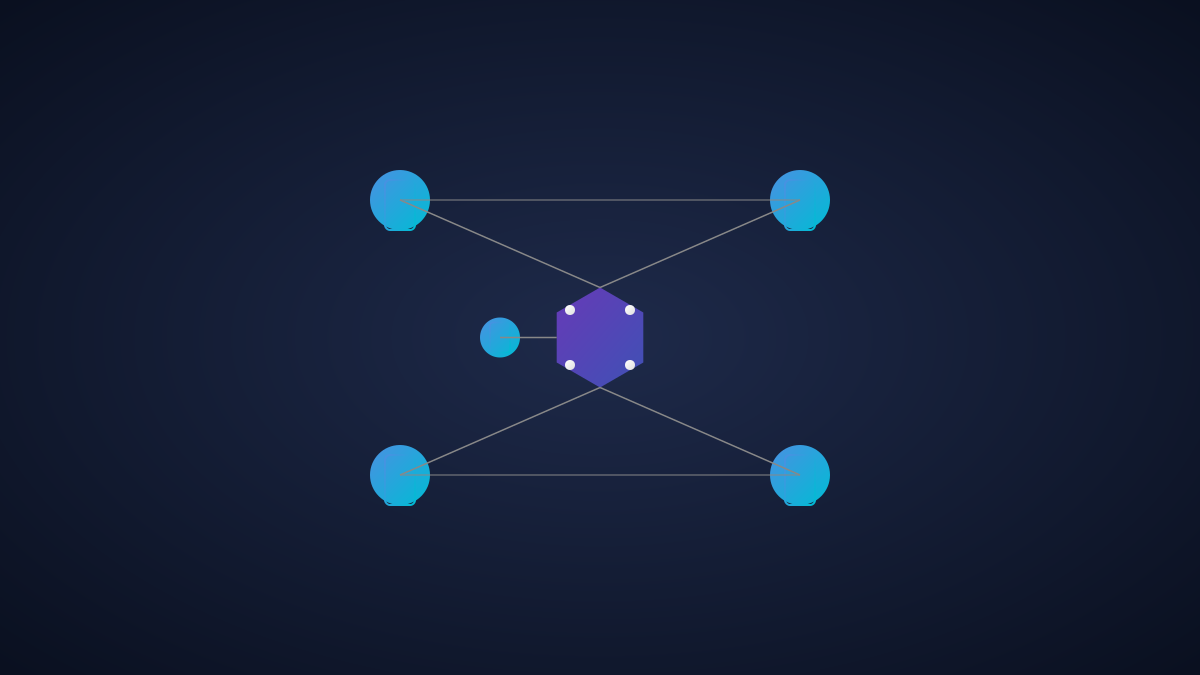
SilSilicaClusterCluster is an AGPLv3 open-source application that transforms Android devices into nodes of a decentralized local AI infrastructure. It supports running LLMs on a single device or distributed inference across a multi-device cluster, and provides a hacker-style UI, hardware teletelemetry, and multiple secure tunnel bridges.

去中心化AI边缘计算安卓LLM移动AI集群推理私有化开源本地模型隐私保护
Published 2026-04-22 08:10Recent activity 2026-04-22 11:59Estimated read 5 min
SilicaCluster: An Open-Source Solution to Turn Android Devices into Decentralized AI AI Nodes
1

Section 01

SilicaCluster: Open Source Solution for Decentralized Android AI Nodes

SilicaCluster is an AGPLv3 open-source Android app that transforms ordinary mobile devices into nodes of a decentralized local AI infrastructure. It supports running LLMs on a single device or distributed inference across multiple devices in a cluster. Key features include a Hacker-style UI, hardware telemetry, and multiple secure tunnel bridges for remote access. The project focuses on privacy protection, letting users control their AI infrastructure without relying on cloud services.


2

Section 02

Project Background: Addressing Cloud AI Privacy & Reliability Issues

As large language models (LLMs) advance rapidly, user concerns about AI service privacy grow. Mainstream cloud AI services require data uploads, leading to privacy risks, service interruptions, censorship, and vendor lock-in. SilicaCluster was developed to address these issues by enabling users to build a private, distributed AI inference network using their own mobile devices.

3

Section 03

Core Concepts & Key Functional Features

Core Concept: Edge Intelligence—utilizing idle mobile device computing power to build a private, distributed AI network. Users can run lightweight models on a single phone or form a cluster for load-balanced inference.

Key Features:

  1. Hacker-style UI (Jetpack Compose): Includes settings center (model config, bridge selection, cluster management) and activity terminal (real-time logs for system status, engine stability).
  2. Distributed Cluster: Cluster map/network scanner to find nodes, node manager tracking status (ONLINE/UNREACHABLE/VERIFYING), hardware telemetry (CPU cores, RAM, battery temp to prevent overheating).
  3. Model Downloader: Native support for .gguf format, custom model URLs, and Model Tiers (Nano/Lite: Danube3 500M; Efficient/Standard: Gemma2 2B; Power/Elite: Llama3.1 8B for clusters).
4

Section 04

Technical Details & Security Measures

Technical Highlights:

  • Open Source: AGPLv3 license ensures code transparency and freedom.
  • Local-first: All inference runs on-device, data never leaves the local environment.
  • Flexible Networking: Supports LAN direct connection and internet tunnels (Cloudflare, Ngrok, Tailscale).
  • Background Execution: Core logic runs in SilicaService, ensuring continuous operation even when the app is in background or screen is locked.

Security: API gateway uses UUID-based keys to prevent unauthorized access; secure tunnels protect remote access.

5

Section 05

Use Cases: Target Users & Scenarios

SilicaCluster is suitable for:

  • Privacy-sensitive users who refuse to send data to third-party AI services.
  • Tech enthusiasts with multiple old Android devices wanting to utilize idle computing power.
  • Offline scenarios like field work or emergency communication where cloud access is unavailable.
  • Students and researchers learning edge computing or distributed AI.
6

Section 06

Project Significance & Conclusion

SilicaCluster represents an attempt at AI democratization. It proves ordinary mobile devices can build useful AI infrastructure without high-end GPUs or cloud services. This decentralized approach lowers AI access barriers and returns data control to users, offering a new possibility for the future of AI applications.

