Zing Forum

Reading

ShopMaiBeli: A Multi-step Intelligent Shopping Assistant Based on Workflow Graphs

ShopMaiBeli is an intelligent agent system that can understand natural language shopping needs. By automatically generating and executing multi-step workflow graphs, it helps users find the most trustworthy and cost-optimal product options.

智能购物助手AI代理工作流图自然语言处理电商自动化价格比较开源项目
Published 2026-04-11 15:10Recent activity 2026-04-11 15:14Estimated read 5 min
ShopMaiBeli: A Multi-step Intelligent Shopping Assistant Based on Workflow Graphs
1

Section 01

ShopMaiBeli: An Agentic Smart Shopping Assistant Using Workflow Graphs

ShopMaiBeli is an open-source intelligent shopping assistant that transforms natural language shopping needs into executable multi-step workflow graphs. It addresses modern e-commerce challenges by helping users find trustworthy, cost-effective products through automated planning and execution. This post breaks down its background, core technology, applications, and implications.


2

Section 02

The Need for Intelligent Shopping Assistants

In today's information-rich e-commerce environment, consumers face choice overload. Traditional search engines and price comparison tools lack deep understanding of complex shopping intentions and multi-step execution capabilities. ShopMaiBeli fills this gap with end-to-end automated support from demand understanding to decision-making.

3

Section 03

Project Overview: What Is ShopMaiBeli?

Developed by nadiavictoria, ShopMaiBeli is an open-source project with an agentic architecture. Unlike simple query tools, it autonomously plans, executes, and optimizes multi-step tasks. Users input natural language requests (e.g., "find a waterproof hiking backpack under 500 yuan with good reviews"), and the system breaks down the demand into a workflow graph to achieve the goal.

4

Section 04

Core Technology: Workflow Graph Generation & Execution

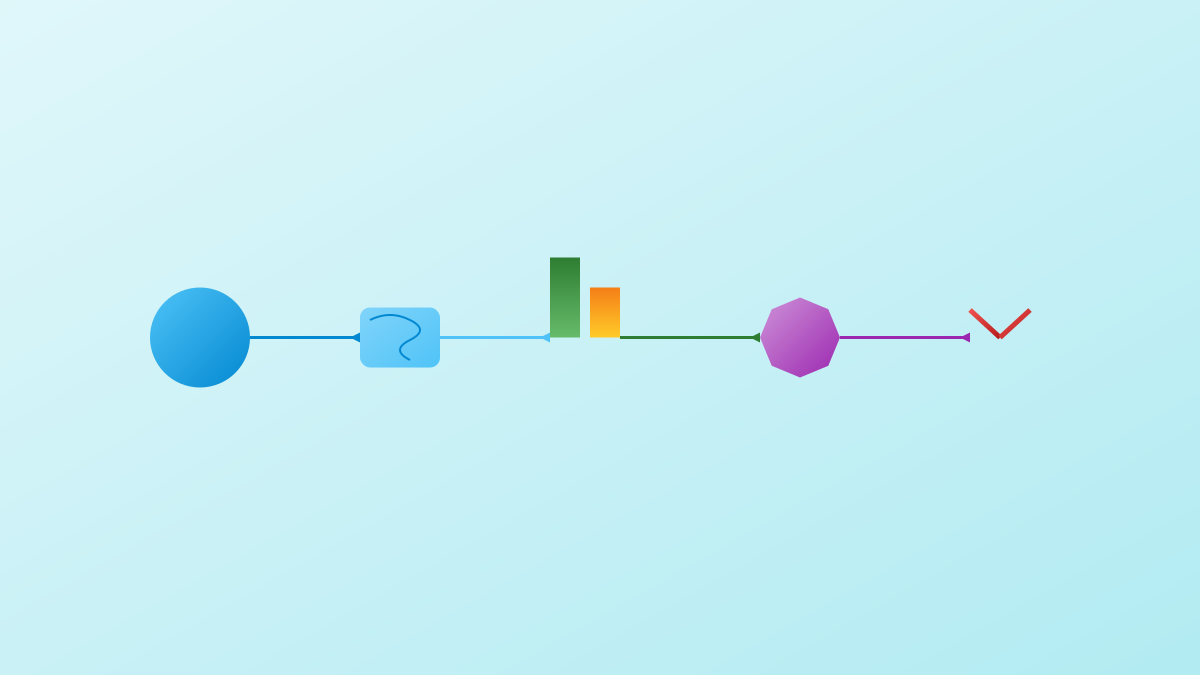
ShopMaiBeli's key innovation is automated workflow graph generation. After parsing user intent (identifying product category, budget, quality requirements), it builds a multi-node graph where each node represents a subtask (price comparison, review analysis, merchant credibility check). The graph is flexible—simple queries use fewer nodes, complex decisions involve more dimensions. Visualization enhances transparency for users.

5

Section 05

Application Scenarios & Value

ShopMaiBeli supports diverse scenarios: daily consumer goods (quick cost-performance screening), high-value products (comprehensive brand/review/service analysis), cross-platform price comparison. It benefits time-sensitive users (e.g., professionals using voice input during commutes) and tech-unfamiliar users (natural language interaction lowers barriers).

6

Section 06

Tech Architecture Implications

ShopMaiBeli's agentic architecture and workflow graph model offer references for AI development. Breaking complex tasks into orchestrated atomic operations and using flexible graph structures can be applied to travel planning, content creation, data analysis. Visualization improves human-AI collaboration efficiency.

7

Section 07

Conclusion & Future Outlook

ShopMaiBeli represents a shift from passive response to active planning in AI tools. Future versions may have better context understanding, personalized preference learning, and higher decision quality. Its open-source implementation serves as a practical example of applying cutting-edge AI to real-world scenarios.

