Zing Forum

Reading

Project DR: A Diabetes Retinopathy AI Diagnosis Platform Integrating ResNet50 and Llama 3.3

A medical AI project combining computer vision and large language models to provide instant, high-precision diagnostic support for diabetes retinopathy screening.

糖尿病视网膜病变医疗AIResNet50Llama 3.3计算机视觉大语言模型深度学习智能诊断
Published 2026-05-03 19:09Recent activity 2026-05-03 19:18Estimated read 6 min
Project DR: A Diabetes Retinopathy AI Diagnosis Platform Integrating ResNet50 and Llama 3.3
1

Section 01

Project DR Introduction: A Diabetes Retinopathy AI Diagnosis Platform Integrating ResNet50 and Llama3.3

Project DR is a medical AI project combining computer vision (ResNet50) and large language models (Llama3.3). It aims to provide instant, high-precision diagnostic support for diabetes retinopathy (DR) screening, address pain points like uneven distribution of traditional screening resources and long time consumption, and promote the application of AI in the medical field.


2

Section 02

Current Status and Pain Points of Diabetes Retinopathy Screening

Diabetes retinopathy (DR) is a common complication of diabetes. Among the approximately 463 million diabetes patients worldwide, one-third are at risk of DR, making it the leading cause of blindness in working-age people. Traditional screening relies on the subjective judgment of professional ophthalmologists, with pain points such as uneven distribution of medical resources, difficulty in accessing timely diagnosis in remote areas, long time consumption of manual film reading, and easy neglect of early lesions.

3

Section 03

Technical Architecture and Diagnostic Process of Project DR

Core Technical Architecture

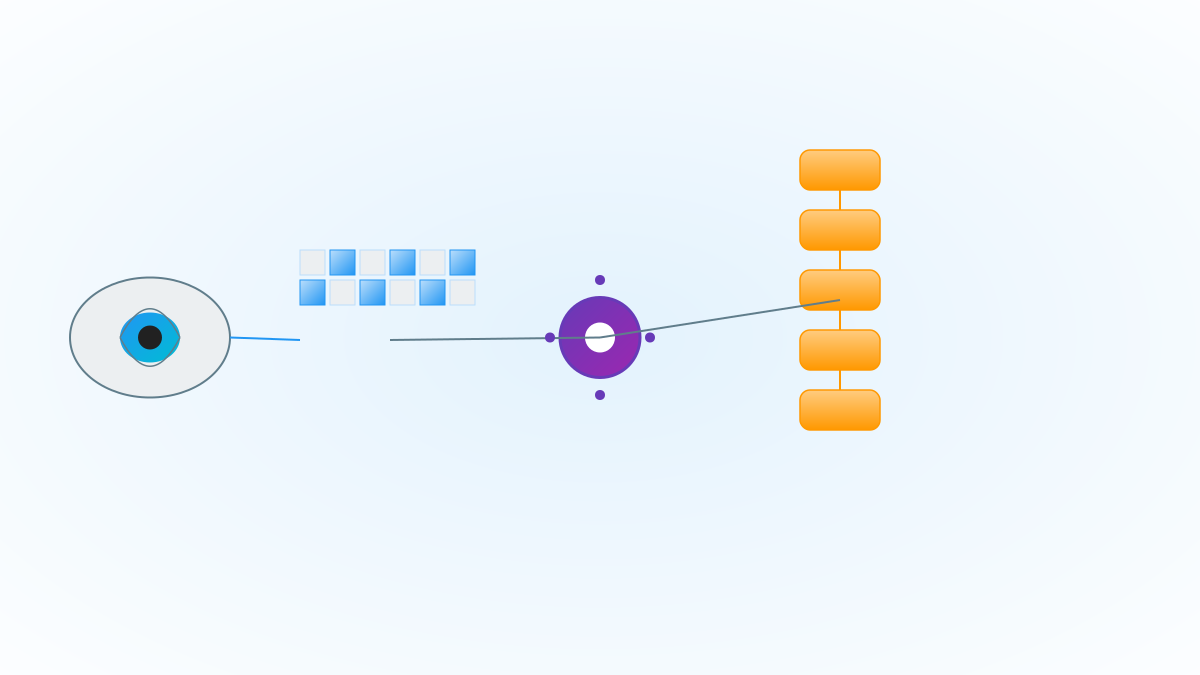
1. Image Recognition Layer: ResNet50 ResNet50 is used for feature extraction and classification of fundus images. It can identify early lesions such as microaneurysms, perform 5-level DR classification, and provide heatmaps to explain the basis for judgment. 2. Natural Language Interaction Layer: Llama3.3 Integrating Llama3.3 enables intelligent report generation, natural language querying, personalized treatment recommendations, and multilingual output.

System Workflow

  1. Image collection and preprocessing: quality inspection, denoising, etc., to ensure input meets standards;
  2. Deep learning inference: ResNet50 outputs DR grade and confidence, and generates heatmaps;
  3. Intelligent report generation: Llama3.3 generates reports containing grade, lesion description, and treatment recommendations;
  4. Doctor review and confirmation: human-machine collaboration, with doctors making the final decision.
4

Section 04

Technical Highlights and Innovations of Project DR

Multimodal Fusion Architecture: The visual model (ResNet50) and language model (Llama3.3) collaborate to provide a diagnostic experience close to that of human experts; Production-Grade Deployment Design: Supports edge device deployment, model quantization optimization, compliance with DICOM standards for integration with hospital systems, and provides RESTful API; Interpretability Priority: Enhances doctors' trust through heatmap visualization, natural language explanations, and confidence prompts.

5

Section 05

Application Prospects and Social Value of Project DR

Project DR can improve the coverage rate of DR screening, enabling primary medical institutions to have screening capabilities; reduce medical costs, decrease reliance on specialists and late-stage treatment expenses; promote balanced distribution of medical resources, benefiting remote areas; and accelerate clinical research by providing large-scale high-quality data to support the development of new therapies.

6

Section 06

Limitations and Future Improvement Directions of Project DR

Project DR has limitations such as insufficient data diversity (needing more data from different ethnic groups and devices to improve generalization), requiring clinical trials and regulatory approval, needing doctor training to adapt to the workflow, and needing to improve data security and privacy protection mechanisms.

7

Section 07

Significance and Future Outlook of Project DR

Project DR represents an important direction of AI in the medical field: building intelligent diagnostic tools by integrating computer vision and large language models. With the maturity of technology and improvement of regulation, such AI-assisted systems are expected to be implemented in more disease areas, realizing the vision of 'AI for Healthcare'.