Core Philosophy
POLLO proposes the 'Prompt as Knowledge Ontology' paradigm, treating prompt text as 'bytecode' derived from semantic intent (which serves as the 'source code'). By switching serializers, optimized text for different models can be generated.
Ten Core Concepts
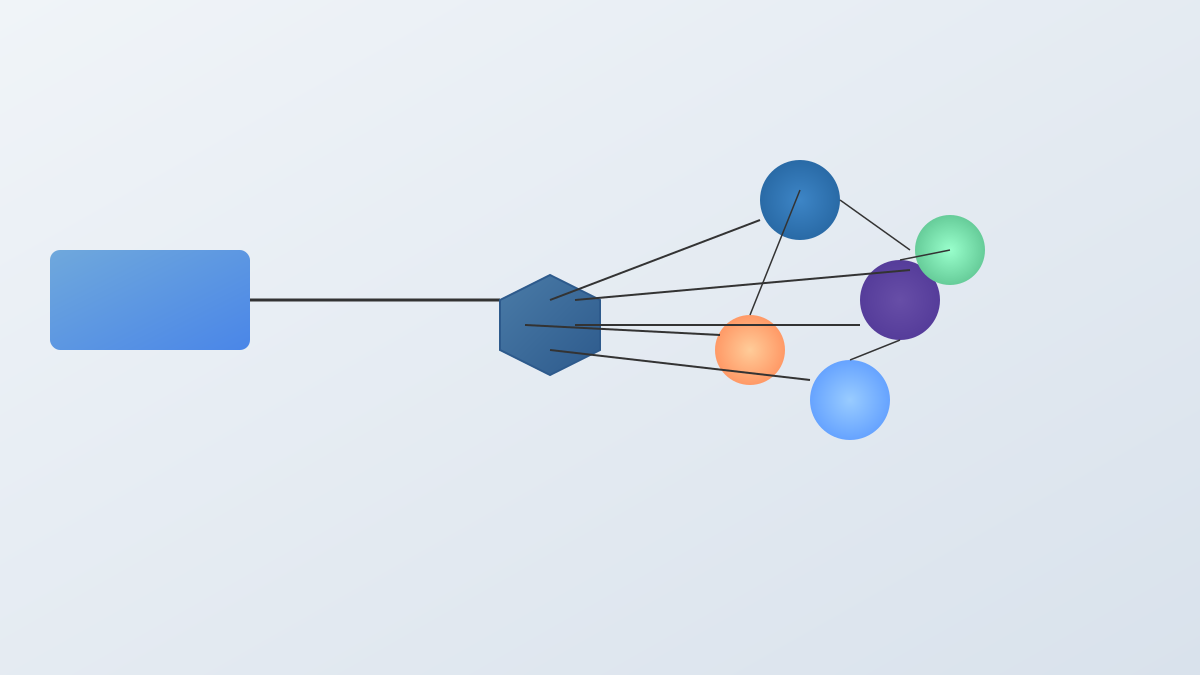
A semantic system is built around ten top-level concepts including PromptIntent (semantic core), PromptingContext (physical container), and CommunicativeAct (communicative behavior).
Three-Layer Architecture
- Shared Vocabulary Layer: Uses SKOS to establish domain concepts and their relationships, mapping to mature ontologies;
- Formal Ontology Layer: Uses OWL2 DL to axiomatize classes and properties;
- Named Extension Layer: Provides domain extensions and RDF instance files.
Design Philosophy
OWL2 DL is chosen to ensure decidability; SKOS is prioritized over OWL for building shared vocabulary; explicit separation between physical (PromptingContext) and semantic (PromptIntent) layers.