Zing Forum

Reading

OysterWorkflow: An Automation Infrastructure for Converting Real Workflows into AI Agent Capabilities

OysterWorkflow is an AI Agent workflow capture tool for macOS and Windows. It can record screen activities, UI events, and input trajectories, converting real workflows into reusable OpenClaw skill artifacts.

AI Agentworkflow automationRPAOpenClawscreen recordingOCRdemonstration learning工作流自动化智能体
Published 2026-05-11 09:13Recent activity 2026-05-11 10:24Estimated read 6 min
OysterWorkflow: An Automation Infrastructure for Converting Real Workflows into AI Agent Capabilities
1

Section 01

OysterWorkflow: Core Idea & Overview

OysterWorkflow is a workflow capture tool for macOS (arm64) and Windows (x64) that converts real desktop/browser workflows into reusable OpenClaw skill artifacts. Its core problem is bridging the gap between traditional prompt/SOP descriptions and actual execution details (like UI states, error handling). The core concept is "Workflow-to-Capability"—capturing real execution evidence to turn into reviewable, reusable AI capabilities for Agent frameworks like OpenClaw.


2

Section 02

Background: Limitations of Traditional Methods

Traditional methods struggle to enable AI Agents to execute complex workflows:

  • Prompt limitations: Can't describe hidden menus, web state changes, error handling, or local context differences.
  • SOP gaps: SOPs miss tacit knowledge (when to wait for loading, scroll for buttons, handle popups) that skilled operators use, creating a "description vs execution" divide.
3

Section 03

OysterWorkflow's Solution & Process

OysterWorkflow solves this by capturing real execution:

  1. Multi-dimensional evidence: Screen activity, OCR text, UI events (clicks/inputs), input tracks, optional voice narration.
  2. Candidate discovery: Analyzes recordings to find potential workflows for extraction.
  3. Skill draft & human-in-loop: Generates OpenClaw artifacts (skill.json, assets.json, summary.json) with user review to ensure accuracy.
  4. Seamless installation: Installs reviewed skills directly into OpenClaw for Agent use.

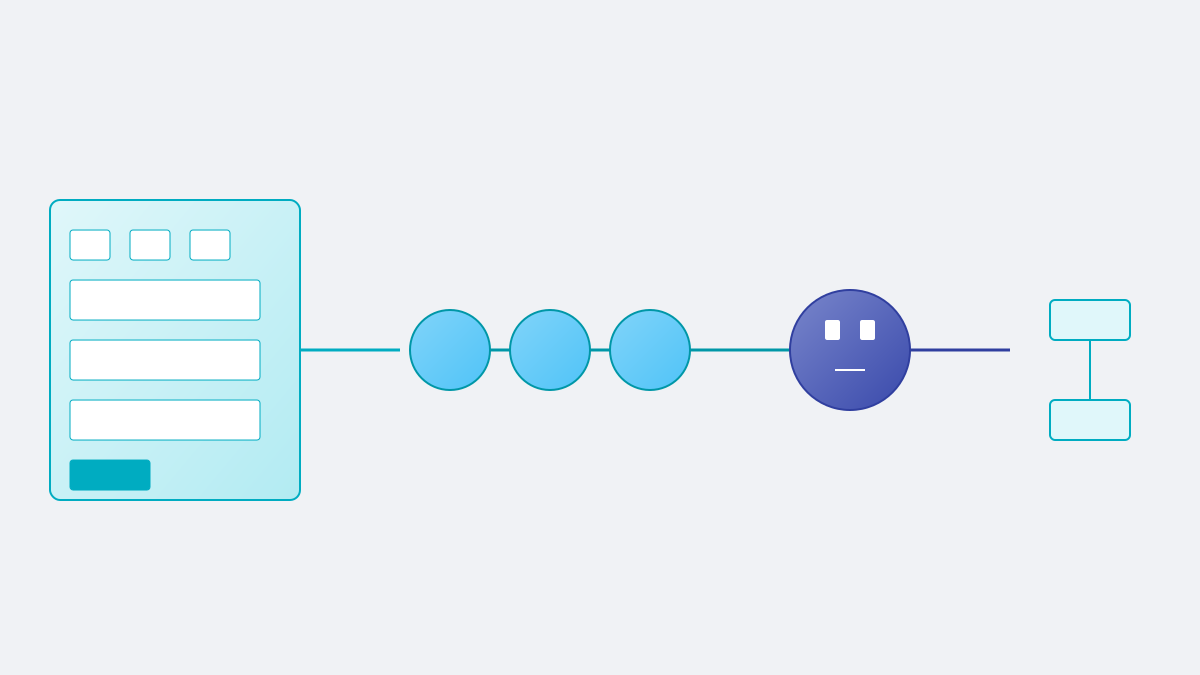
The four-step process: Record → Review candidates → Validate draft → Install to OpenClaw.

4

Section 04

Product Features & Technical Specifications

Features:

  • Recorder dashboard: Manage recording tasks, check OCR/audio status.
  • Candidate discovery interface: Visualize and select workflow candidates.
  • Skill review interface: Check steps/evidence, auto-desensitize sensitive info.
  • Skill manager: Manage installed skills, copy prompts, uninstall.

Tech Specs:

  • Supported platforms: macOS (Apple Silicon arm64), Windows (x64).
  • macOS permissions: Screen Recording, Accessibility, Input Monitoring, Microphone (if voice is used).
  • Version: 0.1.0 (releases: OysterWorkflow-0.1.0-arm64.dmg for macOS, OysterWorkflow-Setup-0.1.0.exe for Windows).
5

Section 05

Open Source Strategy & License

Open Source:

  • Public repo: Contains releases, docs, screenshots, issue tracking, marketing links.
  • Source code: Currently private; future may open parts (SDK/integration interfaces) but no timeline.

License: PolyForm Noncommercial 1.0.0—non-commercial use allowed; commercial use requires written permission; no source code access.

6

Section 06

Target Users & Application Scenarios

Users:

  • Those with repetitive desktop/browser workflows (record once, reuse).
  • AI Agent/RPA developers (extract structured workflows from real execution).
  • Ops teams (standardize/ document internal processes into reviewable artifacts).
  • Scenarios needing human review before skill installation.
7

Section 07

Current Limitations & Notes

Limitations:

  • Platform: Only macOS arm64 and Windows x64.
  • Windows: No Chinese input support; voice transcription works best for English (Chinese unreliable).
  • Not fully automated: Focuses on capture/review of artifacts, not auto-execution of workflows.
8

Section 08

Industry Significance & Conclusion

Significance:

  • Aligns with "Learning from Demonstration" (LfD) trend—Agent learns from human execution instead of programming.
  • Turns tacit knowledge into explicit, reusable artifacts.
  • Enhances Agent capability composability via standardized OpenClaw skills.

Conclusion: OysterWorkflow addresses a core AI Agent challenge (acquiring real workflow knowledge). Though early (v0.1.0) and closed-source now, its design is forward-looking. It's a practical starting point for teams exploring the "record-transform-reuse" workflow model.

