Zing Forum

Reading

multi-llm-platform: An Open-Source Production-Grade Multi-LLM Inference Gateway on AWS

A production-grade multi-LLM inference gateway built on AWS, supporting unified access to multiple large language model providers, enabling intelligent routing, load balancing, and cost optimization.

LLMAWS网关推理多模型开源云原生负载均衡
Published 2026-05-08 05:41Recent activity 2026-05-08 10:05Estimated read 7 min
multi-llm-platform: An Open-Source Production-Grade Multi-LLM Inference Gateway on AWS
1

Section 01

[Introduction] multi-llm-platform: An Open-Source Production-Grade Multi-LLM Inference Gateway on AWS

This article introduces an open-source project for a production-grade multi-LLM inference gateway built on AWS—multi-llm-platform. The project supports unified access to multiple large language model providers, enabling intelligent routing, load balancing, and cost optimization. It aims to solve the complexity, cost, and fault recovery challenges faced by enterprises and developers in multi-LLM management, providing a cloud-native infrastructure layer solution for LLM applications.


2

Section 02

Project Background: Core Challenges in Multi-LLM Management

With the booming development of large language model applications today, enterprises and developers face core challenges: how to choose and efficiently manage among numerous LLM providers such as OpenAI, Anthropic, Google, and Cohere. Connecting to each API separately not only increases development complexity but also brings difficulties in cost management and fault recovery. multi-llm-platform emerged as a production-grade multi-LLM inference gateway on AWS, providing a unified interface layer to enable cross-provider model calls, intelligent routing, and cost optimization.

3

Section 03

Core Architecture Design: Unified Abstraction and Intelligent Scheduling

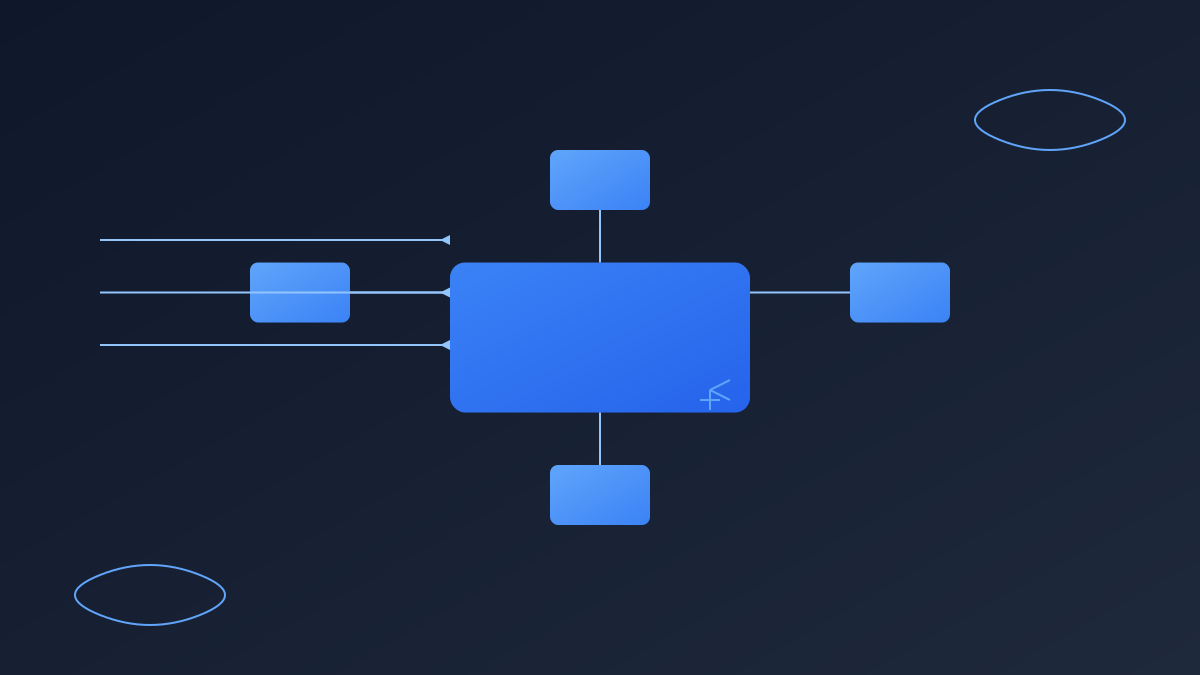
The project architecture follows cloud-native best practices and is built on AWS infrastructure. Its core components include:

  1. Unified API Abstraction Layer: Developers only need to connect to one set of interfaces to seamlessly switch between underlying LLM providers, reducing integration costs, simplifying operations and maintenance, and supporting flexible switching strategies;
  2. Intelligent Routing and Load Balancing: Automatically distributes requests based on request characteristics, model capabilities, and load conditions, improving response speed and enabling automatic failover;
  3. Cost Optimization Strategy: Supports cost-based routing decisions, allowing configuration of priority rules to select the most cost-effective inference path while ensuring quality.
4

Section 04

Production-Grade Features: Reliability, Observability, and Security

For production environments, the project has the following features:

  • High Availability Guarantee: Multi-AZ deployment + AWS Auto Scaling ensures stable service under high concurrency and automatic failover when LLM providers experience issues;
  • Comprehensive Observability: Integrates monitoring and logging systems, including request latency/success rate, call distribution/cost statistics, error alerts, and traceability;
  • Security and Compliance: Multi-layer protection (API key management, rate limiting, content filtering, audit logs), supports sensitive data desensitization, and meets compliance audit requirements.
5

Section 05

Deployment and Usage: Simple and Efficient Process

The deployment process uses IaC tools like AWS CloudFormation or Terraform to complete deployment from code to production environment in minutes. For configuration, it supports flexible setting of LLM provider API credentials, routing rules, and cost thresholds via environment variables or configuration files, balancing development/testing needs and production security requirements.

6

Section 06

Applicable Scenarios and Value Proposition

multi-llm-platform is particularly suitable for the following scenarios:

  1. Multi-Model A/B Testing: Quickly compare the performance of different LLMs on specific tasks;
  2. Cost-Sensitive Applications: Optimize inference costs while ensuring quality;
  3. High-Availability Required Services: Ensure business continuity through multi-provider redundancy;
  4. Rapid Prototyping: Unified interface reduces the cost of technical selection.
7

Section 07

Summary and Outlook: Open-Source Reference and Future Evolution

multi-llm-platform provides an excellent open-source reference implementation for the infrastructure layer of LLM applications, solving the complexity of multi-provider management and introducing advanced features like intelligent routing and cost optimization. As the LLM ecosystem evolves, the value of a unified gateway will become increasingly prominent. In the future, we can expect continuous evolution in model capability evaluation, dynamic routing algorithms, and support for more cloud platforms.

