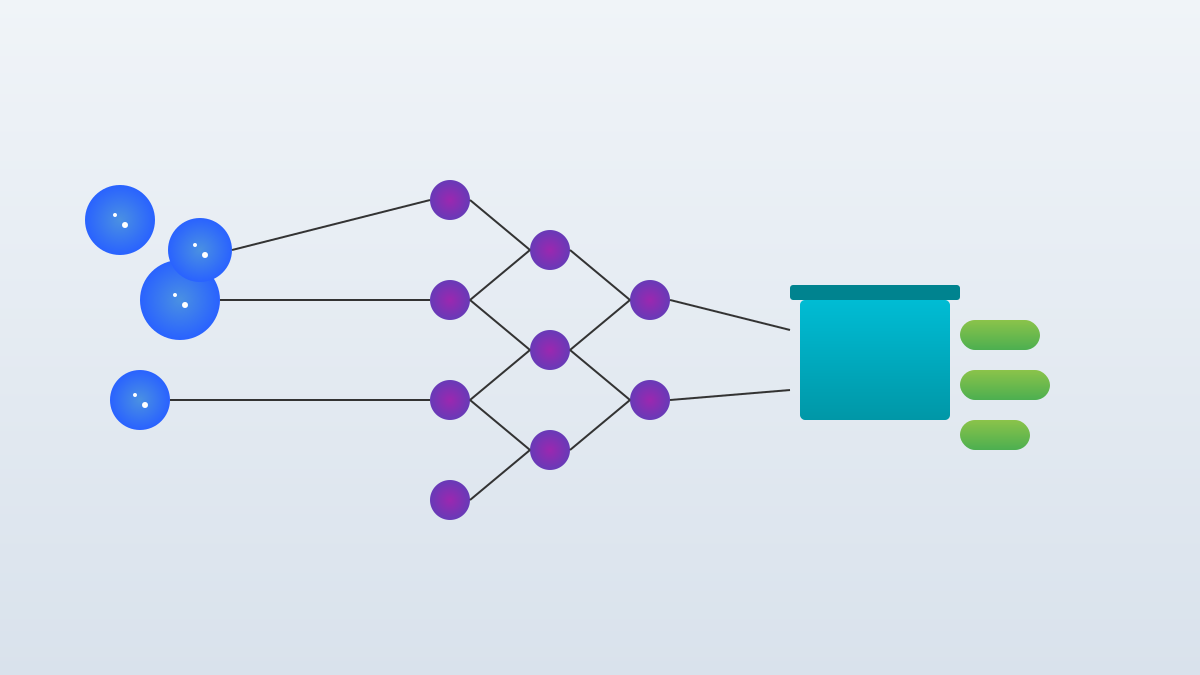
The rapid development of single-cell RNA sequencing (scRNA-seq) technology has brought revolutionary changes to life science research, enabling researchers to analyze tissue heterogeneity at single-cell resolution. However, with the explosive growth of sequencing data, cell type annotation—a key step—has become a major bottleneck in the data analysis pipeline. Traditional cell annotation methods rely on manual labeling or database comparison based on known marker genes, which are not only time-consuming and labor-intensive but also prone to subjective influences.
In recent years, large language models (LLMs) have demonstrated amazing capabilities in natural language processing, and their strong semantic understanding and knowledge integration abilities provide new ideas for solving biological problems. Based on this background, mLLMCelltype introduces large language models into the field of cell type annotation, pioneering automated and intelligent cell type identification.