Zing Forum

Reading

Lumina AI: Architecture and Practice of a One-Stop Multimodal AI Experience Platform

Lumina AI is an open-source multimodal AI platform that integrates Whisper (speech recognition), OmniVoice (text-to-speech), Qwen (large language model), and SDXL (image generation), providing a seamless AI experience through a Next.js frontend and FastAPI backend.

多模态AILumina AIWhisperQwenSDXLNext.jsFastAPI语音交互
Published 2026-06-06 00:17Recent activity 2026-06-06 00:26Estimated read 5 min
Lumina AI: Architecture and Practice of a One-Stop Multimodal AI Experience Platform
1

Section 01

Lumina AI: An Open-Source One-Stop Multimodal AI Experience Platform

Lumina AI is an open-source multimodal AI platform integrating Whisper (ASR), OmniVoice (TTS), Qwen (LLM), and SDXL (image generation) to deliver a seamless one-stop experience. Built with Next.js frontend and FastAPI backend, it solves the challenge of unifying diverse AI capabilities. Key info: Original author/maintainer: khizarali07; Source: GitHub; Release time:2026-06-05; Link: https://github.com/khizarali07/Lumina-AI.


2

Section 02

Multimodal AI Fusion Trend & Integration Challenges

2025-2026 saw a rise in multimodal AI fusion, replacing single-modal tools (text-only ChatGPT, image-only Midjourney). However, integrating different models is hard due to varying APIs, formats, and performance. Lumina AI was created to unify these capabilities into an elegant web app.

3

Section 03

Core Components & Tech Stack Rationale

Lumina AI is a production-ready full-stack project with components: ASR (Whisper), TTS (OmniVoice), LLM (Qwen), image generation (SDXL), frontend (Next.js14), backend (FastAPI). Tech choices: Next.js14 (SSR/SSG, performance); FastAPI (async, type-safe); Whisper (multilingual, accurate); OmniVoice (high-quality); Qwen (Chinese-optimized); SDXL (open-source, high-quality).

4

Section 04

System Architecture Overview

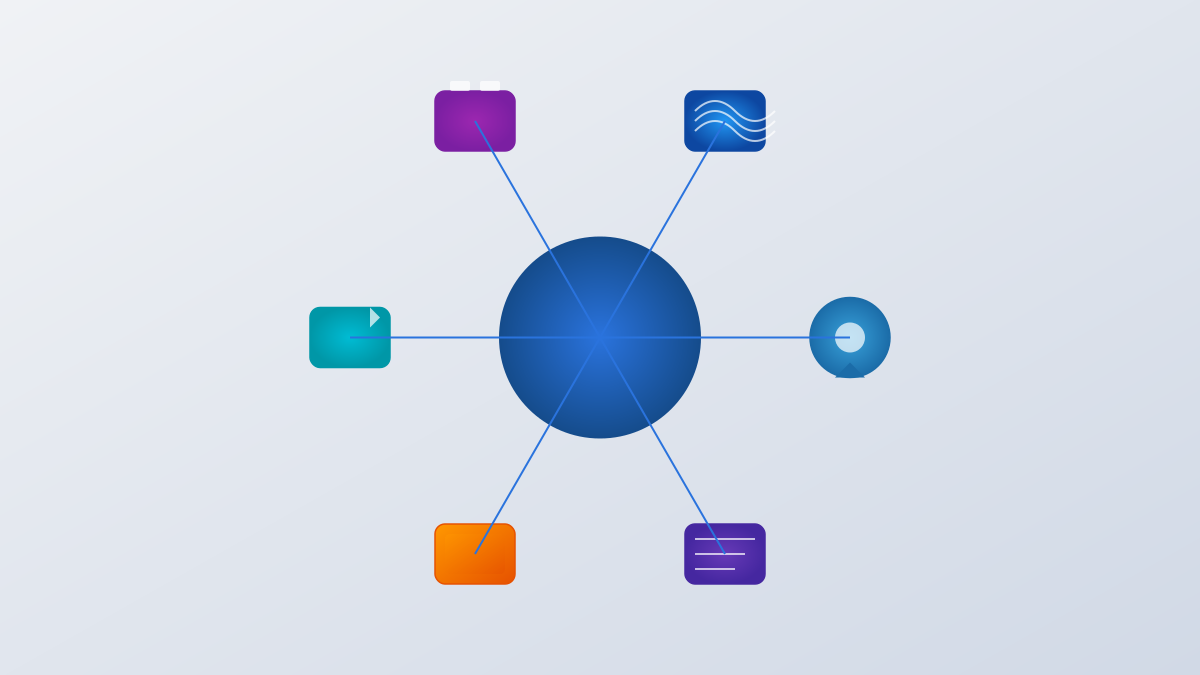
Frontend-backend separation: User layer → Next.js frontend (chat/voice/image interfaces, Zustand state, Web Audio processing) → FastAPI backend (modular ASR/TTS/LLM/image services) → Model layer (Whisper/OmniVoice/Qwen/SDXL). Communication via HTTP/REST.

5

Section 05

Core Features & Performance Optimizations

ASR: Whisper supports multilingual recognition, real-time transcription, timestamps, speaker separation (experimental). Optimizations: multiple model sizes (tiny/base/small/medium/large). TTS: OmniVoice offers high-quality voice, multi-tone, emotion control; optional cloning. LLM: Qwen has Chinese optimization, multimodal (Qwen-VL), long context, tool calling; conversation management. Image generation: SDXL (1024x1024, style control); optimizations: INT8 quantization, batch processing, caching.

6

Section 06

Multimodal Interaction Design

Unified Message Format: Message (id, role, content blocks, timestamp) and ContentBlock (type: text/image/audio/file). Scenarios: 1. Voice dialogue: Record → ASR → LLM → TTS → Play. 2. Image-text: Upload image + question → Qwen-VL analyze → reply + optional SDXL image.3. Creative workflow: Voice idea → ASR → LLM prompt → SDXL → voice feedback → iterate.

7

Section 07

Deployment & Extension Guide

Local: Clone repo → install dependencies → configure .env → docker-compose up -d. Cloud: Frontend (Vercel), backend (AWS/GCP/Azure), models (Hugging Face). Extension: Add models via services/; customize UI; integrate third-party tools via MCP.

8

Section 08

Conclusion & Future Outlook

Lumina AI is a reference for production multimodal apps, offers rich user experience, and promotes AI普及. Future: Integrate video understanding, 3D generation, real-time translation to become a universal AI assistant.

