Zing Forum

Reading

Multi-Agent Development Ecosystem: Practice of a Unified Platform Integrating Lovable, Jules, and Other AI Tools

Exploring the platform-integration project, a reusable multi-agent development ecosystem that integrates multiple cutting-edge AI tools and cloud platforms.

多代理系统AI开发工具LovableJulesFirebaseVercel开发工作流MCP
Published 2026-04-22 04:45Recent activity 2026-04-22 04:55Estimated read 6 min
Multi-Agent Development Ecosystem: Practice of a Unified Platform Integrating Lovable, Jules, and Other AI Tools
1

Section 01

Introduction: Integration Practice of Multi-Agent Development Ecosystem

Introduction: Integration Practice of Multi-Agent Development Ecosystem

The platform-integration project aims to solve the fragmentation problem of AI development tools, build a reusable multi-agent ecosystem, integrate tools like Lovable, Jules, Firebase, and Vercel into a unified workflow, eliminate context switching costs, and improve development efficiency and quality.


2

Section 02

Pain Points in Multi-Tool Collaborative Development

Pain Points in Multi-Tool Collaborative Development

Modern AI-assisted development faces the problem of having many tools but lacking integration: A typical web development process involves multiple tools such as design (Lovable), code generation (GitHub Copilot/Cursor), review (Jules), and deployment (Vercel/Firebase). Manual integration requires a lot of exporting/importing and copy-pasting, leading to low efficiency and fragmented context.

3

Section 03

Core Solutions of platform-integration

Core Solutions of platform-integration

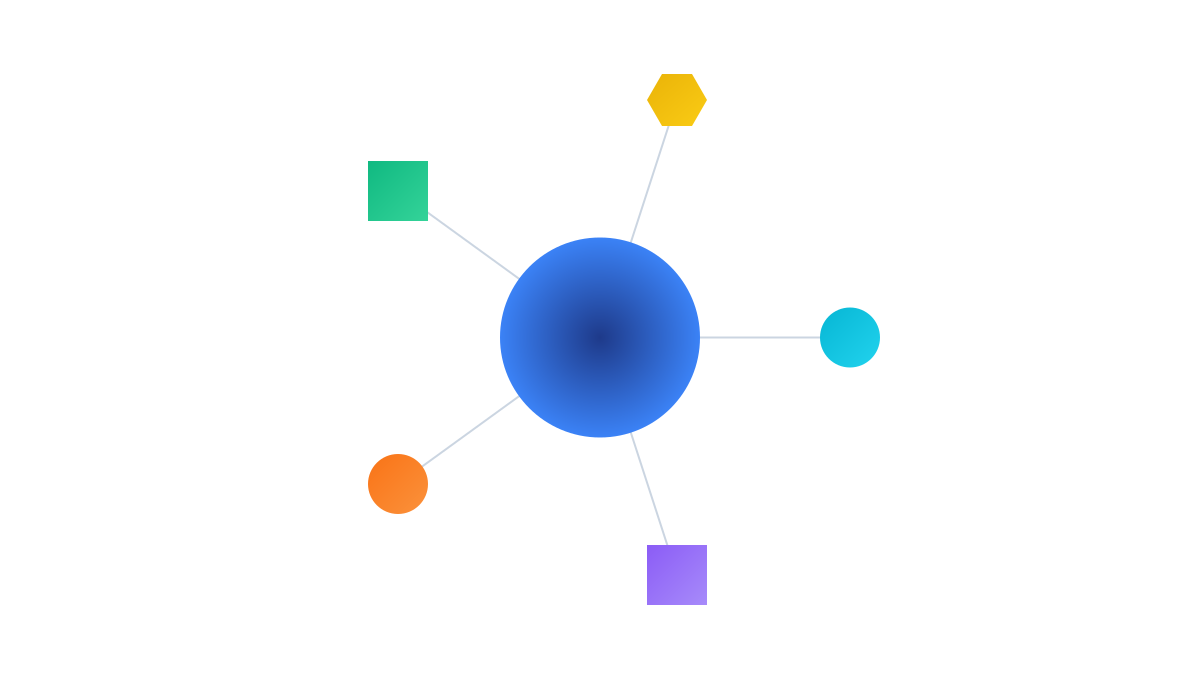
The project integrates tools through three core architectural components:

  1. Unified Configuration Management: Standardized MCP configs centrally maintain tool parameters to reduce configuration errors;
  2. Agent Orchestration Engine: Intelligently assigns tasks, e.g., when creating a login page, it automatically coordinates Lovable for prototype generation → code generation → Jules testing → Firebase configuration → Vercel deployment;
  3. Design System Integration: Built-in specifications ensure consistent UI styles.
4

Section 04

Analysis of Core Toolchain Roles

Analysis of Core Toolchain Roles

  • Lovable: An AI design tool that outputs UI prototypes and structured specifications for downstream use;
  • Jules: A GitHub AI code review tool that performs quality checks at key nodes;
  • Google Stitch: An automated data pipeline that connects data sources and syncs to repositories;
  • Antigravity: A deployment coordinator that manages Vercel/Firebase deployment processes;
  • Firebase+Vercel: Provides backend services (authentication, database) and frontend hosting.
5

Section 05

Starter Kit and Workflow Automation

Starter Kit and Workflow Automation

  • Starter Kit: Pre-configured tool connections, templates, scripts, etc., to launch a multi-agent workflow in minutes;
  • Standardized Workflow: Covers requirement analysis (converting user stories to tasks), design and development (prototype → code), quality assurance (testing/review), release and deployment (version/gray release), and is flexibly customizable.
6

Section 06

Application Value and Technical Highlights

Application Value and Technical Highlights

Application Value: Improves efficiency (eliminates switching costs), ensures quality (automated reviews), accumulates knowledge (standardized practices), and is newcomer-friendly (pre-configured environment); Technical Highlights: MCP protocol (agent communication), shared state management (continuous context), error recovery (intelligent retries), and observability (log monitoring).

7

Section 07

Future Outlook and Conclusion

Future Outlook and Conclusion

Future Directions: Support more professional tools (security scanning, performance analysis), intelligent scheduling algorithms, community template markets, and deep IDE integration; Conclusion: This project represents the direction of AI development from single tools to multi-tool collaboration. Organically integrated AI capabilities generate greater value, making it a reference project for improving development efficiency.

