Zing Forum

Reading

LogiFlow AI Hub: An AI Automation System for Logistics Operations

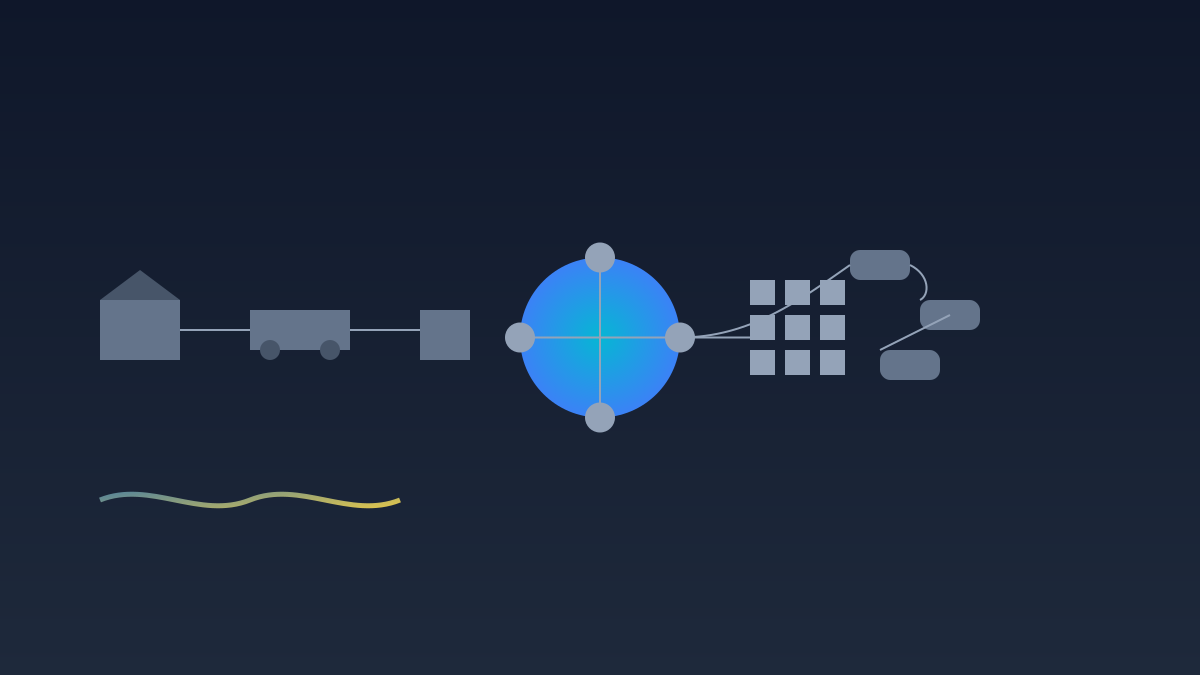
LogiFlow AI Hub is a logistics operation automation system integrating RAG, AI Agent, N8N workflow, and dashboards, demonstrating the innovative application of AI in traditional industries.

物流自动化RAGAI AgentN8N工作流智能物流Python供应链管理
Published 2026-04-12 22:15Recent activity 2026-04-12 22:24Estimated read 7 min
LogiFlow AI Hub: An AI Automation System for Logistics Operations
1

Section 01

LogiFlow AI Hub: An AI-Driven Automation System for Logistics Operations (Main Post)

LogiFlow AI Hub Overview

LogiFlow AI Hub is an open-source project developed by adayautomation, focusing on AI-driven automation solutions for logistics operations. It integrates cutting-edge technologies like RAG (Retrieval-Augmented Generation), AI Agent, N8N workflow engine, and visual dashboards to address key pain points in traditional logistics—such as low efficiency, information asymmetry, and high manual dependency—providing a comprehensive framework for digital transformation.


2

Section 02

Background: Challenges in the Logistics Industry

Industry Challenges

As the lifeblood of the global economy, the logistics industry has long faced issues like:

  • Low operational efficiency
  • Information asymmetry between stakeholders
  • High reliance on manual labor

LogiFlow AI Hub leverages modern AI technologies to tackle these problems, enabling intelligent upgrades for logistics operations.

3

Section 03

Core Technologies of LogiFlow AI Hub

Key Tech Stack

RAG (Retrieval-Augmented Generation)

  • Document intelligent retrieval from massive logistics docs (waybills, contracts)
  • Knowledge base Q&A for operators
  • Dynamic info integration (real-time + historical data)
  • Compliance checks against policies/regulations

AI Agent

  • Task planning (split complex tasks into sub-tasks)
  • Anomaly handling (auto detect transport issues)
  • Resource scheduling (optimize vehicles/warehouses/staff)
  • Customer communication (auto track cargo status & notify)

N8N Workflow Engine

  • Automate repetitive operations
  • Integrate systems like WMS, TMS, ERP
  • Event-driven workflows
  • Visual workflow design

Visual Dashboard

  • Real-time KPI monitoring
  • Anomaly alerts
  • Trend analysis
  • Multi-dimensional views (region/time/business line)
4

Section 04

Key Application Scenarios

Practical Use Cases

Smart Cargo Tracking

  • Integrate multi-source location data
  • Predict arrival time & delay risks
  • Auto generate status updates
  • Handle customer queries

Warehouse Management

  • Inventory prediction & replenishment suggestions
  • Layout optimization for picking efficiency
  • Auto in/out processes
  • Detect inventory anomalies (slow-moving/expiring goods)

Transport Optimization

  • Route optimization (consider traffic/weather)
  • Load optimization
  • Carrier selection & evaluation
  • Cost prediction & control

Customer Service Automation

  • 24/7 query handling
  • Auto process common requests (address change, delivery booking)
  • Emotion recognition for complex issues
  • Personalized service suggestions
5

Section 05

Technical Architecture Features

Architecture Highlights

Python Tech Stack

  • Rich AI/ML libraries (LangChain, LlamaIndex)
  • Active community & mature solutions
  • Good readability & maintainability
  • Cross-platform compatibility

Modular Design

  • Independent components (RAG, Agent, workflow)
  • Flexible configuration
  • Easy to extend new modules
  • Reduced system complexity

Open-source Integration

  • Uses N8N as workflow engine
  • Integrates open-source LLM/vector databases
  • Lowers total ownership cost
6

Section 06

Industry Value & Significance

Value to Logistics & Tech Demo

Industry Value

  1. Efficiency: Automate repetitive tasks, free up human resources
  2. Cost: Optimize resource allocation, reduce waste
  3. Service: Faster & more accurate responses
  4. Decision: Data-driven insights
  5. Scalability: Support business growth

Tech Demonstration

  • Shows AI application path in vertical industries
  • Provides actionable architecture reference
  • Promotes tech exchange in logistics AI
  • Lowers entry barrier for AI adoption in logistics
7

Section 07

Limitations & Future Directions

Challenges & Future Plans

Limitations

  • Data Quality: Dependence on high-quality data (heterogeneous, historical data issues)
  • Integration: Complexity in integrating with legacy systems (API compatibility, data format differences)
  • Security: Need for data protection & compliance (GDPR)

Future Directions

  • Tech Evolution: Multimodal (image/voice recognition), edge computing, digital twin, predictive analysis
  • Ecosystem: Plugin market, industry templates, community collaboration

