Zing Forum

Reading

Llama4_DeepSeek_RAG: A Multi-Model Comparison PDF Intelligent Q&A System

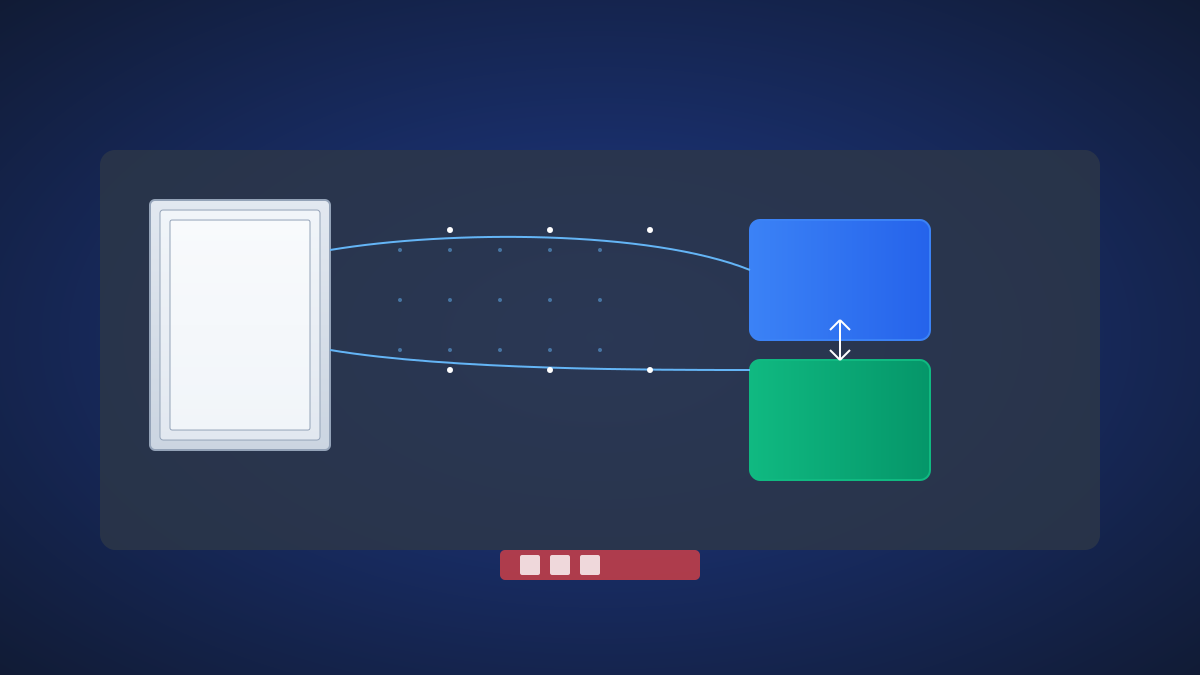
Llama4_DeepSeek_RAG is a RAG application supporting dual models Llama-4 and DeepSeek-R1. Users can upload PDF documents for intelligent Q&A, and intuitively compare the reasoning processes and answer quality of different models, making it suitable for model selection and RAG effect evaluation.

RAG应用PDF问答Llama-4DeepSeek-R1模型对比Streamlit语义检索向量嵌入
Published 2026-05-30 20:01Recent activity 2026-05-30 20:23Estimated read 6 min
Llama4_DeepSeek_RAG: A Multi-Model Comparison PDF Intelligent Q&A System
1

Section 01

[Introduction] Llama4_DeepSeek_RAG: A Dual-Model Comparison PDF Intelligent Q&A System

Llama4_DeepSeek_RAG is a PDF intelligent Q&A application based on Retrieval-Augmented Generation (RAG) technology. Its core feature is supporting parallel comparison of dual models Llama-4 and DeepSeek-R1. Users can upload PDF documents for natural language Q&A, and intuitively compare the reasoning processes and answer quality of different models, which is suitable for model selection and RAG effect evaluation. The project is maintained by skhaneefa42, open-sourced on GitHub, and uses Streamlit to build an interactive interface.


2

Section 02

Project Background and Source Information

This project aims to address the need of developers and researchers for multi-model performance comparison, providing an intuitive RAG application evaluation tool.

3

Section 03

Core Features and Technical Implementation Methods

Core Features

  1. Dual Model Support: Integrates Llama-4 (general-purpose multilingual, instruction-following) and DeepSeek-R1 (inference-specialized, chain-of-thought output). Users can flexibly select or compare them in parallel.
  2. Intelligent PDF Parsing: The process is document parsing → text chunking → vector embedding → semantic retrieval, preserving document structure and achieving precise matching.
  3. Streamlit Interface: Supports drag-and-drop PDF upload, dialogue interaction, model switching, and result display.

Technical Architecture

RAG pipeline: PDF upload → text extraction → chunk processing → vector embedding → vector storage; User query → query vectorization → semantic retrieval → context assembly → model inference → answer generation. Semantic retrieval is based on vector embedding technology, which can understand synonyms and perform cross-language retrieval (depending on the capability of the embedding model).

4

Section 04

Model Comparison and Evaluation Dimensions

The system is designed with a multi-dimensional comparison mechanism to help users evaluate model performance:

  1. Answer Accuracy: Compare the matching degree between the model's answer and the document content;
  2. Reasoning Transparency: Chain-of-thought display of DeepSeek-R1 vs direct answer of Llama-4;
  3. Response Speed: Differences in inference efficiency between different models;
  4. Answer Style: Formality, detail level, structure level, etc.

Users can call both models simultaneously to intuitively observe the differences across dimensions.

5

Section 05

Practical Application Scenarios

Typical scenarios of this application include:

  1. Enterprise Document Q&A: Import internal materials such as product manuals and technical documents to build an enterprise knowledge assistant;
  2. Academic Research Assistance: Upload papers to quickly extract key information, verify cited content, and improve literature research efficiency;
  3. Model Selection Evaluation: Compare the performance of the two models on real business data to assist deployment decisions;
  4. Education and Training: Show the differences in thinking styles of different models to help students understand AI technology.
6

Section 06

Project Value and Significance

Llama4_DeepSeek_RAG is not only a practical RAG tool but also an open-source model comparison research platform. It lowers the technical threshold for multi-model evaluation, allowing individual developers and small and medium-sized enterprises to conduct professional model capability evaluations. With the development of the open-source large model ecosystem, such comparison tools will help the community better utilize model advantages and promote the implementation and optimization of AI applications.

