Zing Forum

Reading

git-readme: AI-Powered Automatic Generator for GitHub Personal Pages and Project Documentation

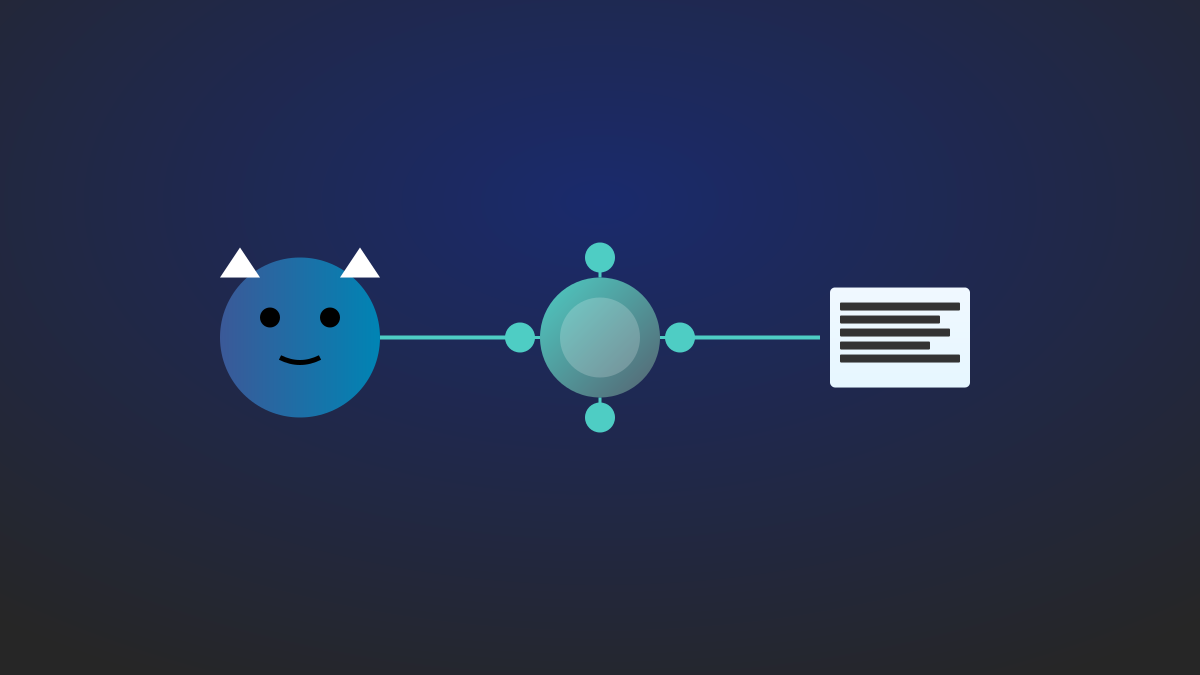
git-readme leverages large language models and repository data to automatically generate polished GitHub personal pages and project README documents for developers, addressing the issues of time-consuming documentation writing and inconsistent quality.

GitHubREADME生成AI工具开发者工具文档自动化开源项目
Published 2026-04-19 07:12Recent activity 2026-04-19 07:20Estimated read 6 min
git-readme: AI-Powered Automatic Generator for GitHub Personal Pages and Project Documentation
1

Section 01

git-readme: Guide to the AI-Powered GitHub Documentation Automatic Generator

git-readme is an AI tool that uses large language models and GitHub repository data. It aims to automatically generate polished GitHub personal pages and project README documents, addressing the pain points of time-consuming and labor-intensive documentation writing with inconsistent quality for developers. It helps projects gain more attention while assisting developers in building a professional personal brand.


2

Section 02

Problem Background: Common Dilemmas of GitHub Documentation and Personal Pages

On GitHub, the documentation quality of tens of millions of open-source projects varies greatly; many powerful projects are buried due to obscure READMEs. A personal developer's GitHub Profile page is an important window to showcase their brand, but creating an aesthetically pleasing and information-rich page takes a lot of time. The traditional README writing process includes organizing features, writing instructions, adding examples, etc., with high maintenance costs, which becomes a burden for developers.

3

Section 03

Core Features and Technical Implementation: Deep Integration of AI and Data

The core of git-readme is the integration of AI capabilities and GitHub data: 1. Analyze repository structure, metadata (code language, dependencies, commit history), user contribution statistics, tech stack, etc.; 2. Use large language models to generate personalized text (project introduction, installation guide, etc., avoiding clichés); 3. Automatically generate dynamic badges (build status, coverage, etc.) and visual elements (contribution heatmap, tech stack radar chart, etc.) to enhance visual appeal.

4

Section 04

Usage Scenarios and Workflow: Convenient Operations Covering Multiple Scenarios

Applicable scenarios: Quickly generate initial README for new project launches; regularly update documentation for existing projects to sync with code; generate professional profiles for personal brand building. Workflow: Users provide GitHub username/repository address → select generation type (project README/personal page) → configure personalized options (theme, language, etc.) → generate Markdown document in a few minutes, which can be used directly or fine-tuned.

5

Section 05

Technical Highlights: Ecosystem Understanding and Personalized Innovation

Technical highlights: 1. Deep understanding of the GitHub ecosystem, combining code analysis, visualization, and natural language generation; 2. Multilingual support: Generate multilingual READMEs with embedded switch links; 3. Rich personalized options: Theme styles (enterprise, community, minimalist, etc.) covering visual elements such as copy tone, color scheme, and typesetting.

6

Section 06

Limitations and Improvement Directions: AI Assistance Still Requires Manual Supplement

Limitations: AI-generated content may lack understanding of the project's deep value and struggle to convey unique perspectives; highly professional/innovative projects may have technical detail errors that require manual review and correction. Improvement directions: Enhance support for specific tech stacks, finer-grained customization, integrate third-party services (CI/CD, security scanning), and develop collaborative maintenance functions.

7

Section 07

Summary and Outlook: The Future of AI-Assisted Developer Tools

git-readme automates documentation work, allowing developers to focus on core code and improving the documentation quality of the open-source community. In the future, as large language models' capabilities improve, AI will assist developers in more areas such as code comments, API documentation, and technical blogs. git-readme is an early explorer of this trend, demonstrating the broad possibilities of combining AI with developer tools.

