Zing Forum

Reading

codex-flow: A Dynamic Workflow Orchestration Engine for OpenAI Codex

codex-flow is a dynamic workflow engine specifically designed for Codex, supporting parallel execution, resumable, and auditable sub-agent tasks. It allows developers to automatically generate parallel workflows by simply describing requirements in natural language, significantly improving the execution efficiency of complex tasks.


CodexAI AgentWorkflow OrchestrationOpenAI并行执行任务编排
Published 2026-06-06 00:46Recent activity 2026-06-06 00:53Estimated read 5 min
codex-flow: A Dynamic Workflow Orchestration Engine for OpenAI Codex
1

Section 01

Introduction / Main Floor: codex-flow: A Dynamic Workflow Orchestration Engine for OpenAI Codex

codex-flow is a dynamic workflow engine specifically designed for Codex, supporting parallel execution, resumable, and auditable sub-agent tasks. It allows developers to automatically generate parallel workflows by simply describing requirements in natural language, significantly improving the execution efficiency of complex tasks.

2

Section 02

Original Author and Source

  • Original Author/Maintainer: Dmatut7
  • Source Platform: GitHub
  • Original Title: codex-flow — dynamic workflows for Codex
  • Original Link: https://github.com/Dmatut7/codex-flow
  • Publication Date: June 5, 2026

3

Section 03

Introduction: When Codex Meets Workflow Orchestration

OpenAI's Codex has transformed the way developers interact with code, but when dealing with complex multi-file tasks, a single conversation is often insufficient. Imagine needing to troubleshoot a login issue involving multiple modules or review a large PR with dozens of files—traditional linear conversation models fall short.

codex-flow was created to address this pain point. It is a dynamic workflow orchestration engine that enables Codex to execute multiple sub-agent tasks in parallel, while providing complete logging and resume capabilities. Developers only need to describe their requirements in natural language, and the system will automatically generate and execute parallel workflows.


4

Section 04

Core Design Philosophy: From Linear to Parallel

The traditional Codex usage pattern is linear: the user asks a question, the AI answers, and the cycle repeats. This pattern works well for simple tasks but has obvious limitations in complex scenarios. codex-flow introduces three key concepts to change this situation:

5

Section 05

Parallel Fan-out

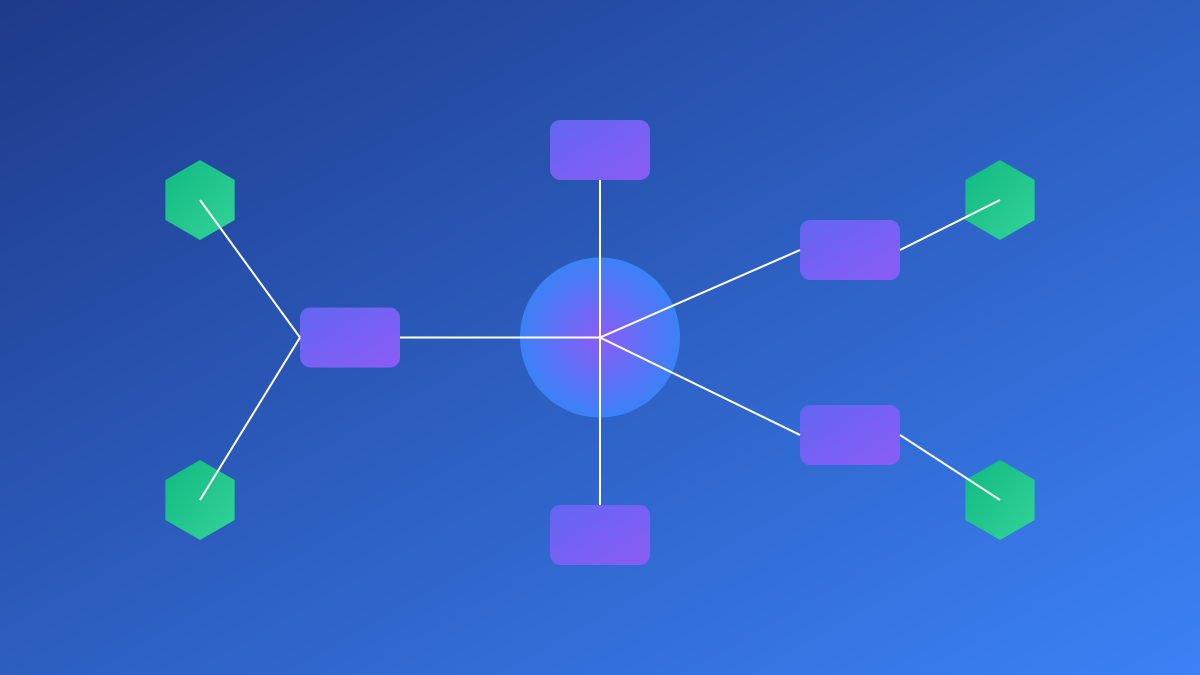
A workflow can split a task into multiple independent sub-tasks, each handled by a dedicated Codex sub-agent. These sub-agents run simultaneously instead of waiting in sequence. For example, when troubleshooting a login issue, you can analyze three files (authentication module, session management, and logging) in parallel.

6

Section 06

Content-Addressed Resume

This is one of the most innovative features of codex-flow. The execution state of the workflow is fully recorded; if the task is interrupted (whether by active user cancellation, program crash, or budget exhaustion), when re-run, it will automatically skip completed nodes and only re-execute the unfinished parts. This mechanism makes long-running complex tasks reliable and cost-effective.

7

Section 07

Journaling / Audit

The execution results, token consumption, input, and output of each node are recorded in JSONL files under the .codex-flow/journal/ directory. This not only provides complete audit trails but also serves as a data foundation for debugging and optimization.


8

Section 08

Technical Architecture Analysis

The architectural design of codex-flow reflects a deep understanding of production environments. It is not a simple script wrapper but a complete orchestration engine.
