Zing Forum

Reading

CodeCannon: Standardized Development Workflow for AI-Assisted Programming Teams

A standardized development workflow framework for teams using AI programming assistants. It supports one-time process definition to ensure all agents, developers, and projects adhere to unified standards, with built-in human review nodes.

AI编程助手开发工作流代码审查标准化流程GitHub CopilotCursor人机协作代码质量DevOps开源项目
Published 2026-05-26 22:15Recent activity 2026-05-26 22:27Estimated read 8 min
CodeCannon: Standardized Development Workflow for AI-Assisted Programming Teams
1

Section 01

CodeCannon: Guide to Standardized Development Workflow for AI-Assisted Programming Teams

CodeCannon is a standardized development workflow framework for AI-assisted programming teams, designed to address issues such as inconsistent code quality, chaotic processes, and security/compliance risks brought by the popularization of AI programming. Its core features include: one-time process definition that takes effect globally, so all agents, developers, and projects follow unified standards; built-in human review nodes to ensure key links are overseen by humans; and support for integration with existing development toolchains. This framework helps teams maintain code quality, security, and maintainability while improving efficiency.


2

Section 02

Background and Challenges: New Issues Arising from the Popularization of AI Programming

With the popularization of AI programming assistants like GitHub Copilot and Cursor, teams face the following challenges:

  1. Inconsistent code quality: Different developers use AI in various ways, leading to uneven quality of generated code;
  2. Lack of standardized processes: When multiple developers and AI agents collaborate, the absence of unified processes causes chaos;
  3. Security and compliance risks: AI-generated code may have vulnerabilities, unsafe dependencies, or sensitive information leaks;
  4. Knowledge silos: AI-generated code lacks sufficient documentation, making maintenance and handover difficult. The need for standardization lies in ensuring AI code meets quality standards, balancing efficiency and security, enabling new members to integrate quickly, and establishing auditable processes.
3

Section 03

Project Overview: Core Design Philosophy of CodeCannon

CodeCannon is the 'rulebook' for software development teams in the AI era. Its core design philosophy includes:

  • One-time definition, global effect: Teams define standards at the project/organization level, and all developers and AI tools automatically follow them;
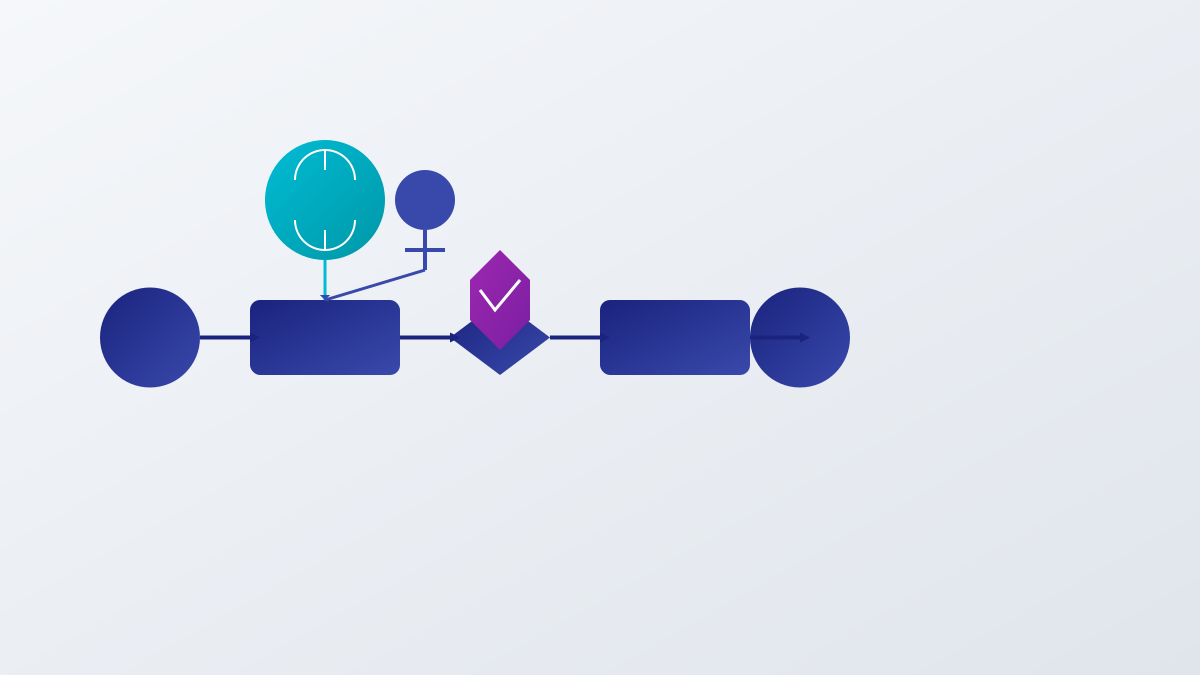
  • Human Gates: Key links (e.g., before code submission, merging, deployment) must be reviewed and approved by humans;
  • AI Agent-friendly: Provides clear instruction formats, context management standards, and output requirements to adapt to the needs of AI agents.
4

Section 04

Core Features: Standardized Workflow and Key Characteristics

The core features of CodeCannon include:

  1. Standardized workflow definition: Covers standards for all stages including requirement analysis, design, coding, testing, review, and deployment, clarifying the responsibility boundaries between humans and AI;
  2. Human review nodes: Sets review nodes before code submission, merging, and deployment to ensure key changes are overseen by humans;
  3. AI Agent integration standards: Provides context management, prompt templates, and output standards to support efficient collaboration of AI agents;
  4. Auditable and traceable: Records AI operation logs and decision trails to meet compliance requirements.
5

Section 05

Application Scenarios: Scope of Application for CodeCannon

CodeCannon is applicable to the following scenarios:

  • Enterprise development teams: Unify AI usage standards, reduce security risks, and meet compliance audits;
  • Open-source project maintenance: Standardize contributors' AI usage methods to ensure consistent code quality;
  • AI Agent development: Provide standardized agent behavior norms and integration best practices;
  • Education and training: Teach AI collaborative programming, cultivate code review habits and critical thinking.
6

Section 06

Technical Implementation: Integration Support with Existing Toolchains

CodeCannon supports integration with existing development toolchains:

  • Version control systems: Git hooks, GitHub/GitLab CI/CD, branch protection rules;
  • IDE integration: Adaptation for mainstream IDEs such as VS Code extensions and JetBrains plugins;
  • AI tool integration: GitHub Copilot, Cursor, Claude Code, and custom AI agent configurations;
  • CI/CD integration: Automated checks, quality gates, and report notification mechanisms.
7

Section 07

Implementation Recommendations: How to Introduce CodeCannon

Recommendations for introducing CodeCannon:

  1. Progressive adoption: Pilot small projects → improve standards → gradually promote → continuous optimization;
  2. Customized configuration: Adjust review strictness according to team size, select templates based on project types, and customize code standards according to technology stacks;
  3. Training and cultural building: Conduct AI collaboration training, establish a human-machine collaboration culture, and regularly review and optimize processes.
8

Section 08

Summary and Outlook: The Standardized Future of AI-Assisted Programming

CodeCannon marks the evolution of AI-assisted programming from 'unregulated growth' to 'standardized management'. It helps teams maintain code quality, security, and maintainability while enjoying the efficiency improvements brought by AI. As AI programming tools develop, such workflow management tools will become more important, laying the foundation for in-depth human-machine collaboration. For teams using AI programming, CodeCannon provides a standardized path to balance efficiency and quality.

