Zing Forum

Reading

Cemini Claude Code CCC: A Meta-Knowledge Base and Efficient Workflow Guide for Claude Code

Cemini Claude Code CCC is a comprehensive meta-knowledge base project that systematically organizes advanced usage skills for the Claude Code editor, covering advanced topics such as workflow design, agent configuration, MCP protocol, Hooks, Skills, slash commands, and OpenSpec patterns.

Claude CodeAI-assisted programmingworkflowMCP protocolskillsslash commandscommunity knowledge base
Published 2026-05-21 22:44Recent activity 2026-05-21 23:28Estimated read 6 min
Cemini Claude Code CCC: A Meta-Knowledge Base and Efficient Workflow Guide for Claude Code
1

Section 01

Cemini Claude Code CCC: Overview of the Meta-Knowledge Base for Advanced Users

Cemini Claude Code CCC is a community-driven meta-wiki project that systematically organizes advanced usage skills for the Claude Code editor. It fills the gap left by official documentation (which only covers basic features) and covers key advanced topics including workflow design, agent configuration, MCP protocol, Hooks, Skills, slash commands, and OpenSpec patterns. This project serves as an essential reference resource for advanced Claude Code users looking to unlock the tool's full potential.


2

Section 02

Background: The Need for Advanced Claude Code Guidance

Claude Code, an AI-assisted programming tool by Anthropic, has gained significant popularity in the developer community due to its deep integration and strong code understanding capabilities. However, as users dive deeper, they find official docs lack systematic advanced guides for personalized workflows and feature exploration. The Cemini CCC project was created to address this gap as a community knowledge base.

3

Section 03

Project Architecture: Modular Knowledge Organization

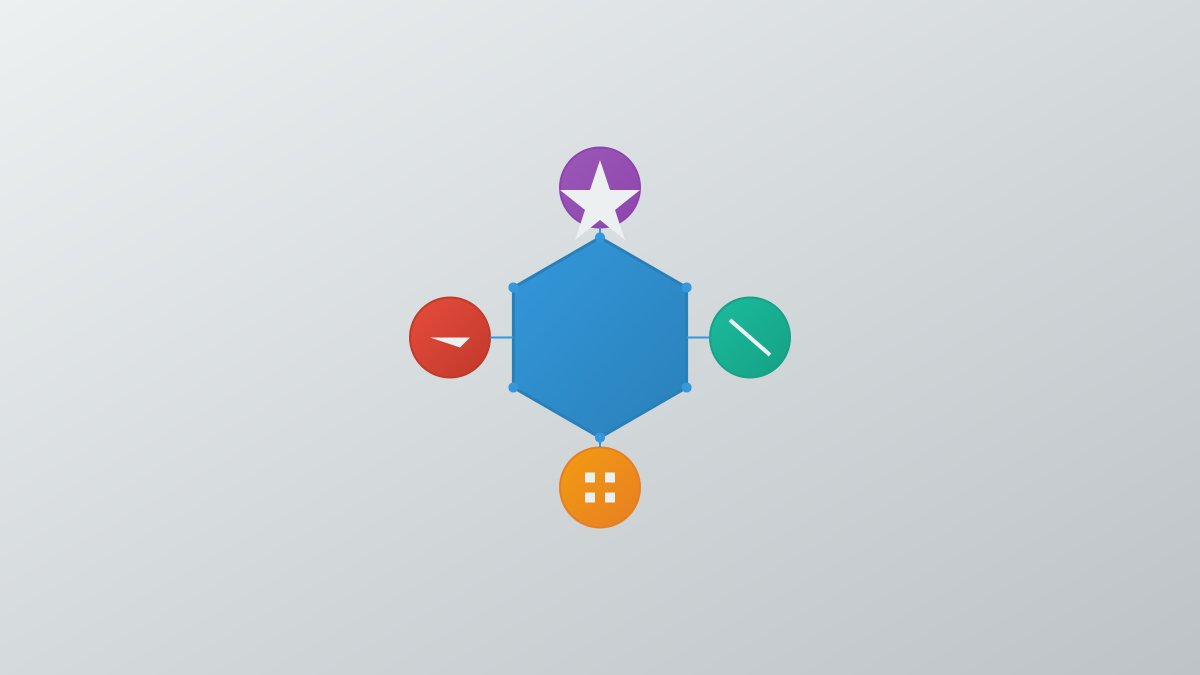
Cemini CCC uses a modular structure to organize knowledge around Claude Code's core extension mechanisms. Key modules include:

  • Workflow: Designing efficient AI-assisted development processes (task decomposition, context management, toolchain integration)
  • Agents: Customizing agent behavior (system prompt engineering, tool calls, multi-agent collaboration)
  • MCP Protocol: Interacting with external systems (message formats, state management, IDE/version control integration)
  • Hooks: Inserting custom logic at lifecycle nodes (auto-formatting, pre-commit checks)
  • Skills: Reusable function units (structure definition, registration, sharing)
  • Slash Commands: Quick interaction (built-in list, parameters, custom command creation)
  • OpenSpec Patterns: Structured goal definition (e.g., /goal·Ralph·OpenSpec for规范-compliant code generation)
4

Section 04

Community-Driven Knowledge Accumulation Model

As a meta-wiki, Cemini CCC relies on community collaboration:

  • Pattern Collection: Users share verified, reusable usage patterns from real projects
  • Anti-Pattern Recording: Documenting problematic practices to help others avoid pitfalls
  • Version Adaption: Tracking Claude Code's frequent updates, updating docs, and标注 version differences to maintain relevance
5

Section 05

Target Audience & Practical Value

Cemini CCC serves four main groups:

  • Advanced Users: Improve efficiency and customize workflows via workflow/skill guides
  • Team Leads: Design team-level integration using MCP protocol and Hooks docs
  • Tool Developers: Build extensions with Agents/Skills/Slash Commands references
  • Researchers: Study AI-assisted programming interaction patterns from the project's records
6

Section 06

Complementary Relationship with Official Docs

Cemini CCC complements rather than replaces Anthropic's official docs. Official docs provide authoritative feature descriptions and API references, while the community知识库 offers rich use cases, practical tips, and edge case solutions. This division mirrors open-source ecosystems: official docs stay stable, while community content adapts quickly to new discoveries.

7

Section 07

Key Features & Community Impact

Cemini CCC's standout features include:

  • Structured Organization: Clear分类 helps users quickly locate relevant content
  • Panoramic Coverage: From底层 MCP protocol to上层 user interaction patterns Its impact on the Claude Code community includes reducing advanced learning curves, providing a knowledge sharing platform, and serving as a feedback aggregation point for tool iteration.
8

Section 08

Conclusion & Recommendation

Cemini Claude Code CCC represents a community knowledge model for AI-assisted programming tools. In fast-iterating tech fields, official docs often miss advanced use cases—this project fills that gap. For developers aiming to master Claude Code, it’s a valuable resource worth bookmarking, as its patterns and best practices help users move from "using" to "mastering" the tool.

