Zing Forum

Reading

AYANAMI-AGENT: A Modular AI Agent System for Developers

AYANAMI-AGENT is a modular AI agent system designed for developers, using FastAPI as the backend and Next.js as the frontend, integrating the Groq high-speed inference engine, and providing code analysis, email automation, and intelligent assistant functions.


AI 代理FastAPINext.jsGroq代码分析开发者工具MongoDB模块化架构
Published 2026-05-22 00:45Recent activity 2026-05-22 00:53Estimated read 5 min
AYANAMI-AGENT: A Modular AI Agent System for Developers
1

Section 01

Introduction / Main Floor: AYANAMI-AGENT: A Modular AI Agent System for Developers

AYANAMI-AGENT is a modular AI agent system designed for developers, using FastAPI as the backend and Next.js as the frontend, integrating the Groq high-speed inference engine, and providing code analysis, email automation, and intelligent assistant functions.

2

Section 02

From Experiment to Product: The Evolution of AI Agents

The developers of AYANAMI-AGENT have gone through multiple iterative explorations before this. From the early AGENTE-IA, to IA-agent-with-tools that supports tool calls, then to the MCP protocol experimental project MCP-SERVER-PRO, each step accumulated architectural experience. AYANAMI-AGENT represents the culmination of this evolutionary path—reaching a new level of maturity in architectural design, tool integration, and engineering practice.

The core positioning of this project is very clear: to build an intelligent, context-aware automated assistant system for developers. It is not a general-purpose chatbot, but a specialized tool deeply focused on developers' workflows.

3

Section 03

Technical Architecture: Dual Considerations of Performance and Experience

The technology stack selection of AYANAMI-AGENT reflects the best practices of modern full-stack AI applications:

4

Section 04

Backend: FastAPI + Python 3.11+

There are several key reasons for choosing FastAPI as the backend framework:

  • Asynchronous Native: Python's async/await pattern naturally aligns with the I/O-intensive characteristics of AI agents
  • Type Safety: Pydantic models ensure clear and maintainable API contracts
  • Excellent Performance: FastAPI consistently ranks among the top in terms of performance among Python web frameworks
  • Rich Ecosystem: There are plenty of ready-made solutions for integration with services like MongoDB and Groq
5

Section 05

Frontend: Next.js + React + TypeScript

The frontend technology stack was also carefully selected:

  • Next.js: Provides server-side rendering, routing optimization, and deployment convenience
  • TypeScript: Full-stack type safety, reducing type errors during front-end and back-end integration
  • TailwindCSS: A utility-first styling solution that accelerates UI development
6

Section 06

Data Layer: MongoDB

Choosing MongoDB as the data storage reflects the pursuit of flexibility:

  • Document Model: The structure of agent states, user profiles, and session data is naturally suitable for document storage
  • Horizontal Scalability: Reserves expansion space for possible large-scale deployments in the future
  • Cloud-Native: MongoDB Atlas provides managed services, reducing operational burden
7

Section 07

Inference Layer: Groq

Groq is the "brain" of AYANAMI-AGENT, responsible for all agents' reasoning and generation tasks. The core reason for choosing Groq is speed—Groq's LPU (Language Processing Unit) architecture can provide response speeds several times faster than traditional GPU inference, which is crucial for real-time interactive developer tools.

8

Section 08

Agent System: A Collaborative Network with Specialized Division of Labor

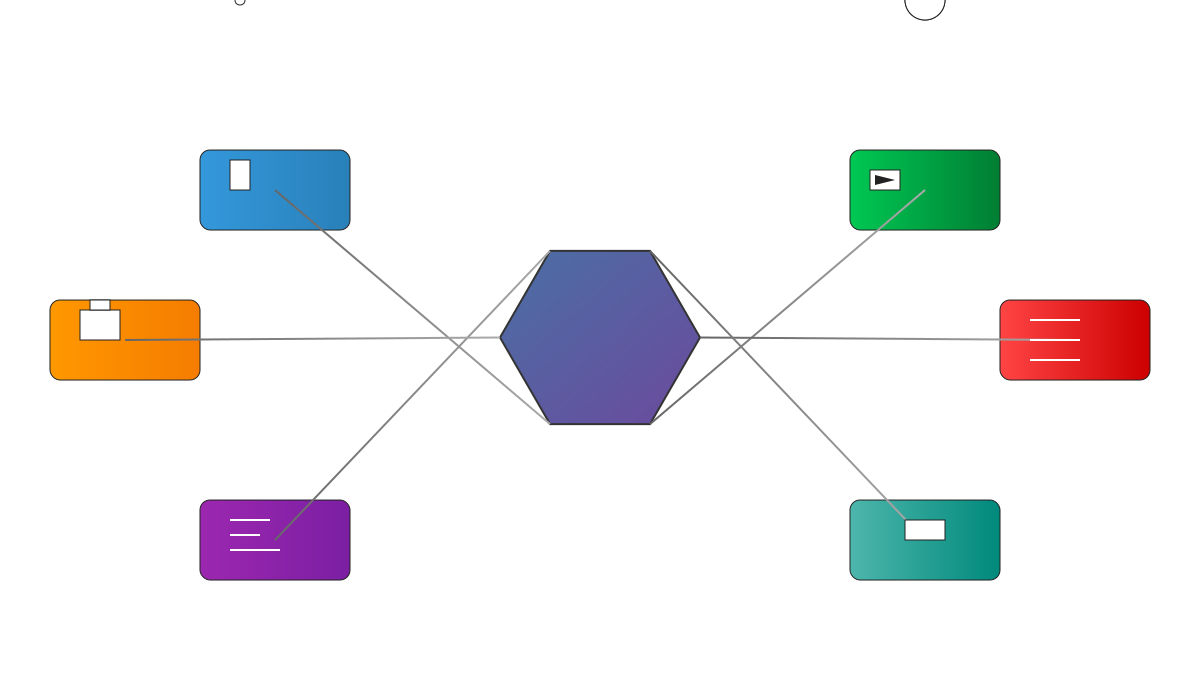
The core innovation of AYANAMI-AGENT lies in its modular agent architecture. Instead of relying on a single general-purpose model to handle all tasks, the system assigns different responsibilities to specialized agents:
