Zing Forum

Reading

AssistaFlow: Architecture Analysis of a Multi-Agent-Driven AI Content Management Platform

A full-stack AI-driven content management platform integrating multi-agent workflows, marketing campaign generation, Kanban task management, and other functions, exploring the deep application of AI in the content operation field

多智能体内容管理AI内容创作营销自动化Kanban团队协作内容运营工作流自动化全栈应用
Published 2026-06-04 23:15Recent activity 2026-06-04 23:27Estimated read 5 min
AssistaFlow: Architecture Analysis of a Multi-Agent-Driven AI Content Management Platform
1

Section 01

Introduction to the Core Analysis of the AssistaFlow Platform

AssistaFlow is a multi-agent-driven full-stack AI content management platform that integrates content creation, marketing campaign planning, task management, and other links. It solves problems such as fragmentation of content operation tools and inefficient collaboration. This article analyzes its architectural design and core functional value.


2

Section 02

Dilemmas of AI Application in the Content Operation Field

Content marketing teams face challenges such as complex workflows (information loss and delays in multi-link collaboration), fragmented tools (cumbersome switching between single-point tools), and the "last mile" problem of AI content (drafts require manual review and modification, making it difficult to maintain brand consistency and track effects).

3

Section 03

Design Philosophy of the Multi-Agent Architecture

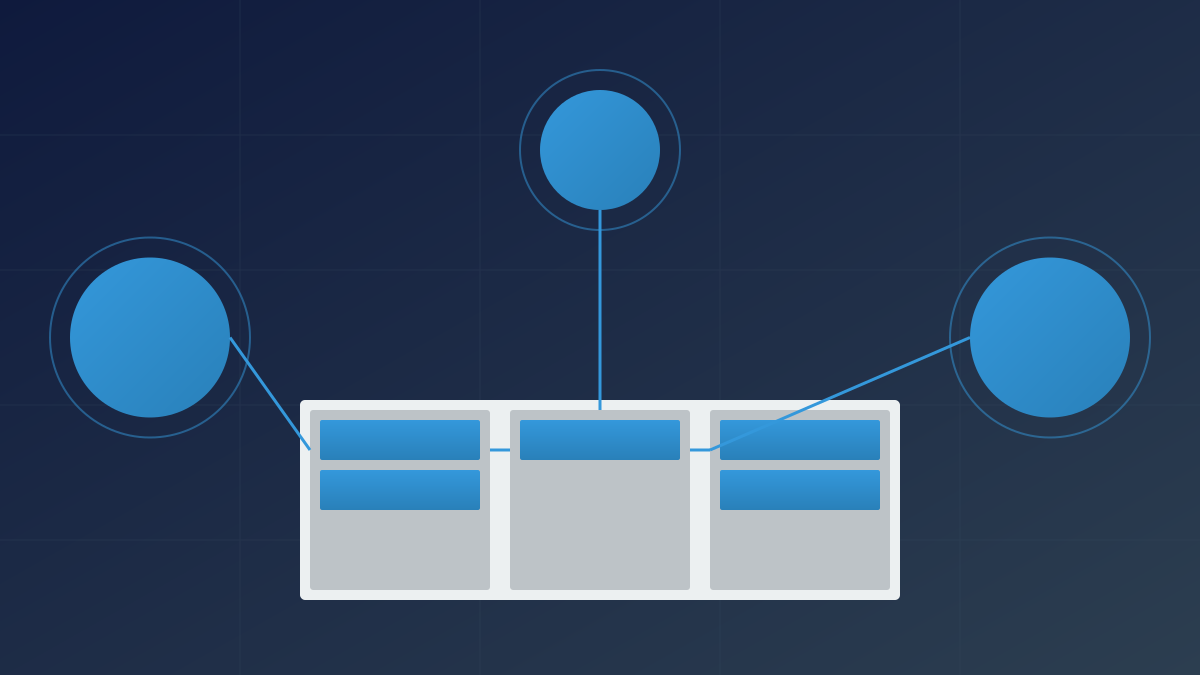
Adopting a multi-agent division of labor and collaboration model: The content planning agent is responsible for trend analysis and topic selection; the copywriting agent generates multi-form content; the visual design agent handles image layout; the data analysis agent tracks effect optimization. All agents complete the entire process through message bus linkage.

4

Section 04

Intelligent Process of Marketing Campaign Generation

After users input parameters such as target audience, the market/competitor analysis agent provides data support, and the creative planning agent generates themes; the content production agent generates content adapted to various channels in batches; the task scheduling agent automatically creates tasks on the Kanban board and assigns them to members.

5

Section 05

AI Enhancement of Kanban Task Management

Deep integration of Kanban and AI: Task cards are associated with AI drafts, and AI actively suggests actions; Kanban columns are configured with automated rules (such as triggering compliance checks during review); AI analyzes the causes of task dependency blockages, provides solutions, and identifies collaboration bottlenecks.

6

Section 06

Data Closed Loop and Continuous Optimization Mechanism

Integrating multi-channel data tracking, the AI analysis agent identifies high-performing content features and feeds them back to the planning/creative agents; supports A/B testing, where AI automatically designs plans, collects results, and generates reports to achieve a data-driven optimization closed loop.

7

Section 07

Application Scenarios and Value Manifestation

Applicable to marketing agencies (multi-client project management), enterprise teams (complete toolchain reduces dependencies), and self-media (AI undertakes basic work to improve efficiency). It reduces learning costs and switching costs, allowing small teams to produce professional results.

8

Section 08

Limitations and Future Outlook

Current limitations: Fluctuations in content quality, insufficient creative uniqueness, and lack of in-depth domain knowledge. Future directions: Multi-modal content generation, agent intent-level collaboration, providing reference for AI-native content operation platforms.

