Zing Forum

Reading

Agentic Social Media Workflow: AI-Driven Content Operation Automation

agentic-socmed-workflow is an open-source agentic workflow framework designed specifically for social media content operations. It leverages multi-agent collaboration to automate the entire process from content creation to publishing and analysis.

智能体工作流社交媒体运营内容自动化AI营销多智能体系统LangChain社媒管理数字营销
Published 2026-05-13 01:14Recent activity 2026-05-13 01:25Estimated read 8 min
Agentic Social Media Workflow: AI-Driven Content Operation Automation
1

Section 01

Introduction: Agentic Social Media Workflow — AI-Driven End-to-End Automation for Content Operations

agentic-socmed-workflow is an open-source agentic workflow framework designed specifically for social media content operations. It achieves end-to-end automation from content planning, creation, publishing to interaction management and data analysis through multi-agent collaboration. Its goal is to address the pain points of repetitive and time-consuming social media operations, improve efficiency, and support data-driven decision-making.


2

Section 02

Project Background: Pain Points of Social Media Operations and the Introduction of Agentic Workflow

Social media operation is a core component of modern digital marketing, but it involves dozens of repetitive and time-consuming tasks such as topic selection and planning, content creation, visual design, publishing scheduling, interaction management, and data analysis. The agentic-socmed-workflow project introduces the concept of "Agentic Workflow", using collaboration among multiple specialized AI agents to achieve end-to-end automation of content operations.

3

Section 03

System Architecture and Workflow Orchestration: Multi-Agent Collaboration Mechanism

System Architecture

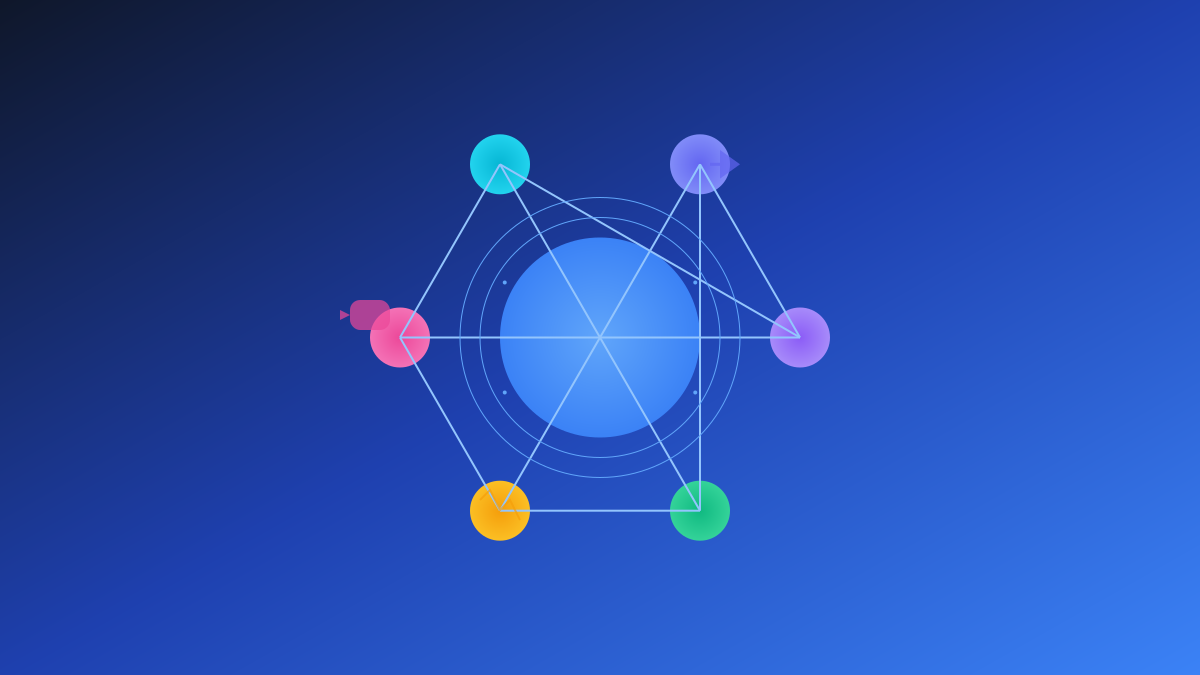
包含六大智能体:

  • Content Strategy Agent: Responsible for hot topic monitoring, audience analysis, content calendar development, and theme planning
  • Creation Agent: Generates platform-adapted copy, multi-version output, style adaptation, and SEO optimization
  • Visual Agent: Image generation, template application, video editing, and graphic layout
  • Publishing Agent: Timing optimization, platform adaptation, batch scheduling, and cross-promotion
  • Interaction Agent: Automatic replies, public opinion monitoring, community management, and private message handling
  • Analysis Agent: Data collection, performance analysis, insight generation, and strategy iteration

Workflow Orchestration

  • Event-Driven Architecture: Communicates via an event bus to trigger execution of each link
  • Human-Machine Collaboration Nodes: Manual review required for sensitive content, crisis public opinion, and major strategy adjustments
  • Feedback Loop: Results from each link are fed back to the system to support strategy iteration
4

Section 04

Technical Implementation: LangChain-Based Agent System and Multi-Platform Integration

Agent Framework

Built on LangChain/LangGraph, supporting tool calling, memory management, and ReAct/Plan-and-Execute reasoning modes

Integration Ecosystem

  • Content Platforms: Twitter/X API, LinkedIn API, Instagram Graph API, TikTok for Business
  • Creation Tools: OpenAI GPT-4, Claude, DALL-E, Midjourney API
  • Data Services: Google Analytics, social media analysis tools
  • Storage: PostgreSQL (structured data), Redis (cache/message queue)

Deployment Methods

  • Local deployment: Suitable for individual creators
  • Cloud deployment: AWS/GCP/Azure, supporting team expansion
  • SaaS mode: Hosted service, ready to use out of the box
5

Section 05

Application Scenarios: Covering Diverse Needs of Individuals, Brands, and Media

  • Individual Creators: Automatically monitor hot topics, batch generate multi-platform content, optimize publishing time, and auto-reply to common questions
  • Brand Marketing Teams: Ensure consistent brand tone, coordinate multi-account and multi-platform messaging, real-time public opinion monitoring, and data-driven strategy optimization
  • Media Organizations: Quickly follow hot topics, generate multilingual content, personalized recommendations, and enhance user stickiness
6

Section 06

Advantages and Limitations: Efficiency Improvement and Current Challenges

Core Advantages

  • Efficiency improvement: 5-10x increase in work efficiency
  • 24/7 operation: Continuous monitoring and response
  • Data-driven: Decisions supported by data
  • Scalability: Easily manage multiple accounts and content

Current Limitations

  • Creative ceiling: Breakthrough creativity relies on humans
  • Context understanding: Cultural nuances and tone control need improvement
  • Platform dependency: API restrictions affect functional completeness
  • Ethical considerations: Automated interactions require careful handling of authenticity and transparency
7

Section 07

Best Practice Recommendations: Gradual Adoption and Humanization Balance

  • Gradual Adoption: Expand step by step from assisted creation → publishing automation → interaction automation
  • Maintain Humanization: Regular manual spot checks of content, retain real-person replies for key interactions, and label AI-assisted creations
  • Continuous Optimization: Review characteristics of high-performing content, adjust agent strategy parameters, and update platform algorithm adaptation strategies
8

Section 08

Future Outlook: New Trends in AI-Driven Social Media Operations

With the development of multimodal models, real-time video generation, and digital human technologies, future social media operations will become more intelligent:

  • Real-time generation of personalized content
  • 24/7 live streaming by AI digital humans
  • Automatic adaptation and re-creation of cross-platform content
  • Predictive content strategies to pre-layout topics Mastering Agentic workflows will become a core competency, enabling human-machine collaboration to unleash creativity

