Zing Forum

Reading

BidForge: A Distributed System-Based Automated Tender Proposal Generation Platform

BidForge is a distributed system that enables automated tender proposal generation by orchestrating multiple LLM intelligent agents, covering core functions such as requirement extraction, semantic inventory matching, and competitive pricing analysis.

BidForge投标自动化LLM代理分布式系统智能合约商业智能自动化文档生成
Published 2026-04-06 15:45Recent activity 2026-04-06 15:52Estimated read 5 min
BidForge: A Distributed System-Based Automated Tender Proposal Generation Platform
1

Section 01

BidForge: Guide to the Distributed LLM Agent-Driven Tender Automation Platform

BidForge is an automated tender proposal generation platform based on a distributed system architecture. It achieves end-to-end automation from requirement understanding to proposal delivery by orchestrating multiple LLM intelligent agents. Its core functions include requirement extraction, semantic inventory matching, competitive pricing analysis, and proposal generation, aiming to address pain points of traditional tendering such as time-consuming, labor-intensive processes and low efficiency.

2

Section 02

Market Demand and Technical Challenges of Tender Automation

The traditional tendering process is complex (including requirement understanding, resource evaluation, pricing strategy, and proposal writing), and its high reliance on manual work leads to low efficiency and high error rates. There is an urgent need for shorter response times. Technically, it needs to address challenges such as complex document understanding, multi-dimensional information integration, knowledge precipitation and reuse, and quality control.

3

Section 03

BidForge's Distributed Intelligent Agent Architecture

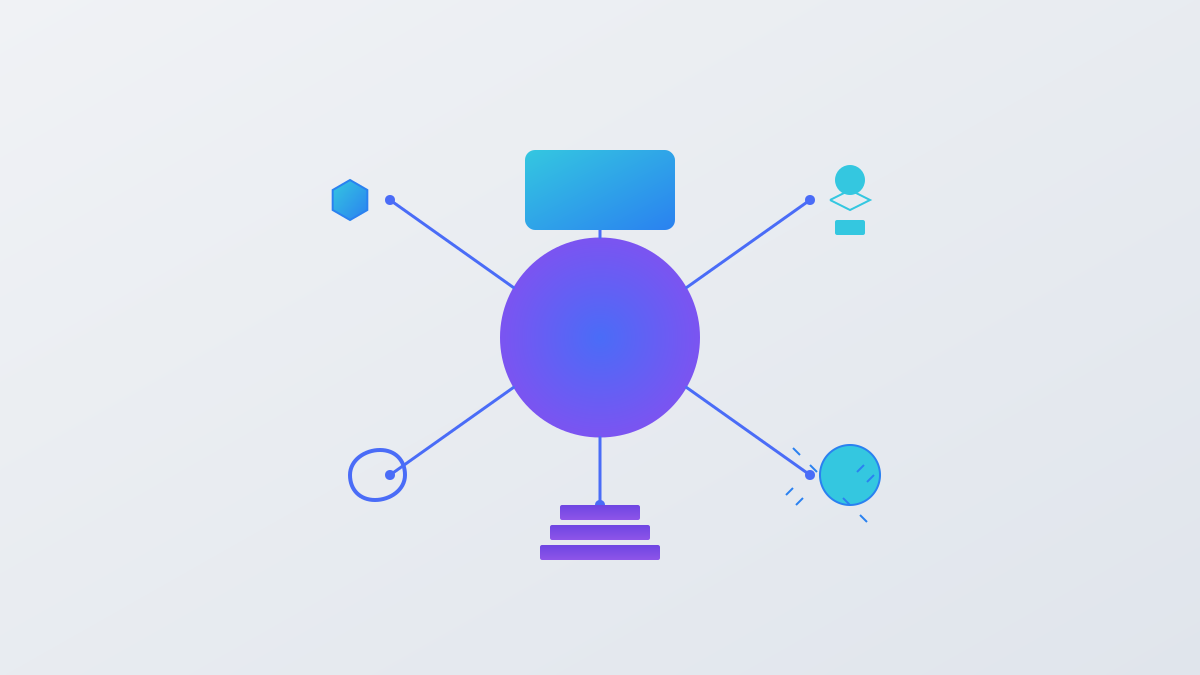
It adopts a multi-agent collaboration architecture. Core agents include: Requirement Extraction Agent (parses tender documents to extract structured information), Semantic Inventory Matching Agent (matches enterprise resources with requirements), Competitive Pricing Analysis Agent (formulates quotes that balance cost, profit, and competition), and Proposal Generation Agent (generates professional tender documents). All agents collaborate through a distributed coordination mechanism.

4

Section 04

Core Technical Capabilities and Implementation Details

It comprehensively applies cutting-edge AI technologies: 1. LLM as the agent's brain, optimized for specific tasks; 2. RAG technology integrates enterprise knowledge bases to improve matching accuracy; 3. Workflow orchestration manages agent dependencies and exceptions; 4. Knowledge graphs structurally organize domain information to enhance semantic understanding and reasoning.

5

Section 05

Application Scenarios and Business Value

Application scenarios cover industries requiring tendering such as IT services, engineering construction, and consulting services. Business value includes: efficiency improvement (shortening tender preparation time), quality improvement (reducing human errors), knowledge precipitation (transforming individual experience into organizational assets), and decision support (data-driven tender decisions).

6

Section 06

Technical Development Trends and Industry Impact

Technical trends: Enhanced multimodal capabilities (processing multi-form documents such as charts), improved collaboration capabilities (supporting human-machine/cross-department collaboration), and adaptive learning (optimizing strategies from tender results). Industry impact: Freeing professionals to focus on high-value work, changing the industry competition pattern, and making tender response capability a core competitiveness.