Zing Forum

Reading

New RPG Localization Solution: Automated Translation Tool Based on Large Language Models

Exploring how to use Python and large language models to implement automated translation of RPG Maker MV game dialogues, supporting multilingual localization and multiple AI endpoints

RPG Maker MV游戏本地化机器翻译大语言模型独立游戏PythonOpenAI游戏开发AI翻译
Published 2026-05-01 12:14Recent activity 2026-05-01 12:22Estimated read 5 min
New RPG Localization Solution: Automated Translation Tool Based on Large Language Models
1

Section 01

[Introduction] New RPG Localization Solution: Automated Translation Tool Based on Large Language Models

This article introduces an open-source automated translation tool for RPG Maker MV games. The tool uses Python and large language models (such as GPT, Claude, etc.) to address the language localization pain points faced by indie game developers. It supports multilingual translation and integration with multiple AI endpoints, aiming to achieve near-human quality localization at low cost, helping developers break language barriers and reach global players.

2

Section 02

[Background] Pain Points of Indie Game Localization and Opportunities from Large Language Models

The main obstacle for indie game developers to bring their works to the global market is language localization. Traditional translation requires a lot of time and money, and the quality of machine translation is inconsistent. The RPG Maker MV developer community has long faced language barrier issues. With the maturity of large language models like GPT and Claude, which can understand context, capture emotions, and handle proper nouns, they bring a qualitative leap to game localization, leading to the emergence of the open-source tool rpgmaker-mv-ai-translate.

3

Section 03

[Methodology] Technical Architecture Analysis of the Tool

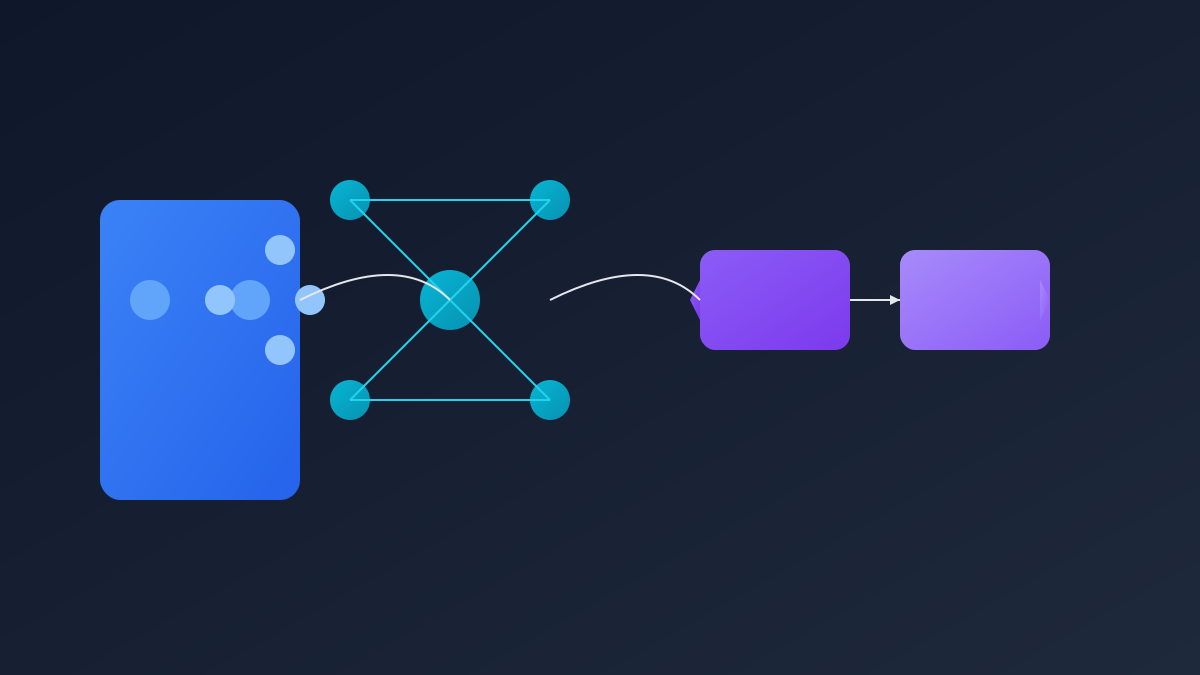
The core idea of the tool is "Precise Extraction, Intelligent Translation, Lossless Backfilling", with a four-layer architecture:

  1. Data Parsing Layer: Extracts JSON data from RPG Maker MV (map events, dialogues, databases, etc.) while preserving structural information;
  2. Context-Aware Translation Engine: Builds dialogue context, supports terminology consistency, tone preservation, and format protection;
  3. Multi-Endpoint Support: Compatible with OpenAI API, third-party services, and local open-source models (Ollama, vLLM);
  4. Quality Verification: Length detection, character set check, consistency review, forming a closed loop of "Generation - Review - Optimization".
4

Section 04

[Evidence] Practical Application Effects and Community Feedback of the Tool

Community feedback shows that the tool significantly improves efficiency (projects that took weeks are shortened to days), the fluency of translations is better than traditional machine translation, and it reduces manual proofreading workload. Innovative uses by developers include: multilingual synchronous development, A/B testing of translation versions, and a human-machine collaboration model of AI first draft + community polishing.

5

Section 05

[Notes] Limitations of the Tool and Usage Precautions

When using the tool, note the following:

  • Cultural Adaptability: AI struggles with content involving cultural differences such as jokes and puns, which need manual adaptation;
  • Creative Text: Special texts like poems and riddles are recommended to be manually checked;
  • Cost: Large model API fees need to be included in the budget;
  • Compliance: Understand the review regulations for AI-translated content in the target market.
6

Section 06

[Conclusion] Significance of the Tool for the Indie Game Ecosystem and Future Outlook

This tool lowers the threshold for indie game globalization, allowing small teams/individual developers to implement multilingual localization and enrich the game market ecosystem. Its "domain-specific AI tool" approach is worth learning from. In the future, with technological progress, it is expected to build a more open and diverse global game creation ecosystem where language is no longer a boundary to imagination.