Zing Forum

Reading

Hands-On Machine Learning Project for Diabetes Prediction with Multi-Algorithm Comparison

A complete machine learning project that uses multiple classification algorithms including logistic regression, random forest, SVM, XGBoost, and neural networks to predict diabetes, covering full workflows of data preprocessing, feature engineering, and model optimization.

糖尿病预测机器学习分类算法医疗AIXGBoost随机森林神经网络数据预处理超参数优化模型评估
Published 2026-05-22 19:43Recent activity 2026-05-22 19:52Estimated read 4 min
Hands-On Machine Learning Project for Diabetes Prediction with Multi-Algorithm Comparison
1

Section 01

[Introduction] Core Overview of the Hands-On Machine Learning Project for Diabetes Prediction with Multi-Algorithm Comparison

This article introduces an open-source machine learning project that implements diabetes prediction using multiple algorithms including logistic regression, random forest, SVM, XGBoost, and neural networks, covering the entire workflow of data preprocessing, feature engineering, model optimization, and multi-dimensional evaluation. The project aims to provide a reference for medical data analysis, with both practical application value and learning example significance.


2

Section 02

Project Background and Dataset Characteristics

Diabetes prediction is a binary classification problem that can assist in early screening and intervention. The project uses a dataset containing features such as demographics (gender, age), health status (hypertension, heart disease), lifestyle (smoking history), and physiological/biochemical indicators (BMI, HbA1c, blood glucose), with the target variable being a binary label indicating diabetes status.

3

Section 03

Data Preprocessing and Feature Engineering Steps

The project handles missing values through exploratory analysis; encodes categorical variables such as gender and smoking history; standardizes numerical features using StandardScaler; generates a correlation matrix to analyze feature relationships and guide feature selection.

4

Section 04

Model Selection and Hyperparameter Optimization

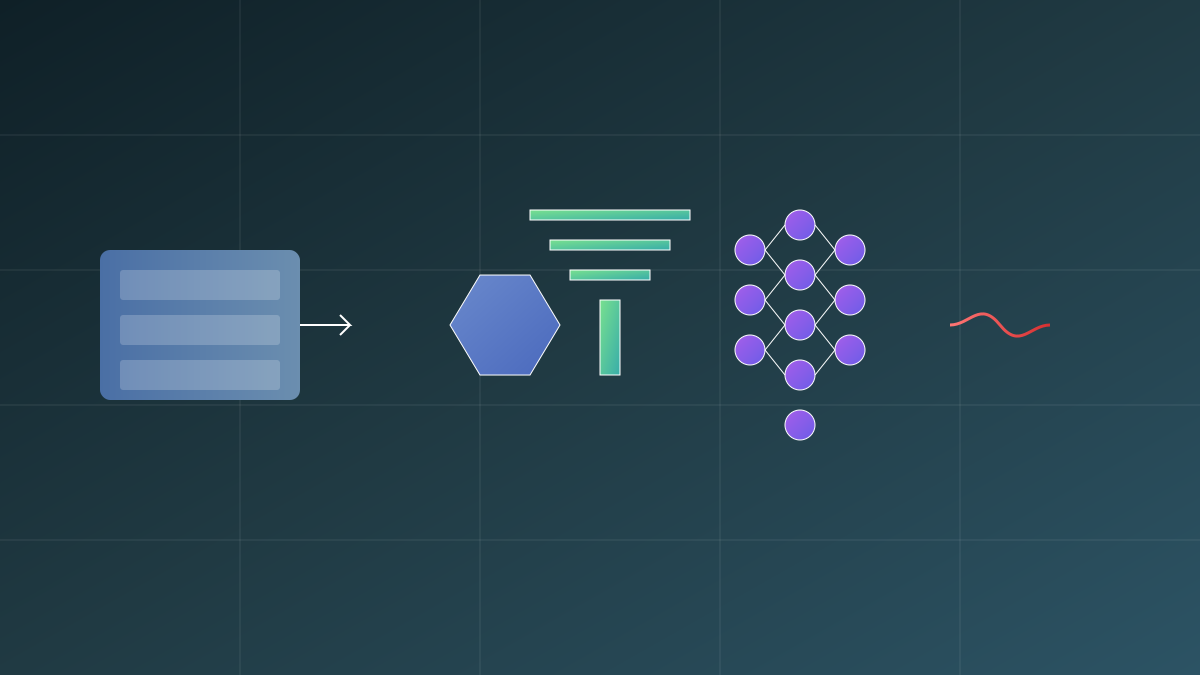
Implements 9 algorithms: traditional ML (logistic regression, decision tree, random forest, SVM, KNN, Naive Bayes), gradient boosting (XGBoost), and deep learning (MLP neural network). Uses GridSearchCV combined with cross-validation for hyperparameter tuning to ensure optimal model performance.

5

Section 05

Multi-Dimensional Model Evaluation System

Evaluates models using accuracy, precision, recall, F1 score, and confusion matrix. Recall is particularly important in medical scenarios (high cost of missed diagnosis), so models suitable for practical applications are selected based on comprehensive indicators.

6

Section 06

Project Outcomes and Practical Application Value

Generates visualization results such as dataset preview, correlation heatmap, confusion matrix, and model accuracy comparison chart. Application values include: integration into physical examination systems for early screening, assisting doctors in diagnosis, and guiding health education through feature importance.

7

Section 07

Expansion Directions and Learning Reference Significance

Future explorations can include complex neural networks, Web deployment (Flask/Django), real-time prediction, model interpretability (SHAP/LIME), and cloud deployment. For beginners, it provides learning value such as end-to-end workflow, multi-algorithm comparison, real medical data practice, and engineering best practices.

