Zing Forum

Reading

Argus: A Multi-Source Search Proxy for AI Agents, Integrating Five Major Search Engines

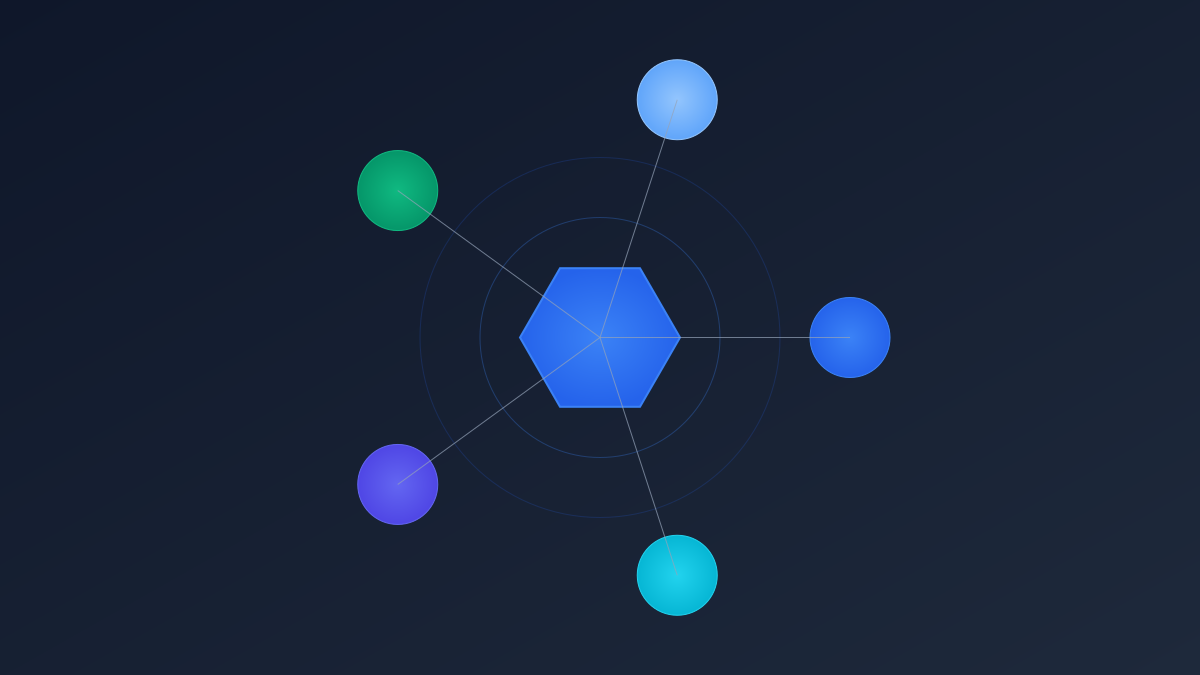
Argus is an open-source multi-provider search proxy that offers a unified search interface for AI agents. It supports five major search sources: SearXNG, Brave, Serper, Tavily, and Exa, and features intelligent routing, RRF result ranking, budget control, and content extraction. It only relies on SQLite and requires no external databases.

AI Agent搜索代理多源搜索SearXNGBrave SearchTavilyExaSerperRRF排序内容提取
Published 2026-04-02 06:28Recent activity 2026-04-02 06:49Estimated read 6 min
Argus: A Multi-Source Search Proxy for AI Agents, Integrating Five Major Search Engines
1

Section 01

Argus: Open-Source Multi-Source Search Proxy for AI Agents

Argus is an open-source multi-provider search proxy designed for AI Agents, offering a unified interface to 5 mainstream search sources: SearXNG, Brave, Serper, Tavily, Exa. It solves common pain points in AI Agent development—such as choosing between multiple search APIs, balancing cost and effect, and graceful degradation when services fail—with features like smart routing, RRF result sorting, budget control, content extraction, and lightweight deployment relying only on SQLite (no external databases).


2

Section 02

Background & Design Philosophy

Created by developer Khamel83 and licensed under MIT, Argus follows three core design principles:

  • Unified: Encapsulates 5 search providers into a consistent interface, allowing seamless switching or expansion without modifying business code.
  • Smart: Uses scenario-based routing (4 modes: discovery, recovery, grounding, research) to prioritize low-cost providers and auto-degrade when needed.
  • Lightweight: Relies only on SQLite for storage, making deployment simple (via Docker) for individuals and small teams.
3

Section 03

Core Features

Multi-Provider Routing

Supports 5 providers with unique strengths (e.g., SearXNG: free/open-source; Serper: LLM-optimized Google search) and 4 scenario-specific modes with predefined provider call orders (e.g., discovery mode: searxng→brave→exa→tavily→serper).

RRF Result Sorting & Deduplication

Uses Reciprocal Rank Fusion (RRF) algorithm to merge results from multiple sources, with smart deduplication for clean output.

Content Extraction & Cache

  • Local Trafilatura extractor (fallback to Jina Reader)
  • Multi-level cache (memory + SQLite, TTL=168h)

Session Support

Context-aware via session_id to remember query history for precise follow-up results.

Budget Control

Tracks API usage for each provider and warns when approaching limits (supports token-based services like Jina Reader).

4

Section 04

Deployment & Usage

HTTP API

FastAPI-based RESTful API with endpoints like /api/search, /api/extract, /api/budgets (OpenAPI docs available).

CLI

Commands for search (with mode/session), content extraction, and budget management (e.g., argus search -q "Python web framework" --mode research).

MCP Protocol

Supports Model Context Protocol for integration with AI tools like Claude Code.

Python SDK

Async SDK for Python developers (example code to execute discovery-mode searches).

5

Section 05

Technical Architecture

Argus has a modular structure:

  • core: TTL cache, sliding window limiter
  • broker: Core routing, result sorting/deduplication
  • providers: Adapters for 5 search engines
  • extraction: URL content extraction
  • sessions: Session storage management
  • api: FastAPI service implementation
  • cli: Click-based command line interface
  • mcp: MCP server implementation
  • persistence: SQLite data persistence layer This design makes it easy to extend (e.g., add new providers or storage backends).
6

Section 06

Application Scenarios

Argus is ideal for:

  1. AI Agent development (reliable search without multi-source integration)
  2. Cost-sensitive apps (smart routing & budget control minimize API costs)
  3. Privacy-first deployment (self-host with SearXNG)
  4. Research/content aggregation (multi-source search + extraction)
  5. Link recovery (recovery mode to retrieve invalid URLs)
7

Section 07

Conclusion & Project Link

Argus abstracts complex multi-source search integration into a simple, reliable service for AI Agents. It prioritizes developer experience with zero external dependencies, cost control, and diverse access methods. For AI Agent developers or those needing robust search capabilities, Argus is a strong choice. Project GitHub: https://github.com/Khamel83/argus

