Zing 论坛

正文

AI SDK:简化大语言模型集成,打破供应商锁定困境

AI SDK项目致力于解决将大语言模型集成到应用中的复杂性,提供统一的抽象层,帮助开发者摆脱对特定模型供应商的依赖。

AI SDKLLM集成供应商锁定API抽象多模型策略AI开发工具标准化模型路由
发布时间 2026/04/19 18:07最近活动 2026/04/19 18:24预计阅读 6 分钟
AI SDK:简化大语言模型集成,打破供应商锁定困境
1

章节 01

AI SDK: Simplifying LLM Integration & Breaking Vendor Lock-in

The AI SDK project addresses the complexity of integrating large language models (LLMs) into applications and solves the vendor lock-in problem. It provides a unified abstraction layer, allowing developers to interact with various LLM providers (OpenAI, Anthropic, Google, open-source models) using a consistent interface, thus reducing development complexity and enabling flexible model switching.


2

章节 02

LLM Integration: The Fragmentation Dilemma

Each LLM provider offers distinct APIs with differences in authentication (API Key, OAuth, service accounts), request formats (JSON structure, parameter names), error handling (HTTP status codes, retry strategies), and advanced features (function calls, structured output). This fragmentation increases development and maintenance burdens—supporting multiple vendors requires separate adaptation code, and frequent updates to provider APIs add to the workload.

3

章节 03

AI SDK's Core Value: Unified Abstraction

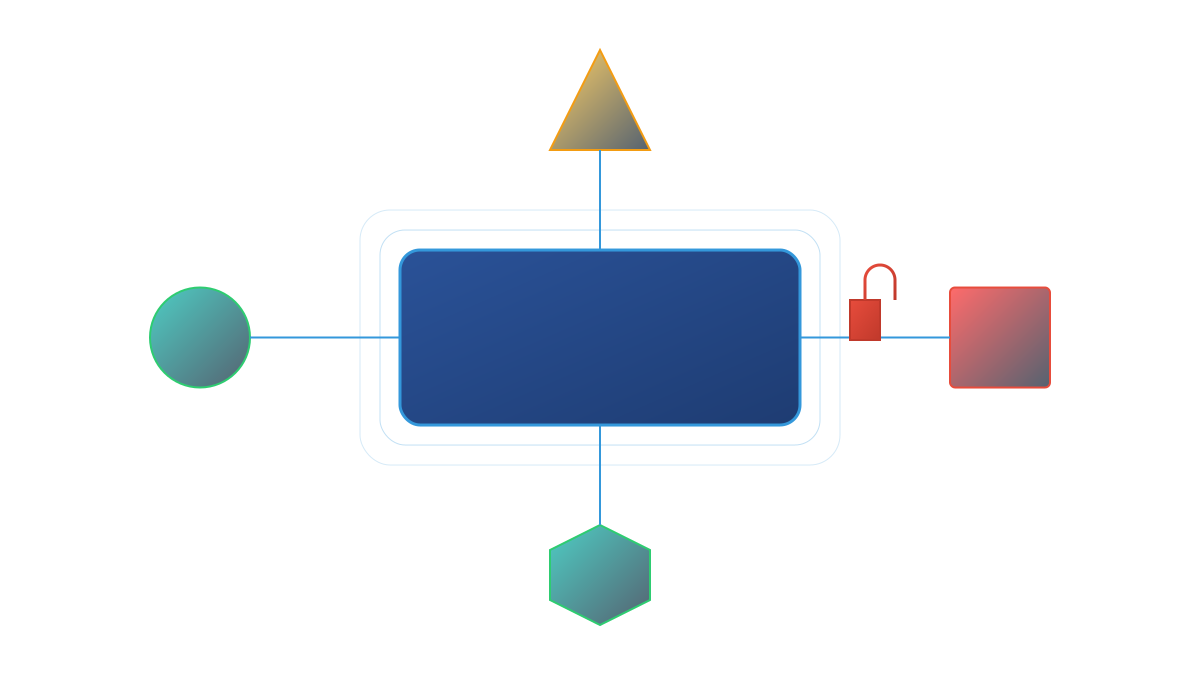
AI SDK acts as a 'universal adapter' for LLMs, similar to JDBC for databases. Its unified interface brings multiple benefits: developers learn one API to use any supported model; switching or adding vendors only requires configuration changes (no business logic rewrite); and applications gain flexibility to choose models based on cost, performance, or privacy needs.

4

章节 04

Key Technical Considerations for AI SDK

Designing AI SDK requires balancing unified abstraction with vendor-specific features. Core technical challenges include handling diverse streaming response protocols (SSE, WebSocket), cross-vendor function call compatibility, type-safe structured output (JSON Schema validation), standardized error/retry handling (rate limits, timeouts), and performance optimizations (connection pooling, request batching, caching).

5

章节 05

Breaking Vendor Lock-in with AI SDK

AI SDK eliminates vendor lock-in by allowing model switching without modifying core business logic (e.g., from GPT-4 to Claude 3 or open-source models). It enables multi-model strategies like 'model routing'—dynamically selecting models based on task complexity (small models for simple queries, large models for reasoning), cost, or data sensitivity (local open-source models for sensitive data).

6

章节 06

LLM Ecosystem: Moving Towards Standardization

The AI SDK reflects the LLM ecosystem's shift from closed to interoperable systems. Similar to cloud computing (where standards like Docker/Kubernetes replaced proprietary APIs), LLMs are moving toward standardization. Developers and enterprises demand interoperability to avoid vendor lock-in, making AI SDK a key step in this evolution.

7

章节 07

AI SDK Use Cases & Best Practices

Key use cases: 1) Prototype development (quickly test multiple models); 2) Multi-tenant SaaS (support diverse customer model preferences/compliance);3) Cost-sensitive apps (auto-switch to cheaper models during high load). Best practices: Treat AI SDK as infrastructure; build domain-specific abstractions (encapsulate prompts, output parsing, error handling) to insulate business code from SDK changes.

8

章节 08

Limitations & Future Outlook of AI SDK

AI SDK has limitations: it can't eliminate inherent model capability differences (e.g., GPT-4-optimized prompts may not work well on other models), may add performance overhead as an abstraction layer, and struggles to standardize rapidly evolving advanced features. However, as LLMs become infrastructure, the need for standardized integration tools like AI SDK will grow, making it a critical choice for building robust, future-proof AI applications.

