Zing Forum

Reading

From 2D Blueprints to 3D Practice: Innovation of YOLOv8-Driven Tactical Training Simulation System

This article introduces an automated 2D blueprint-to-3D tactical training simulation system based on the YOLOv8 object detection model. Using deep learning technology, the system converts architectural floor plans into interactive, immersive training environments, providing security forces with an efficient and low-cost solution for tactical drills.

YOLOv8战术训练蓝图转换三维模拟安全部队深度学习Unity引擎游戏化训练目标检测计算机视觉
Published 2026-04-08 08:00Recent activity 2026-04-10 00:03Estimated read 6 min
From 2D Blueprints to 3D Practice: Innovation of YOLOv8-Driven Tactical Training Simulation System
1

Section 01

[Main Post] YOLOv8-Driven Tactical Training Simulation System: Innovation from 2D Blueprints to 3D Practice

This article introduces an automated 2D blueprint-to-3D tactical training simulation system based on the YOLOv8 object detection model. Using deep learning technology, the system converts architectural floor plans into interactive, immersive training environments. It addresses issues in traditional tactical training such as high costs, fixed scenarios, and restrictions on training in real locations, providing security forces with an efficient and low-cost solution for tactical drills. Combined with the Unity engine and gamified design, it enhances training effectiveness.


2

Section 02

Background: Dilemmas Faced by Traditional Tactical Training

Traditional tactical training faces many challenges: high costs for constructing physical training venues (rental, renovation, equipment purchase); fixed scenarios that make it difficult to simulate complex real environments; high costs, operational disruptions, and safety risks when training in specific buildings like airports or shopping malls. How to quickly build diverse training environments at low cost has become an urgent problem to solve.

3

Section 03

Technical Approach: Core Applications of YOLOv8 and Unity Engine

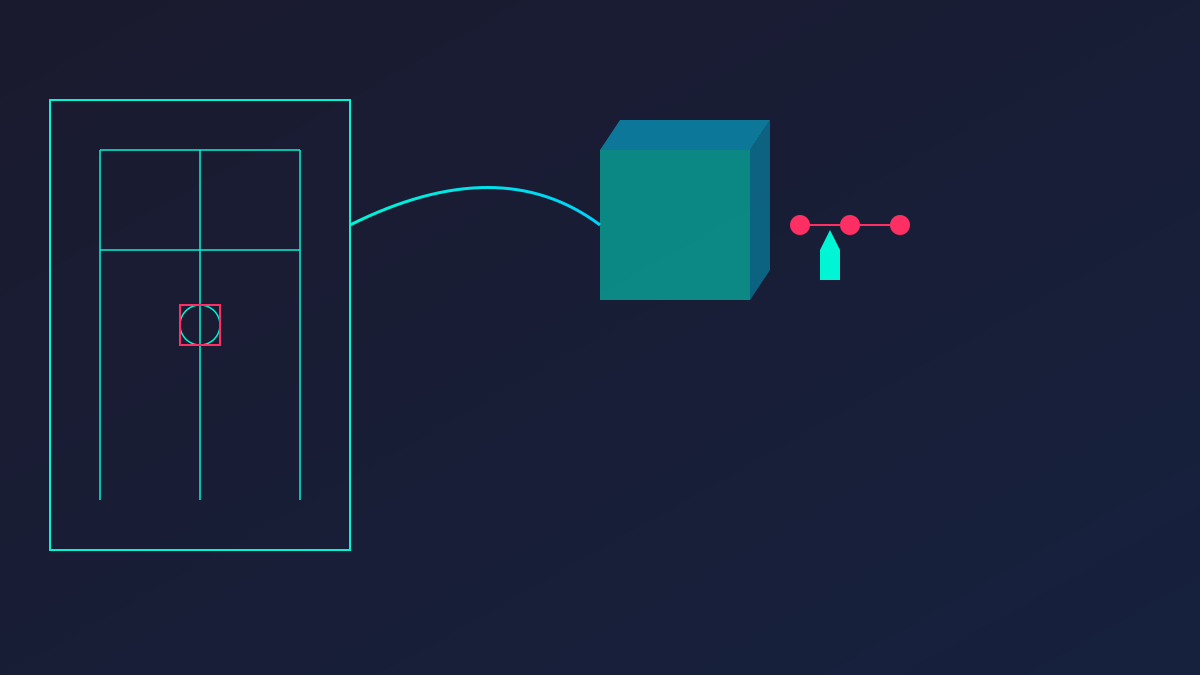
The core of the system's technical path is to use computer vision and deep learning to convert 2D blueprints into 3D environments. Key components include: 1. The YOLOv8 model identifies elements like walls, doors, windows, and stairs in blueprints, solving the problem of weak generalization ability of traditional rule-based methods. It learns to extract visual features through labeled data and generates 3D geometries; 2. The Unity engine builds immersive environments, supporting lighting simulation, dynamic NPCs, action data recording, and cross-platform deployment (PC, VR headsets).

4

Section 04

Gamified Design: Enhancing Training Engagement and Practicality

The system introduces gamified design to enhance training effectiveness: setting time challenges, scoring, scenario modes, etc., to increase fun and competitive awareness; supporting offline operation to meet training needs in remote areas or network-restricted environments, enhancing practicality.

5

Section 05

Experimental Verification: Dual Optimization of Efficiency and Cost

Experimental verification shows significant advantages of the system: in terms of time efficiency, automated conversion takes only a few minutes, much faster than manual modeling which takes days/weeks; in terms of cost, it reduces labor costs (no need for professional modelers); in terms of training effectiveness, pre-trained units perform better in real drills than those trained traditionally.

6

Section 06

Future Outlook: Development Direction of Intelligent Training

Future development directions include: multi-modal large models combining photos, videos, and point cloud data to build more realistic environments; reinforcement learning AI opponents dynamically adjusting training difficulty; VR/AR technology enhancing immersion; cloud computing and edge computing enabling flexible deployment (cloud streaming, local operation).

7

Section 07

Conclusion: Value and Significance of Technological Innovation

This system is an important technological innovation in the field of security training. Combining computer vision, deep learning, and game engines, it addresses traditional pain points, provides security forces with cost-effective training methods, and explores the application possibilities of AI in professional fields. Future tactical training will be more intelligent and personalized, and open-source frameworks like YOLOv8 will drive industry progress.

