Zing Forum

Reading

QueAI: A Unified Management Platform for Local Open-Source AI Modules

An open-source solution for centrally managing, installing, and combining AI modules (Chat, RAG, STT, TTS, OCR, etc.) on local computers without relying on cloud services

本地AI开源工具Docker模块化隐私保护DjangoTraefikAI管理
Published 2026-06-04 02:40Recent activity 2026-06-04 02:49Estimated read 6 min
QueAI: A Unified Management Platform for Local Open-Source AI Modules
1

Section 01

QueAI: Local Open-Source AI Module Management Platform (Main Thread)

QueAI is an open-source solution for centrally managing, installing, and combining AI modules (Chat, RAG, STT, TTS, OCR, etc.) on local computers without cloud dependency. It emphasizes data privacy and user control over resources. The project is hosted on GitHub (queai-project/QueAI) and is preparing for v1.0 release. Key technologies include Docker (modularity), Django (core management), Traefik (routing), and SQLite (storage).


2

Section 02

Project Background & Core Vision

Most users and enterprises face a dilemma: choosing between expensive commercial cloud services or fragmented, hard-to-deploy open-source AI tools. QueAI aims to solve this by building a local AI module management platform. Its core vision is "decentralized AI"—letting users fully control their data and compute resources while enjoying AI convenience, which aligns with growing data privacy concerns.

3

Section 03

System Architecture & Technical Design

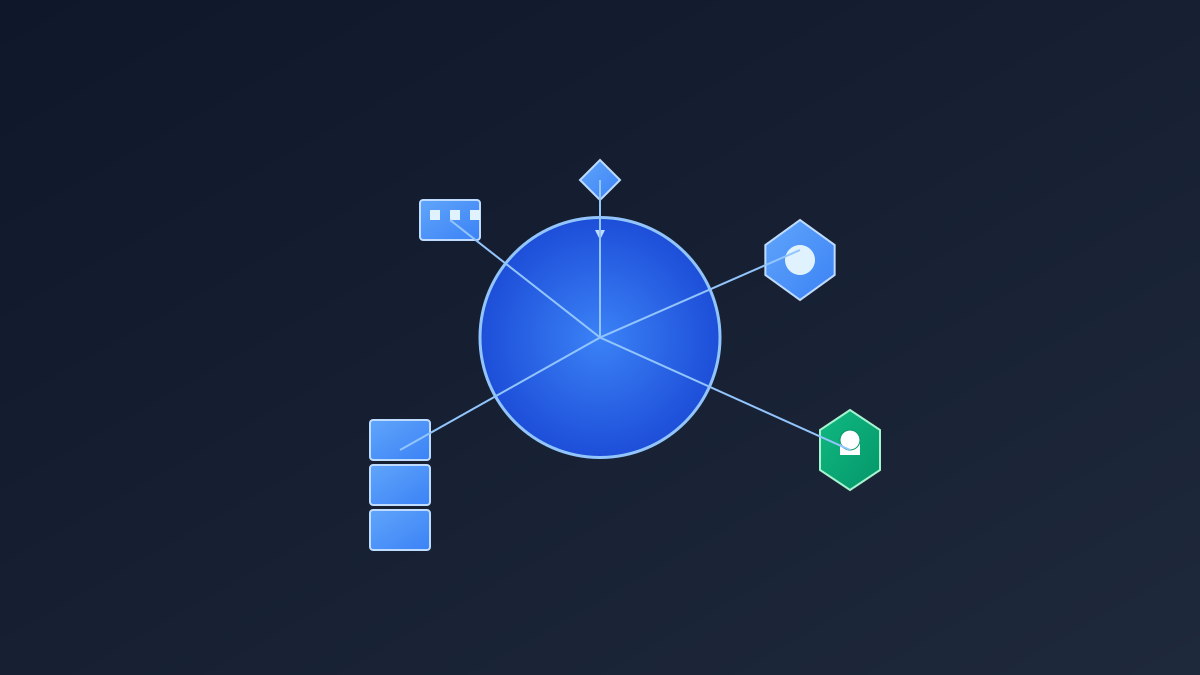
QueAI uses a modular marketplace architecture with Docker containers. Key components:

  • Django Kernel: Backend with web UI for module discovery, installation, configuration, and monitoring (interacts via Docker API).
  • Traefik: Reverse proxy routing requests to different modules (unified entry point).
  • Plugin System: AI modules as independent FastAPI container services (communicate via queai_network).
  • SQLite: Lightweight local database for module catalog and configuration (no extra database dependency).
4

Section 04

Features & Supported AI Modules

Module management features:

  • Auto discovery/install (from local plugins, remote marketplace, Git URL).
  • Visual configuration (web UI for .env files, auto restart containers on config save).
  • Real-time monitoring (CPU/memory/network) and independent module logs. Supported AI modules: Chat (local LLM), RAG (local knowledge base), STT, TTS, OCR—allowing custom AI workflow combinations.
5

Section 05

Deployment & Installation Guide

Installation options:

  1. One-click script: curl -fsSL https://raw.githubusercontent.com/queai-project/QueAI/main/install.sh | bash (supports --dry-run, --unattended, --dir).
  2. Manual install: Clone repo → copy .env.example → docker compose up. System requirements: Docker Engine + Compose v2, Git; supports Linux (Debian/Ubuntu, Fedora/RHEL, Arch), macOS, Windows (WSL2). Web endpoints: Hub (8080/), Manager (8080/manager/), Marketplace (8080/marketplace/), Monitor (8080/monitor/), Traefik Dashboard (9090/dashboard/). Port customizable via QUEAI_PORT in .env.
6

Section 06

Plugin Development & Ecosystem

QueAI has a complete plugin development specification (docs cover module structure, manifest.json, docker-compose.yml, Traefik integration). Plugin development steps: create module directory → write service code → configure manifest → define env template → test integration. Open architecture encourages community contributions to build a healthy ecosystem.

7

Section 07

Project Status & Roadmap

Current state: Preparing v1.0 release. Roadmap:

  • Stage1: Improve basic features (auth system, HTTPS support, production hardening).
  • Future: Richer marketplace, better monitoring/alerts, enterprise features. Licensed under MIT; community contributions are welcome.
8

Section 08

Technical Value & Application Prospects

QueAI's advantages: unified management (avoids separate config for each tool), modular design (resource efficiency), local-first (data privacy/compliance), open source (no vendor lock-in). Target users: individual developers, research teams, enterprises building private AI infrastructure. With v1.0 and ecosystem growth, it's expected to become an important tool in local AI management.