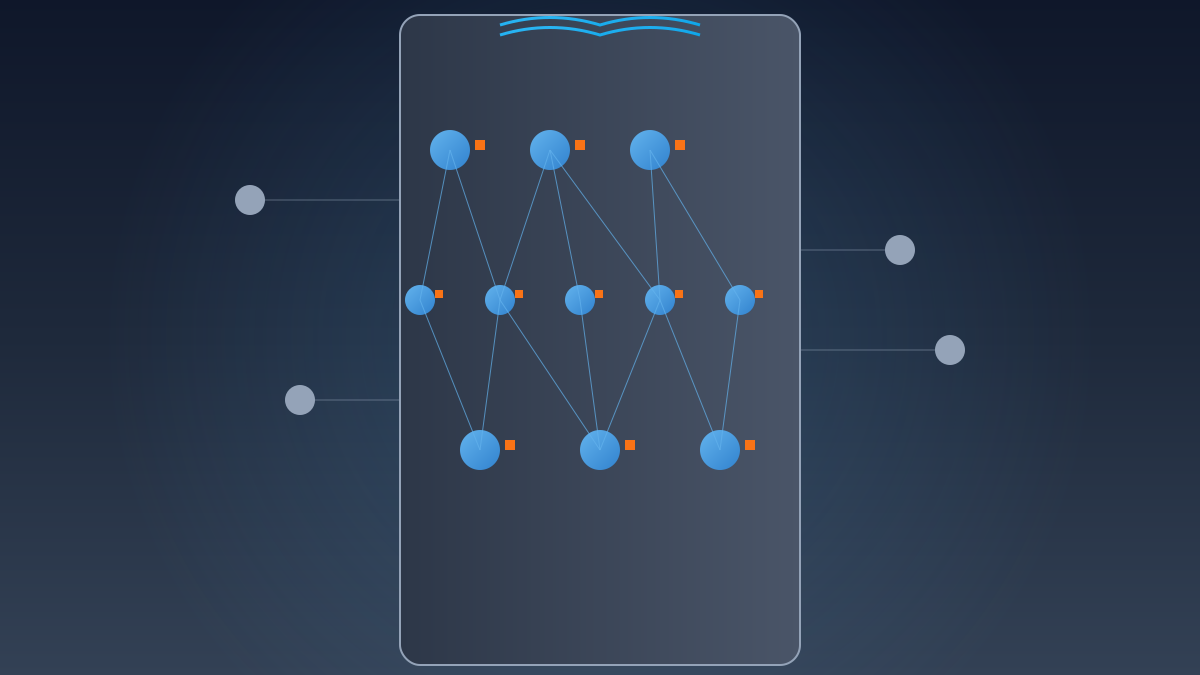
With the rapid improvement of computing power in mobile devices, artificial intelligence is migrating from the cloud to the edge. Edge AI has significant advantages such as low latency, good privacy, and offline availability, and has become the core competitiveness of smartphones, cars, and IoT devices.
However, deploying advanced machine learning models to the edge faces severe challenges:
- Computational resource constraints: The computing power of mobile SoCs is only 1/100 or even lower than that of data centers
- Memory bandwidth bottleneck: The storage requirements for model parameters and intermediate activations are seriously mismatched with device memory
- Power consumption constraints: Continuous high-load operation will quickly drain the battery and cause the device to overheat
- Heterogeneous computing complexity: Modern SoCs include multiple computing units such as CPU, GPU, NPU, etc., making scheduling complex
As a leader in the mobile chip field, Qualcomm's AI Hub Models project is a systematic solution born to address these challenges.