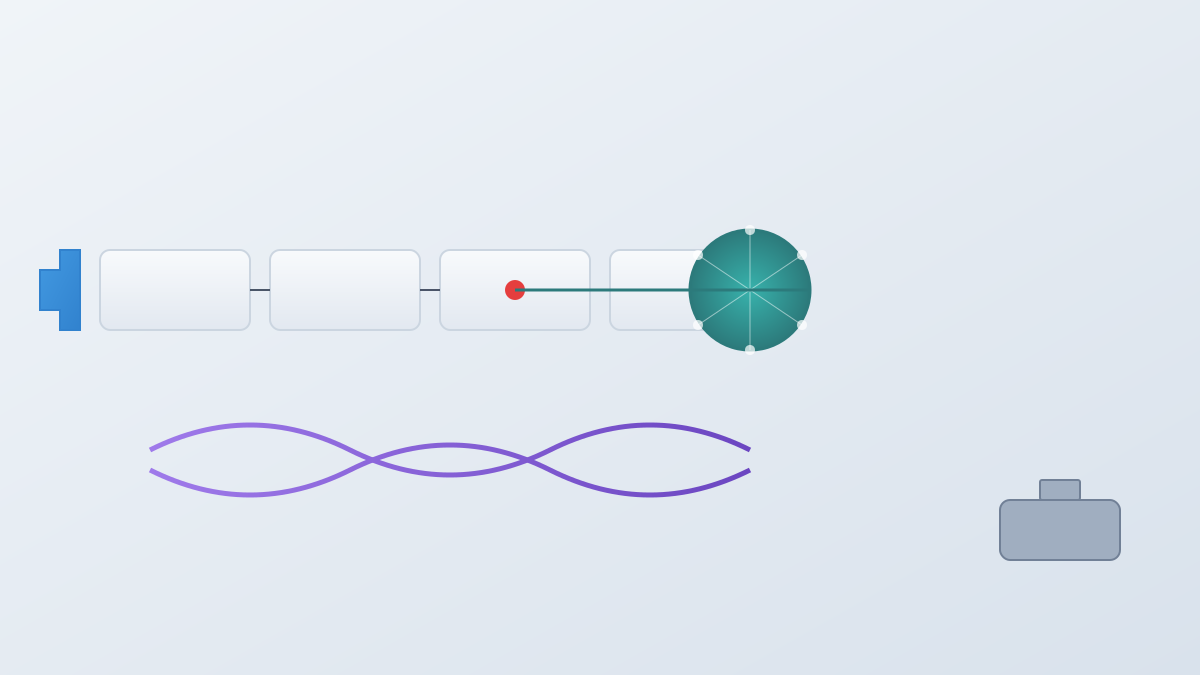
In the fields of bioinformatics and high-performance computing, Nextflow has become the framework of choice for building reproducible and scalable data analysis pipelines. However, as pipeline complexity increases, debugging becomes increasingly challenging. A typical Nextflow pipeline may contain dozens of processes, involving multiple software containers, resource allocation strategies, and data dependencies. When a process fails, developers often have to deal with lengthy log files, obscure exit codes (such as 126, 127, 1, etc.), and complex error stack traces.
Traditional debugging methods usually require developers to manually consult documentation, search for error information, and analyze log contexts—this process is not only time-consuming but also requires developers to have in-depth knowledge of various tools. For newcomers to bioinformatics, this debugging barrier is particularly high.