Zing Forum

Reading

Hugging Face Transformers: The Core Hub of the Machine Learning Ecosystem

As a model definition framework, the Transformers library unifies the interfaces for text, vision, audio, and multimodal models, connects training frameworks with inference engines, and serves as a key infrastructure in the machine learning ecosystem.

TransformersHugging Face大语言模型机器学习框架模型定义PyTorch推理引擎多模态NLP计算机视觉
Published 2026-04-28 18:15Recent activity 2026-04-28 18:23Estimated read 5 min
Hugging Face Transformers: The Core Hub of the Machine Learning Ecosystem
1

Section 01

[Introduction] Hugging Face Transformers: The Core Hub of the Machine Learning Ecosystem

Hugging Face Transformers has evolved from a pre-trained model toolkit into the core infrastructure of the machine learning ecosystem. As a model definition framework, it unifies the interfaces for text, vision, audio, and multimodal models, connects training frameworks with inference engines, and serves as a universal language across toolchains, lowering the barrier to AI applications and becoming an essential skill for modern AI developers.


2

Section 02

Background: Evolution from Toolkit to Ecosystem Infrastructure

Transformers was initially known for providing easy-to-use interfaces for Transformer architecture models like BERT and GPT, and now it has evolved into a "model definition framework". Its unique positioning is not to compete with training frameworks or inference engines, but to serve as a universal language between them, acting as a "Swiss Army knife" in the machine learning field—almost all toolchains rely on its support.

3

Section 03

Core Positioning: Unified Standard for Model Definition and Cross-Tool Compatibility

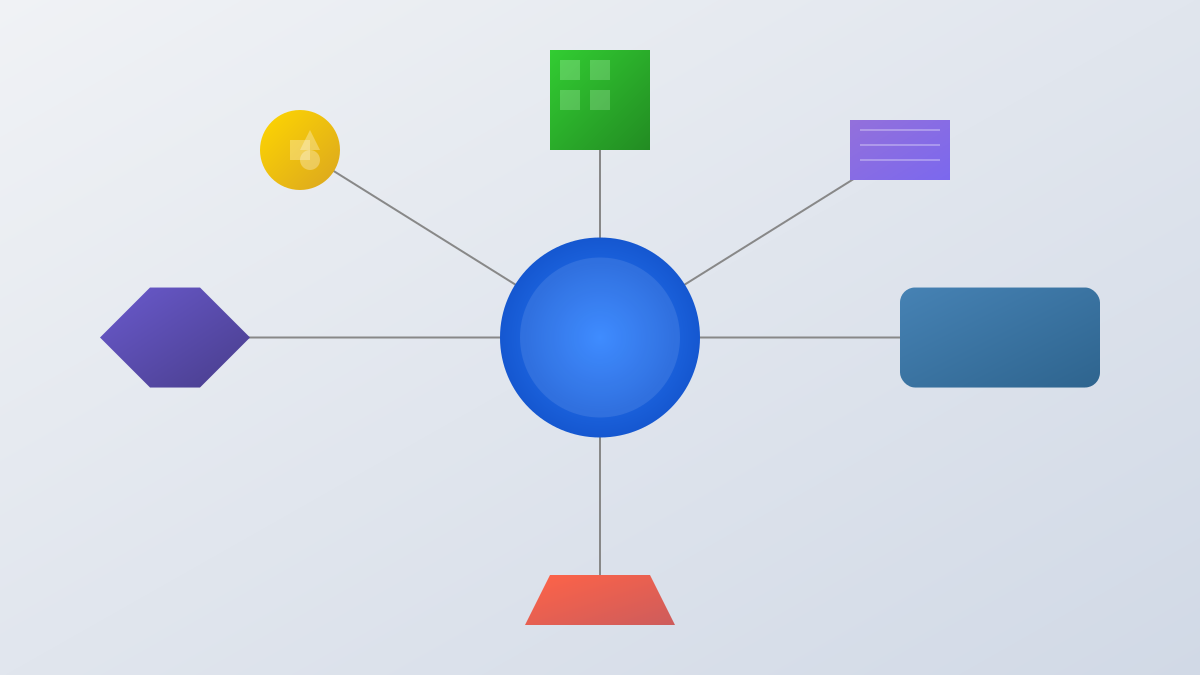
The core philosophy of Transformers is centralized model definition to reach a consensus in the ecosystem. On the training framework side, it is compatible with Axolotl, Unsloth, DeepSpeed, FSDP, PyTorch Lightning, etc.; on the inference side, it supports vLLM, SGLang, TGI; adjacent libraries like llama.cpp and MLX also reuse its model definitions to ensure compatibility. Developers can freely switch tools without modifying model definitions.

4

Section 04

Technical Features: Comprehensive Support for Multi-Domain Tasks

Transformers supports mainstream machine learning tasks: NLP (text classification, question answering, generation, etc.—Pipeline API simplifies operations); computer vision (image classification, object detection, DINOv2 integration); audio processing (ASR, speech synthesis, Whisper model); multimodal (unified interface for scenarios like visual question answering).

5

Section 05

Developer Experience: Design Philosophy of Low Threshold and High Ceiling

Transformers emphasizes "low threshold, high ceiling": Beginners can complete text generation with three lines of code; the Pipeline API hides complex logic; the Hugging Face Hub has over one million model checkpoints available for direct use; the standardized chat interface unifies the dialogue calling format for different models, reducing the cost of switching between multiple models.

6

Section 06

Ecosystem Impact: Becoming the De Facto Standard in the AI Industry

The influence of Transformers goes beyond the technical level: Community-driven contributions of millions of model checkpoints form a virtuous cycle; easy-to-use APIs and pre-trained models lower the threshold for non-professional developers, promoting AI industry penetration; advocating shared models reduces computing costs and carbon footprint, aligning with sustainable development.

7

Section 07

Future Outlook: Continuing as the Core of AI Infrastructure

With the development of multimodal AI and edge AI, Transformers will become even more important, continuing to connect training frameworks, inference engines, and developers. For machine learning developers, familiarity with Transformers has become an essential skill and a passport to enter the modern AI ecosystem.

