Zing Forum

Reading

Machine Learning-Based Diabetes Risk Prediction System: A Complete Practice from Data to Deployment

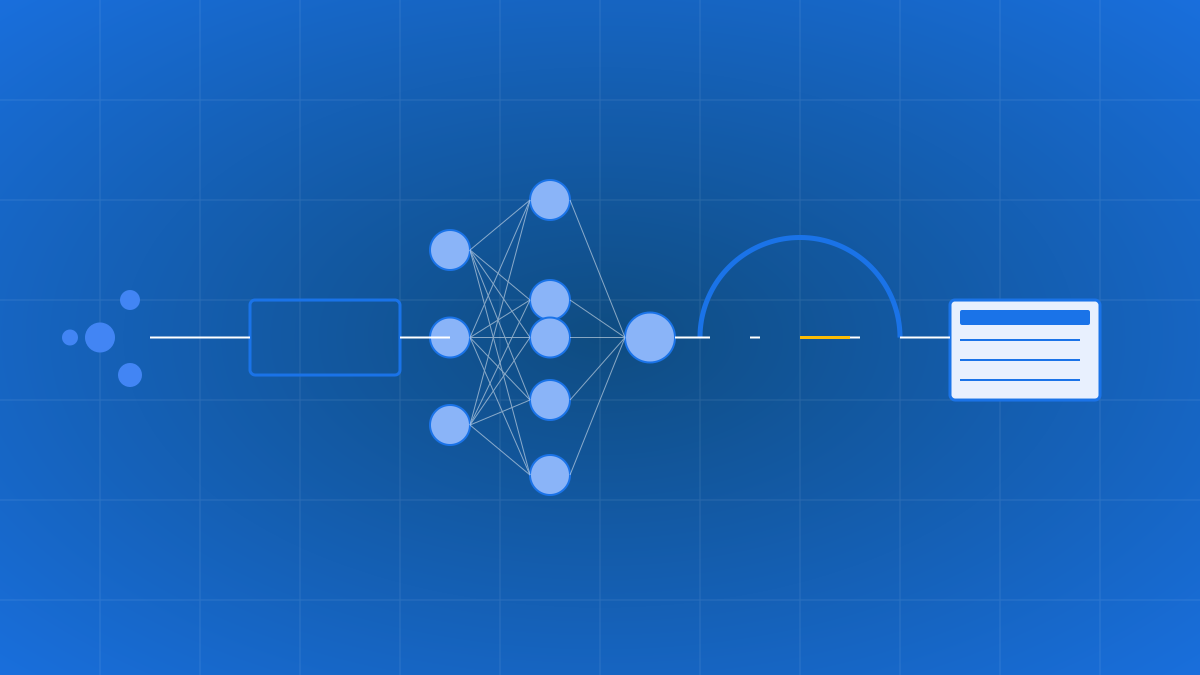
A production-level machine learning project demonstrating how to build an end-to-end diabetes risk prediction system, covering the entire workflow from data preprocessing, model comparison, threshold optimization to web application deployment.

机器学习糖尿病预测医疗健康风险评估数据预处理模型部署Web应用
Published 2026-05-23 05:15Recent activity 2026-05-23 05:20Estimated read 6 min
Machine Learning-Based Diabetes Risk Prediction System: A Complete Practice from Data to Deployment
1

Section 01

[Introduction] Machine Learning-Based Diabetes Risk Prediction System: A Complete Practice from Data to Deployment

This article introduces a production-level diabetes risk prediction system, covering the entire workflow from data preprocessing, model comparison, threshold optimization to web application deployment. It demonstrates how to transform machine learning technology into a practical healthcare tool to assist in early diabetes risk identification and intervention. The system aims to address the limitations of traditional assessment methods, use multi-dimensional health data to improve prediction accuracy, and achieve practical application value through end-to-end deployment.


2

Section 02

Project Background and Significance

The global incidence of type 2 diabetes is on the rise, placing a huge burden on healthcare systems. Early identification of high-risk groups is crucial for disease prevention, and lifestyle interventions can significantly reduce the risk of developing diabetes in pre-diabetic patients. Traditional assessments rely on clinical experience and simple scoring systems, making it difficult to fully utilize complex patterns in multi-dimensional data; machine learning technology can learn correlation patterns from historical data to provide more accurate predictions, which has important social value.

3

Section 03

Data Processing and Model Development

The data preprocessing stage includes handling missing values, outlier detection, feature scaling and encoding, and exploratory data analysis to ensure data quality and representativeness. Model development adopts a multi-model comparison strategy (such as logistic regression, random forest, gradient boosting machine, etc.), and comprehensively evaluates indicators like accuracy, precision, recall, and AUC through cross-validation; threshold tuning needs to balance sensitivity and specificity to adapt to different business scenarios. In addition, model interpretability (such as feature importance, SHAP values) enhances user trust and provides diagnostic references for doctors.

4

Section 04

Deployment and Application Value

The project is deployed via a web application, providing an intuitive input interface and clear result display to support users in easily obtaining risk predictions. The application can be integrated into community medical services to identify high-risk groups for early intervention, and also serves as a self-assessment tool for personal health. At the same time, ethical considerations need to be addressed: prediction results are for reference only, not diagnostic conclusions; data privacy and security must be guaranteed; and the fairness of the model across different populations must be ensured.

5

Section 05

Technical Highlights and Future Directions

Technical highlights include demonstrating the complete life cycle of a machine learning project (problem definition, data preparation, model development to deployment and operation), and adopting production-level engineering practices such as modular code, comprehensive documentation, and version control. Future directions may include integrating more data sources such as wearable devices, genetics, and lifestyle, applying deep learning to capture complex relationships, and exploring personalized risk assessment and dynamic monitoring.

6

Section 06

Conclusion

This diabetes risk prediction project demonstrates the application potential of machine learning in the healthcare field. Through systematic methodology and engineering implementation, it promotes the transition of models from the laboratory to practical applications, aiding disease prevention and health promotion. With the advancement of data science and AI technology, we look forward to more innovative applications driving the intelligent transformation of healthcare.

