Zing Forum

Reading

EquityFlow: An Intelligent Stock Investment Education Platform Based on MERN Stack and Machine Learning

EquityFlow is an innovative educational project that combines machine learning with stock investment. Built using the MERN tech stack, it demonstrates how AI can assist in investment decision-making while keeping users in full control.

MERN机器学习股票投资ReactNode.jsMongoDBAI预测教育项目金融科技
Published 2026-05-16 19:17Recent activity 2026-05-16 19:28Estimated read 5 min
EquityFlow: An Intelligent Stock Investment Education Platform Based on MERN Stack and Machine Learning
1

Section 01

EquityFlow Project Introduction: An Intelligent Investment Education Platform with MERN + Machine Learning

EquityFlow is an innovative educational project that combines machine learning with stock investment. Built using the MERN tech stack, its core concept is to balance AI-assisted decision-making with full user control, helping learners master multi-domain technologies such as web development and AI applications.


2

Section 02

Project Background and Core Concepts

In the era of digital investment, AI is reshaping the way financial markets operate. As an educational project, EquityFlow aims to demonstrate the application of machine learning in stock investment. It serves both as an analysis tool and a tech stack practice platform, helping users understand the collaboration between web development and AI. The core concept is 'balance between automation and control'—AI assists in analysis and prediction, while users hold the final decision-making power, reflecting technological empowerment and the dominant position of humans.

3

Section 03

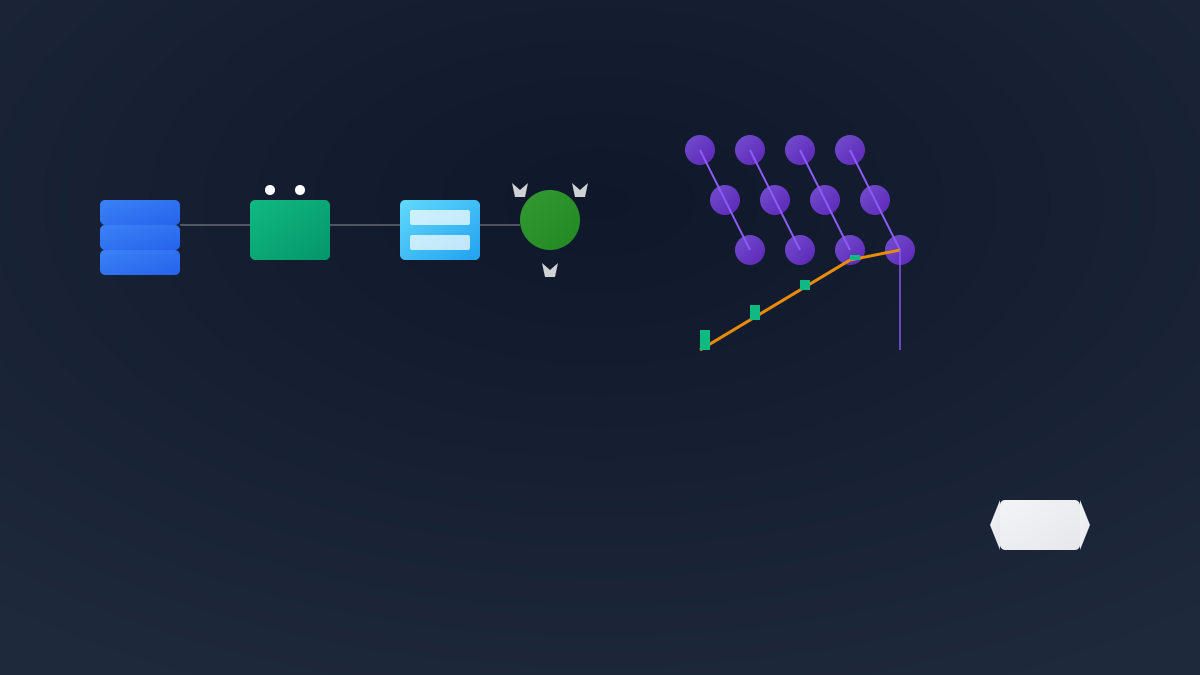
Technical Architecture: Specific Applications of the MERN Stack

The MERN tech stack is used:

  • MongoDB: A document-oriented database that flexibly stores market data, user portfolios, and AI prediction results. Its schema-less feature adapts to diverse financial data.
  • Express.js: A backend framework that handles stock data acquisition, user authentication, portfolio management, and front-end/back-end interaction.
  • React: A front-end framework that implements responsive interactive interfaces, supporting data visualization, real-time chart updates, and portfolio management interfaces.
  • Node.js: A runtime environment that unifies the front-end and back-end technology ecosystem, reducing development and maintenance costs.
4

Section 04

AI Prediction Model: Assisting Decision-Making Instead of Replacing It

The core highlight is the integration of an AI prediction model, which provides data-driven recommendations by analyzing historical stock data, market trends, and financial indicators. It emphasizes 'assisting decision-making' rather than replacing it—AI provides references, while the final decision-making power lies with the user. This design helps learners understand the boundaries of AI in education, cultivate critical thinking, and learn to combine technology with their own judgment.

5

Section 05

Educational Value: Practical Scenarios for Multi-Role Learners

Multiple values as an educational project:

  • Front-end developers: Learn to use React to build complex data visualizations, real-time updates, and interactive processes.
  • Back-end developers: Practice RESTful API design (authentication, persistence, integration of external data sources).
  • ML beginners: Learn model deployment, API exposure capabilities, and handling prediction uncertainty.
6

Section 06

Deployment and Access: Cloud-Native Experience Entry

The project is deployed on the Vercel platform, and the access address is: equity-flow-dashboard.vercel.app. Cloud-native deployment lowers the threshold for use and also provides learners with an opportunity to observe the deployment process of modern web applications.

7

Section 07

Summary and Outlook: Immersive Learning and Future Trends

EquityFlow represents an immersive learning model, allowing users to learn complex technologies (web development, databases, ML, etc.) through a complete project. As AI is deeply applied in finance, such educational projects become more important—they not only teach skills but also cultivate deep thinking abilities such as AI ethics and human-machine collaboration.

