Zing Forum

Reading

Ember ML: A New Choice for Kotlin Multiplatform Machine Learning Libraries

A backend-agnostic Kotlin machine learning library that supports cross-platform deployment, bringing a feature-rich ML toolset to the Kotlin ecosystem.

Kotlin机器学习多平台Android跨平台深度学习移动开发JVM
Published 2026-05-03 07:15Recent activity 2026-05-03 09:57Estimated read 6 min
Ember ML: A New Choice for Kotlin Multiplatform Machine Learning Libraries
1

Section 01

Ember ML: A New Kotlin Multiplatform ML Library for Cross-Platform Smart Apps

Ember ML is an open-source, backend-agnostic Kotlin machine learning library developed by the KotlinMania team. It leverages Kotlin's multi-platform capabilities to support JVM, Android, JavaScript, and native platforms, filling the gap for Kotlin developers needing ML tools in non-Python environments (mobile, edge, cross-platform apps). Its core value lies in enabling "write once, run anywhere" ML logic with native Kotlin integration.


2

Section 02

The Need for Kotlin-Focused ML Tools

Python has long dominated ML with mature ecosystems like TensorFlow/PyTorch, but the rise of mobile/edge computing demands ML deployment beyond Python. Kotlin's popularity in Android and cross-platform development (via Kotlin Multiplatform) created a need for native ML solutions. Ember ML addresses this by providing Kotlin devs an efficient, platform-agnostic way to integrate ML without relying on Python runtimes or complex native libraries.

3

Section 03

Backend-Agnostic Architecture & Kotlin Multiplatform Benefits

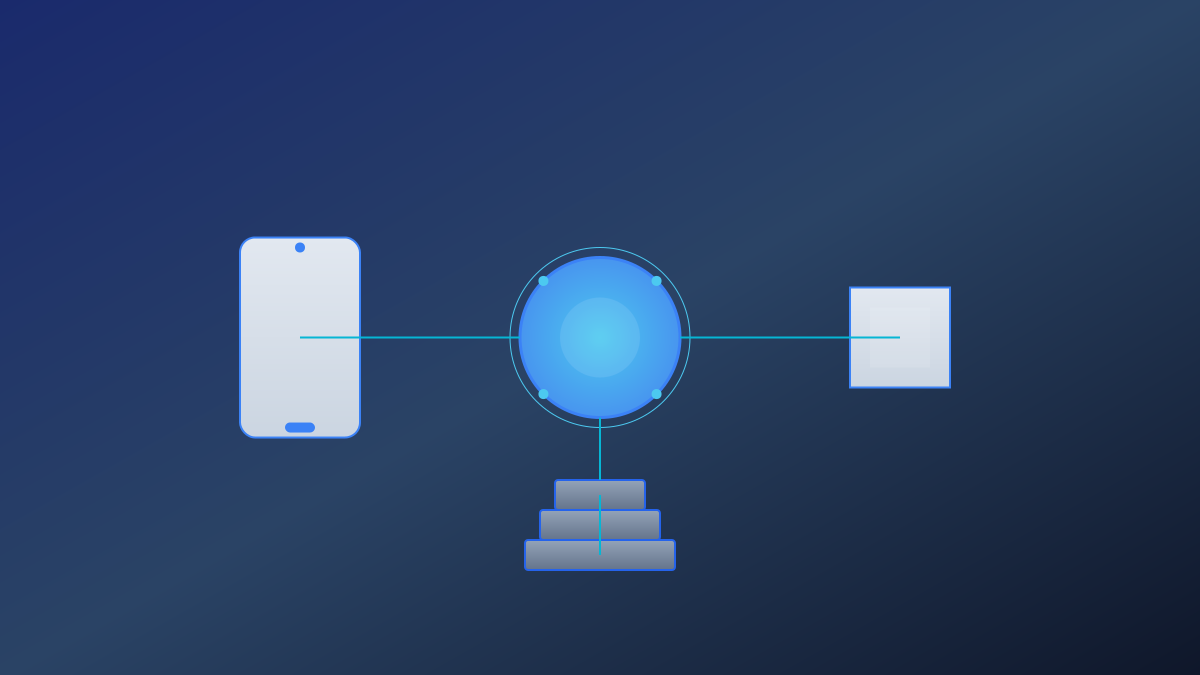
Ember ML's key design is its backend-agnostic architecture—core APIs decoupled from compute backends, allowing flexible backend selection (high-performance JVM for servers, lightweight for Android, JS for web). This ensures code portability, easy integration of new hardware/optimizations, and simplified testing. Using Kotlin Multiplatform, it enables shared ML code across platforms: Android devs avoid cross-language overhead, backend devs integrate with Ktor/Spring seamlessly, and cross-platform apps maintain consistent ML behavior.

4

Section 04

Feature-Rich ML Toolset for End-to-End Workflows

Ember ML covers full ML workflows:

  • Data Preprocessing: Scikit-learn-like tools (standardization, normalization, encoding) optimized for Kotlin collections.
  • Classic ML Algorithms: Linear/logistic regression, decision trees, random forests, SVM—optimized for JVM performance.
  • Deep Learning: Support for MLP, CNN, RNN via integration with ND4J/custom implementations (sufficient for common tasks).
  • Model Persistence: Cross-platform serialization for model sharing (server-trained models run on mobile).
5

Section 05

Where Ember ML Shines

Ember ML is ideal for:

  • Mobile Apps: Android apps with offline ML (e.g., note categorization, health trend prediction).
  • Cross-Platform Apps: Compose Multiplatform apps sharing ML logic (e.g., consistent recommendation algorithms across devices).
  • Server ML Microservices: Kotlin-based services handling real-time predictions (leveraging coroutines for concurrency).
  • Edge Devices: Kotlin/Native platforms (iOS, embedded Linux) for resource-constrained ML.
6

Section 06

How Ember ML Stacks Against Other Tools

  • vs TensorFlow Lite: Pure Kotlin (no NDK complexity, smaller app size) but TFLite is more mature for mobile production.
  • vs ONNX Runtime: Ember ML supports training (not just inference) but ONNX is more efficient for pre-trained model execution.
  • vs DL4J: Lighter, modern Kotlin API (idiomatic, type-safe) vs DL4J's heavy dependencies and older design.
7

Section 07

Challenges & Future Directions

Ember ML faces challenges: smaller community vs Python, fewer pre-trained models, and room for algorithm optimization. Future plans include: better deep learning support, interoperability with mainstream model formats, mobile/edge performance optimizations, and expanding pre-trained model libraries.

8

Section 08

Final Thoughts & Who Should Use Ember ML

Ember ML represents a shift toward diverse ML toolchains. While Python remains dominant in research, Ember ML offers Kotlin devs a native way to build cross-platform smart apps. It's recommended for teams using Kotlin across mobile/backend/cross-platform projects, needing consistent ML logic without leaving the Kotlin ecosystem. As the community grows, it's poised to become a key part of Kotlin's ML infrastructure.

