Zing Forum

Reading

Cloud-based Real Estate Data Warehouse Using Databricks Medallion Architecture: A Complete Practice from Raw Data to RAG Intelligent Assistant

This article introduces a production-grade real estate data analysis platform that uses the Databricks Medallion Architecture (Bronze/Silver/Gold) and PySpark to build an end-to-end data engineering pipeline. The project implements layered data cleaning, transformation, and modeling, eventually forming an optimized star-schema data warehouse, and plans to integrate RAG technology to provide conversational intelligent insights for the real estate sector.

DatabricksMedallion ArchitecturePySparkDelta Lake数据仓库星型模式RAGUnity Catalog数据工程
Published 2026-06-15 14:13Recent activity 2026-06-15 14:18Estimated read 6 min
Cloud-based Real Estate Data Warehouse Using Databricks Medallion Architecture: A Complete Practice from Raw Data to RAG Intelligent Assistant
1

Section 01

[Introduction] Practice of Real Estate Data Warehouse Using Databricks Medallion Architecture

This article introduces a production-grade real estate data analysis platform that uses the Databricks Medallion Architecture (Bronze/Silver/Gold) and PySpark to build an end-to-end data engineering pipeline. It implements layered data cleaning, transformation, and modeling to form a star-schema data warehouse, and plans to integrate RAG technology to provide conversational intelligent insights. The core tech stack includes Databricks, Delta Lake, Unity Catalog, etc.


2

Section 02

Project Background and Motivation

In the data-driven real estate industry, traditional data processing faces challenges such as inconsistent data quality, hard-to-scale architecture, and inability to support advanced AI applications. This project provides a complete data platform covering data ingestion, cleaning/transformation, and building an optimized data warehouse, with a forward-looking plan for integration with generative AI (RAG).

3

Section 03

Core Tech Stack

  • Databricks: Unified cloud-native data analysis platform
  • PySpark: Large-scale distributed data processing
  • Delta Lake: ACID transaction support and data version control
  • Unity Catalog: Unified data governance and access control
  • Power BI: Business intelligence visualization
  • RAG (Retrieval-Augmented Generation): Planned AI conversation layer
4

Section 04

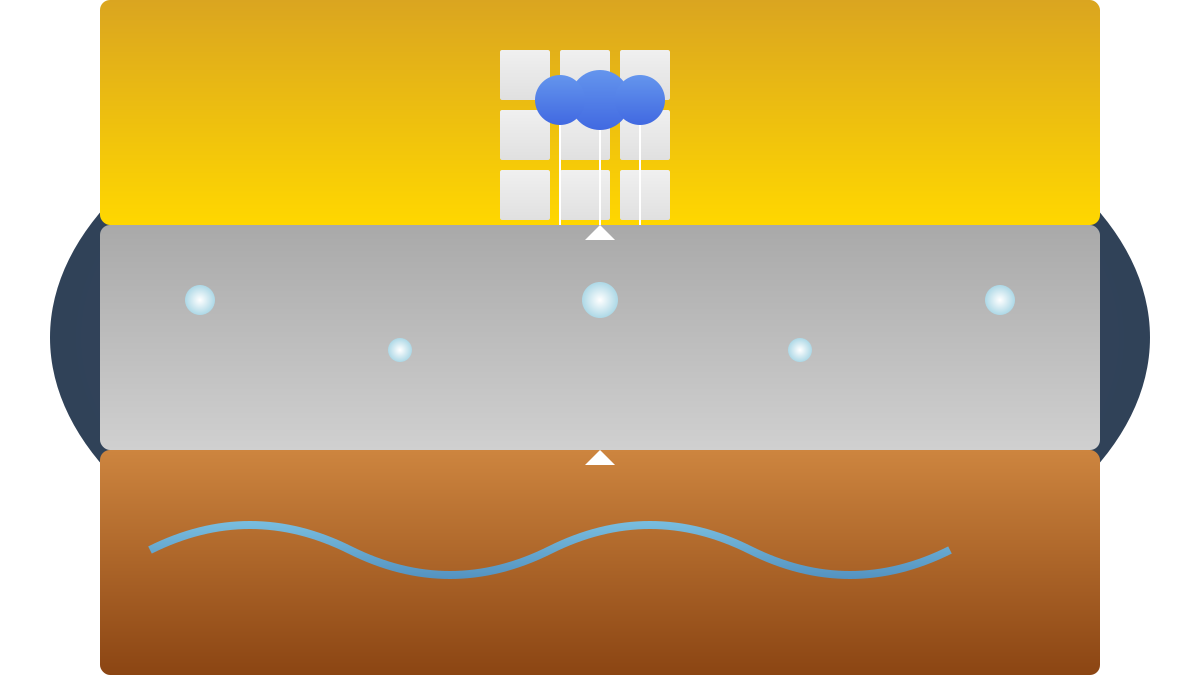
Detailed Explanation of the Three Layers of Medallion Architecture

Bronze Layer: Raw Data Ingestion

Preserves the original Parquet data format, iteratively handles schema mismatches, and stores data in the workspace.default.real_estate_bronze table to ensure no loss of original information.

Silver Layer: Data Cleaning and Standardization

Performs categorical variable standardization, regex parsing (JSON/developer name/date/currency), layered median imputation for missing values, and feature engineering (e.g., payment flexibility score).

Gold Layer: Star-Schema Data Warehouse

Builds dimension tables (dim_date/dim_location/dim_developer/dim_property) and fact tables (fact_sales), and ensures data integrity by registering primary and foreign key constraints via Unity Catalog.

5

Section 05

Prospects of RAG Application

Plans to use Gold layer data combined with Databricks Vector Search technology to implement vector embedding generation and efficient retrieval index construction, deploy a conversational AI assistant, provide intelligent decision support for real estate agents, investors, and homebuyers, and enable seamless integration of structured data warehouses with generative AI applications.

6

Section 06

Implementation Guide and Environment Requirements

Implementation Steps

Execute the notebooks in order: 01_Bronze_Ingestion.py → 02_Silver_Cleansing.py → 03_Gold_DWH.py → 04_Gold_Constraints.py, or use Databricks Workflows to orchestrate automated scheduling.

Environment Requirements

  • Databricks Workspace (with Unity Catalog enabled)
  • Compute cluster: Databricks Runtime 13.0+
  • Raw real estate Parquet files preloaded into the specified Databricks volume
7

Section 07

Project Value and Insights

This project provides references for data engineers and architects:

  • Architectural Normativity: Follows Databricks best practices, with clear and maintainable code
  • Data Quality First: Multi-layered cleaning and constraints ensure data quality
  • Scalability: Modular design supports independent evolution and integration of new data sources
  • AI Readiness: Forward-looking RAG design enables a smooth transition to the AI-driven analysis era It is a reference implementation for teams planning or optimizing data platforms.

