Zing Forum

Reading

Cula Trust: A Hybrid AI-Based Verification System for Biochar Carbon Removal Claims

This article introduces the Cula Trust project—a hybrid AI system for verifying carbon removal claims in biochar carbon capture projects. It explains how the system uses rule-based verification, graph neural networks, and anomaly detection techniques to build a trustworthy carbon credit verification mechanism on supply chain data, providing a reference for technological innovation in the carbon neutrality field.

碳移除生物炭图神经网络异常检测碳信用供应链APIPython气候变化
Published 2026-06-07 07:12Recent activity 2026-06-07 07:20Estimated read 7 min
Cula Trust: A Hybrid AI-Based Verification System for Biochar Carbon Removal Claims
1

Section 01

Cula Trust: A Hybrid AI-Based Verification System for Biochar Carbon Removal Claims - Introduction

This article introduces the Cula Trust project—a hybrid AI system for verifying carbon removal claims in biochar carbon capture projects. The system combines rule-based verification, graph neural networks, and anomaly detection techniques to build a trustworthy carbon credit verification mechanism on supply chain data, providing a reference for technological innovation in the carbon neutrality field. The project was developed by notHacker1917 and released on the GitHub platform on June 6, 2026.


2

Section 02

Project Background and Motivation

With the advancement of global carbon neutrality goals, biochar has gained attention as an effective carbon capture and storage technology, but verifying carbon removal claims remains an industry pain point. The Cula Trust project emerged as a hybrid AI system specifically designed to verify carbon removal claims in biochar carbon capture projects. Developed at the HackHPI 2026 hackathon, it combines rule-based verification, graph neural networks, and anomaly detection techniques to provide technical support for the carbon credit market.

3

Section 03

System Architecture and Core Components

Cula Trust provides a lightweight Python library to interact with its public API. The tech stack includes Python 3.10+, httpx, Pydantic v2, NetworkX, and Matplotlib. The API endpoint is https://api.hack-hpi.cula.earth. The core functional modules are as follows:

Method Description
list_sinks() Get the UUID list of all carbon sinks
get_sink(id) Get the complete model of a specified carbon sink (including graph structure, site, materials, etc.)
download_document(id) Download the raw byte data of the proof document
list_machines(site_id) Get the list of devices at a specified capture site
list_machine_data_points(machine_id) Get the device data point configuration
get_machine_data(requests) Batch query device time-series data
4

Section 04

Data Model and Supply Chain Graph Analysis

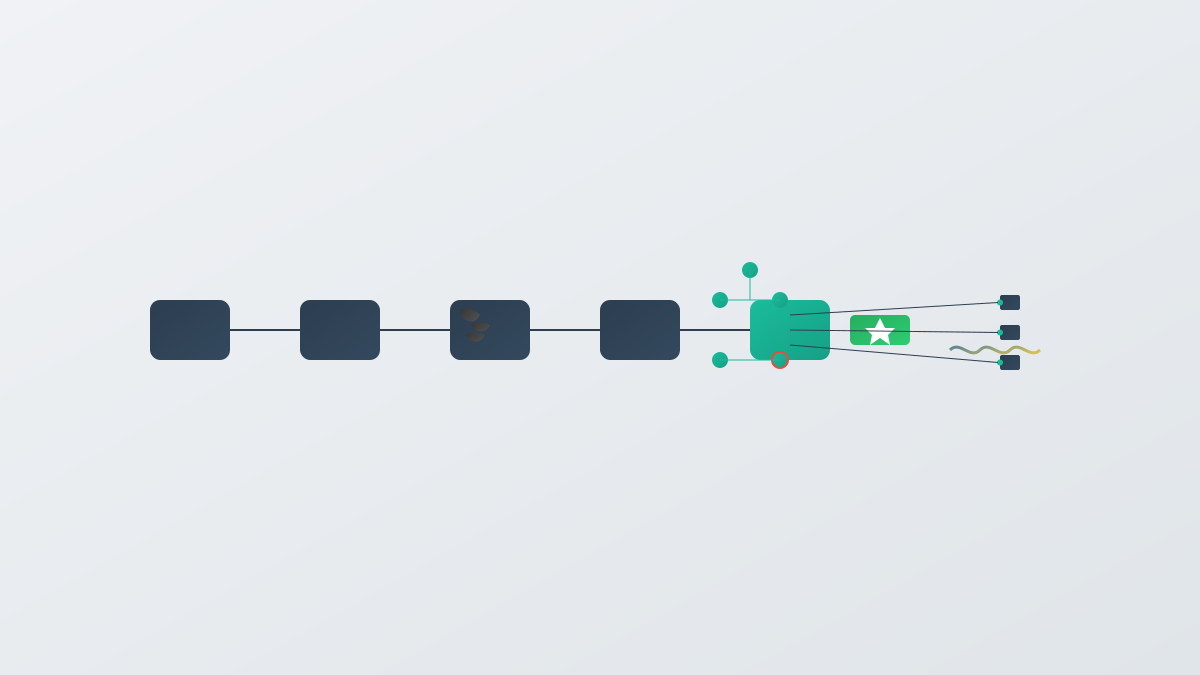
The data model is built around carbon sinks, including supply chain information such as graph structure, capture sites, materials, containers, lifecycle events, and LCA entities. The project uses Graph Neural Networks (GNN) to analyze the supply chain graph: it converts data into a NetworkX graph structure via the build_sink_graph function, which can detect abnormal nodes/edges, verify consistency between claims and data, and identify fraud or data inconsistencies. The graph visualization uses a force-directed layout, with carbon sinks on the right and other entities arranged in layers based on graph distance.

5

Section 05

Detailed Explanation of the Hybrid AI Verification Mechanism

The core innovation of Cula Trust is its hybrid verification mechanism, which combines three technologies:

  1. Rule-based Verification: Filters claims based on expert knowledge, such as verifying the physical feasibility of carbon removal amounts, the rationality of timestamps, and supply chain continuity.
  2. Graph Neural Networks: Learns normal patterns of the supply chain, identifies abnormal claims, captures complex relationships and historical patterns, and scores the risk of new claims.
  3. Anomaly Detection: Applies statistical and ML methods on time-series data to detect abnormal material flows, process parameters, and data errors.
6

Section 06

Application Scenarios and Core Values

Application Scenarios and Values:

  • Carbon Credit Verification: Provides transparency (public data via API), traceability (complete lifecycle records), automated verification (reduces manual costs), and fraud detection (anomaly identification via GNN).
  • Biochar Project Monitoring: Offers real-time production data monitoring, verification of the authenticity of carbon removal amounts, and supply chain risk assessment for producers and buyers.
7

Section 07

Project Summary and Outlook

Cula Trust demonstrates the innovative application of AI technology in addressing climate change. By combining graph neural networks, anomaly detection, and domain knowledge, it provides a reliable solution for verifying carbon removal claims. As the carbon credit market develops, such technical solutions will become more important—they not only provide tools for biochar projects but also serve as a reference for innovation in the carbon neutrality field.

