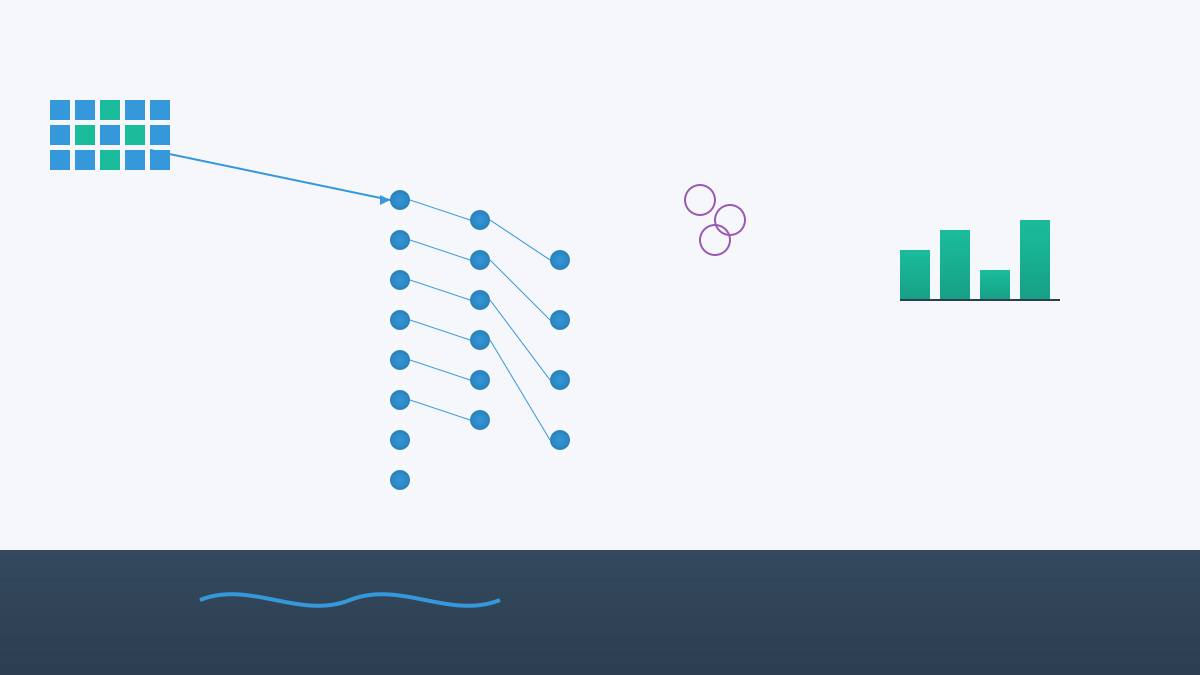
Modular Training Architecture
Arcadium adopts a highly modular design, decomposing the training process into independent components such as data loading, model definition, optimizer configuration, and distributed strategy. This design allows users to flexibly combine different technical solutions, such as switching between data parallelism and model parallelism strategies, or trying different optimization algorithms. The framework supports common LLM architectures and is easy to extend to support new model variants.
Visualization and Monitoring
The project places special emphasis on the visualization of the training process. The built-in visualization module can display key metrics such as loss curves, gradient distributions, and learning rate changes in real time. This real-time feedback helps researchers quickly identify training anomalies, such as gradient explosion or excessively high learning rates. The framework also supports generating training reports and comparison charts, facilitating the sharing and reproduction of experimental results.
Ablation Study Support
Arcadium provides specialized tools for ablation studies. Through simple configuration, researchers can automatically run multiple sets of comparative experiments to systematically evaluate the impact of different components on model performance. The project's included attention_ablation.sh script demonstrates how to conduct ablation studies on attention mechanisms, and this systematic experimental method is crucial for understanding model behavior.
Paper Reproduction Capability
The framework has built-in configurations and implementations for several important papers, helping users reproduce classic research results. The configs directory contains preset training configurations, and the story directory may record key decisions and findings during the reproduction process. This design lowers the barrier to academic research, allowing more developers to verify and extend cutting-edge research.