Zing Forum

Reading

AIDRA: A Disaster Emergency Response System Integrating Multi-Algorithm Intelligent Agents

A hybrid AI rescue system that combines A* pathfinding, BFS/DFS search, constraint satisfaction problems, machine learning, fuzzy logic, and dynamic replanning to achieve intelligent path optimization, victim prioritization, and dynamic resource scheduling.

灾害响应路径规划A*算法模糊逻辑约束满足资源调度机器学习应急响应
Published 2026-05-10 12:26Recent activity 2026-05-10 12:30Estimated read 7 min
AIDRA: A Disaster Emergency Response System Integrating Multi-Algorithm Intelligent Agents
1

Section 01

AIDRA: A Disaster Emergency Response System Integrating Multi-Algorithm Intelligent Agents (Introduction)

AIDRA (Adaptive Intelligent Disaster Response Agent) is a hybrid AI rescue system integrating A* pathfinding, BFS/DFS search, constraint satisfaction problems, machine learning, fuzzy logic, and dynamic replanning. It aims to address the pain points of traditional disaster response systems, which rely on manual decision-making and static plans and struggle to adapt to complex and changing on-site environments, to achieve intelligent path optimization, victim prioritization, and dynamic resource scheduling.


2

Section 02

Project Background and Significance

Natural disasters and sudden accidents often cause massive casualties and property losses, and rescue efficiency directly affects survival rates. Traditional disaster response systems usually rely on manual decision-making and static plans, making it difficult to cope with complex and changing on-site environments. The AIDRA project was born to address this pain point, building an intelligent rescue system that integrates multiple AI algorithms to enable adaptive rescue decisions in dynamic environments.

3

Section 03

System Architecture and Core Technical Methods

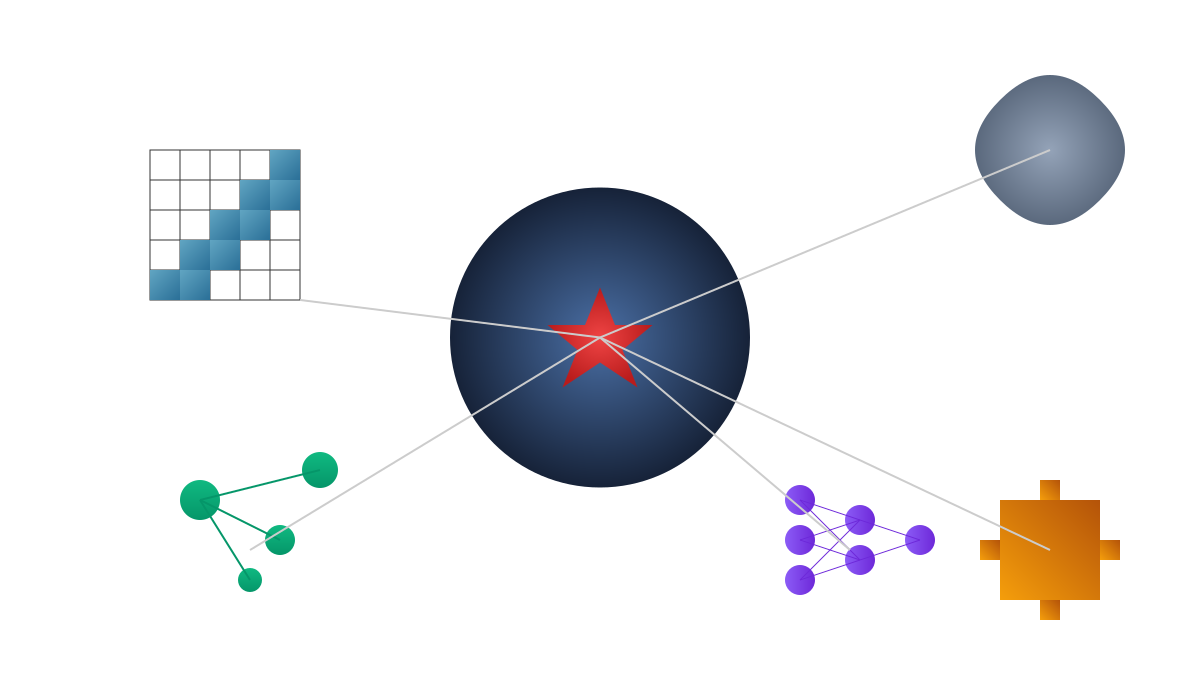
AIDRA adopts a hybrid intelligent architecture, integrating multiple classic algorithms and machine learning technologies:

Core Algorithm Components

1. Path Planning: A* algorithm (optimal path), BFS (shortest path in unweighted graphs), DFS (comprehensive exploration); 2. Constraint Satisfaction Problem (CSP): Handles resource allocation constraints (number of ambulances, medical staff skills, etc.) and finds feasible solutions through constraint propagation and backtracking; 3. Machine Learning: Predicts disaster severity based on historical data and learns optimal rescue strategies; 4. Fuzzy Logic: Processes uncertain information (e.g., "severely damaged") and integrates multi-source data to generate risk assessments; 5. Dynamic Replanning: Monitors environmental changes in real time and triggers rapid adjustments to rescue plans.

4

Section 04

Key Functional Modules

Victim Prioritization

Integrates factors such as injury severity, trapped time, accessibility, age, and health status to generate a dynamic priority queue through machine learning and fuzzy reasoning;

Intelligent Path Optimization

Multi-algorithm collaboration: CSP determines task allocation → A*/BFS calculates paths → Fuzzy logic evaluates risks to select the optimal path;

Risk Assessment and Resource Scheduling

Regional Risk: Integrates meteorological/geological/social data to predict secondary disasters and update risk maps; Resource Allocation: Uses integer programming + heuristic algorithms to allocate resources, balancing response speed and coverage.

5

Section 05

Dynamic Adaptability

Trigger Conditions: New disaster-stricken points, road changes, resource status updates, changes in victim conditions; Replanning Strategies: Local adjustment (optimization of affected tasks), global recalculation (for major changes), incremental update (using existing results to quickly generate new plans).

6

Section 06

Practical Application Scenarios

Applicable to scenarios such as earthquake rescue (trapped person location, aftershock avoidance, medical deployment), flood disasters (path adjustment, evacuation planning, boat scheduling), industrial accidents (leak isolation, team dispatch, evacuation priority adjustment), etc.

7

Section 07

Technical Highlights and Innovations

  1. Multi-algorithm fusion: Leverages the advantages of each algorithm (A* for optimality, BFS/DFS for comprehensiveness, CSP for constraint handling, etc.);
  2. Real-time response: Second-level replanning meets timeliness requirements;
  3. Interpretability: Fuzzy logic and rule engines make decisions transparent and traceable.
8

Section 08

Limitations and Improvement Suggestions

Current Limitations: High computational complexity in large-scale scenarios, sensor data integration needs improvement, multi-agent collaboration needs expansion; Future Directions: Introduce reinforcement learning to optimize strategies, use digital twins to simulate disasters.

