Zing Forum

Reading

AI-Vehicle-Diagnosis: An Intelligent Car Diagnosis System Integrating Traditional Data and Generative AI

AI-Vehicle-Diagnosis adopts a hybrid intelligent architecture, combining traditional data retrieval and generative AI technologies to provide an accurate, context-aware intelligent solution for car fault diagnosis.

汽车诊断生成式AI混合智能故障排查知识引擎automotive
Published 2026-05-25 16:12Recent activity 2026-05-25 16:24Estimated read 10 min
AI-Vehicle-Diagnosis: An Intelligent Car Diagnosis System Integrating Traditional Data and Generative AI
1

Section 01

[Introduction] AI-Vehicle-Diagnosis: An Intelligent Car Diagnosis System Integrating Traditional Data and Generative AI

AI-Vehicle-Diagnosis is an intelligent car diagnosis system that integrates traditional data retrieval and generative AI technologies, using a hybrid intelligent architecture to provide an accurate, context-aware fault diagnosis solution.

Project Basic Information:

2

Section 02

Project Background and Problem Definition

Car fault diagnosis involves multi-level knowledge such as mechanics, electronics, and software. Traditional diagnosis relies on technicians' experience and static fault code databases, which have the following limitations:

  1. Experienced technicians are scarce;
  2. The diagnosis process takes a long time;
  3. Knowledge update lags behind when facing new vehicle models.

With the increasing electrification of cars, modern vehicles are equipped with dozens of sensors, generating massive amounts of data, which provides a foundation for intelligent diagnosis but also puts higher demands on data processing and knowledge extraction. The AI-Vehicle-Diagnosis project was thus born, attempting to improve diagnosis efficiency and accuracy through a hybrid intelligent architecture.

3

Section 03

Hybrid Intelligent Architecture and Adaptive Diagnosis Knowledge Engine Design

Design Concept of Hybrid Intelligent Architecture

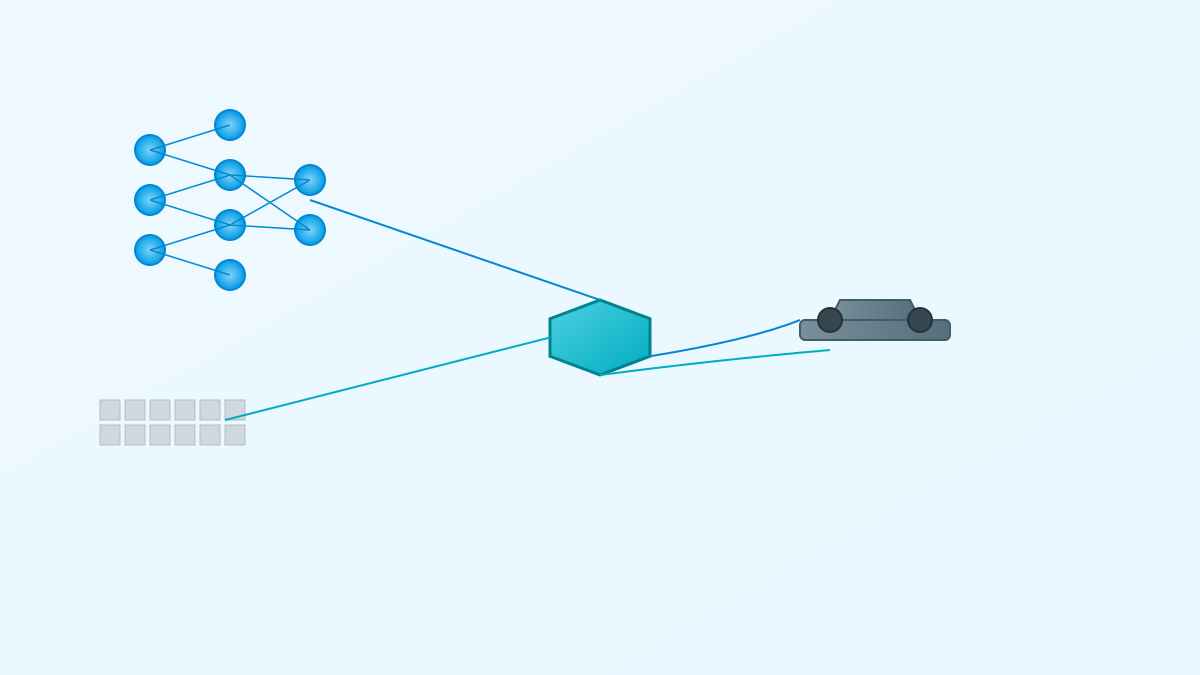
The core innovation of this project lies in the hybrid intelligent architecture, which organically combines traditional data retrieval and generative AI:

  • Traditional Data Retrieval: Its advantages are accuracy and interpretability, which can accurately return fault code definitions, common causes, and repair suggestions (reliable for handling known issues);
  • Generative AI: Its advantages are flexibility and knowledge integration ability, which can understand natural language symptoms and reason about edge cases (such as vague descriptions like "abnormal engine sound"). The system needs to determine when to rely on database queries, when to call AI reasoning, and fuse the results.

Features of Adaptive Diagnosis Knowledge Engine

  • Vehicle Model Adaptation: Adjust diagnosis strategies according to vehicle model, year, and configuration;
  • Continuous Learning: Learn from historical diagnosis cases to enrich the knowledge base;
  • Context Awareness: Consider the vehicle's overall state, driving history, and environmental conditions (such as the impact of cold/hot weather on fault codes).
4

Section 04

Key Technical Implementation Links

The system's technical implementation includes the following key links:

  1. Data Collection Layer: Communicate with the OBD-II interface to read fault codes and real-time sensor data;
  2. Data Processing Layer: Convert raw data into structured information (fault code parsing, sensor data normalization, time series analysis, anomaly detection);
  3. Knowledge Retrieval Layer: Search for relevant information from structured knowledge bases (repair manuals, technical bulletins, recall information);
  4. Generative AI Layer: Call LLM API or local models, and ensure output quality through prompt engineering;
  5. Result Fusion Layer: Combine traditional retrieval and AI reasoning results, consider information credibility and consistency, and generate a diagnosis report.
5

Section 05

Practical Application Value and Scenarios

The practical value of the project is reflected in multiple scenarios:

  • Professional Technicians: As an intelligent assistant, it quickly provides diagnosis suggestions, reduces time spent on consulting materials, and makes up for insufficient experience;
  • Car Owners: Provides preliminary self-diagnosis ability, helps understand the severity of faults and repair costs, and avoids being deceived by unscrupulous merchants;
  • Manufacturers/Dealers: Analyze vehicle quality data, identify common fault patterns, and guide product improvement and recall decisions.
6

Section 06

Technical Challenges and Solutions

Technical challenges and solutions encountered during development:

  1. Data Standardization: Different manufacturers have different fault code definitions and formats, so a unified vehicle data model and fault code mapping table need to be established;
  2. Knowledge Base Maintenance: Car technology is constantly evolving, so cooperation with manufacturers and repair manual publishers is needed to update the knowledge base in a timely manner;
  3. AI Reliability: Large language models may produce "hallucinations", so multi-source verification and confidence evaluation are needed to reduce risks;
  4. Response Speed: Complex AI reasoning takes time, so algorithm efficiency needs to be optimized, and a progressive response strategy (first provide quick preliminary results, then improve) should be adopted.
7

Section 07

Future Development Directions

Future development directions:

  1. Predictive Maintenance: Analyze sensor data trends to early warn of fault risks;
  2. AR Technology Integration: Provide intuitive repair guidance through AR glasses, real-time identify operating components and guide operations;
  3. V2X Data Utilization: Obtain data from similar vehicles for group analysis, identify common problems or the impact of driving habits on vehicle health.
8

Section 08

Summary

AI-Vehicle-Diagnosis demonstrates the innovative application of AI in traditional industries. Its core value lies in the design concepts of hybrid intelligence, adaptability, and context awareness, which have reference significance for AI applications in other fields.

The significance of this project for different groups:

  • Developers: Learn cases of integrating LLM into practical applications;
  • Automotive Industry Practitioners: Indicates the transformation of maintenance work methods;
  • Ordinary Car Owners: Means more transparent and efficient car services are coming.



