Zing Forum

Reading

Embedded IoT and AI Project Collection: Engineering Practices from Electric Vehicle Telemetry to Intelligent Monitoring

This article introduces an embedded IoT project collection covering electric vehicle telemetry, ESP32 device health monitoring, automation systems, and AI applications, demonstrating the integrated application of IoT and artificial intelligence in engineering fields.

物联网嵌入式系统电动汽车ESP32设备监测边缘AI
Published 2026-05-20 23:15Recent activity 2026-05-20 23:27Estimated read 7 min
Embedded IoT and AI Project Collection: Engineering Practices from Electric Vehicle Telemetry to Intelligent Monitoring
1

Section 01

Introduction: Core Overview of the Embedded IoT and AI Project Collection

This article introduces an embedded IoT project collection covering electric vehicle telemetry, ESP32 device health monitoring, automation systems, and AI applications. It demonstrates the integrated application of IoT and artificial intelligence in engineering fields, providing valuable learning resources and engineering references from theory to practice for developers at different levels.


2

Section 02

Background: Integration Trend of IoT and AI

The Internet of Things (IoT) and Artificial Intelligence (AI) are two of the most active directions in the current technology field. Their combination has given birth to a new generation of intelligent systems, with application scenarios covering smart homes, Industry 4.0, and other fields. As hardware carriers, embedded systems undertake key tasks such as data collection and edge computing; the popularity of open-source hardware platforms like Arduino and ESP32 has lowered the development threshold, allowing more developers to participate in innovative practices.

3

Section 03

Core Project Analysis: Four Practical Cases

1. Electric Vehicle Telemetry System

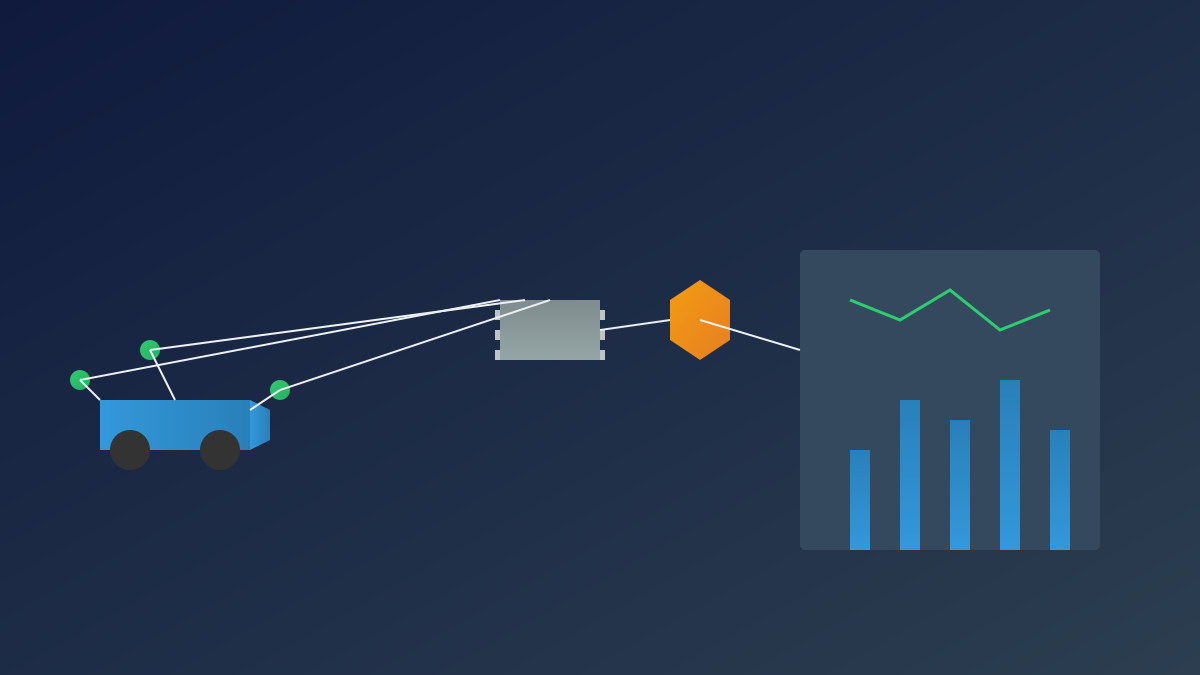
Real-time collection of Battery Management System (BMS) parameters, motor performance, and energy consumption data to implement fault diagnosis and predictive maintenance. Data is uploaded to the cloud via CAN bus communication and cellular/Wi-Fi.

2. ESP32 Device Health Monitoring

Use vibration, temperature, and current sensors to monitor device status. Perform signal processing and feature extraction via edge computing, and run lightweight ML models to achieve real-time intelligent diagnosis.

3. Automation System

Includes environmental monitoring, intelligent control, rule engine, and remote control functions, supporting custom automation rules.

4. AI-Driven Intelligent Applications

Covers scenarios such as image recognition (object/face/defect detection), voice interaction, predictive analysis, and anomaly detection.

4

Section 04

Technology Stack and Toolchain: Key Support for Project Implementation

Hardware Platforms: Arduino, ESP32/ESP8266, Raspberry Pi, and various sensors

Communication Protocols: Wi-Fi/Bluetooth, MQTT, HTTP/REST, LoRa/Zigbee

Software Development: Embedded C/C++, MicroPython, Arduino IDE/PlatformIO

Cloud Platforms: AWS/Azure/Google Cloud IoT, Blynk/ThingsBoard, self-built servers (Node-RED, InfluxDB, Grafana)

Machine Learning: TensorFlow Lite, Edge Impulse, Scikit-learn

5

Section 05

Learning and Reference Value: A Practical Guide for Multi-Level Developers

Beginners: Start with IoT basics such as sensor reading and LED control; Intermediate Developers: Learn multi-sensor integration, wireless communication, and cloud platform integration; Advanced Developers: Research edge AI, real-time systems, and architecture design.

Engineering Practice Value: Demonstrates complete project flow, good code organization and comments, clear documentation, and reproducibility.

6

Section 06

Practical Application Scenarios: Cross-Domain Technology Implementation

The project's technology can be applied to scenarios such as smart agriculture (soil monitoring, automatic irrigation), Industry 4.0 (predictive equipment maintenance, production line monitoring), smart homes (security, energy management), smart cities (traffic monitoring, environmental monitoring), and healthcare (remote monitoring, fall detection).

7

Section 07

Future Development Directions: Possible Paths for Technology Evolution

In the future, it can develop towards digital twins (digital replicas of physical devices), federated learning (collaborative training under privacy protection), 5G/6G integration (high bandwidth and low latency), sustainable computing (energy-efficient algorithms and hardware), and open-source ecosystems (community contributions).

8

Section 08

Conclusion: Significance and Technical Impact of the Project Collection

This project collection demonstrates innovative practices of IoT and AI integration, covering multiple important application fields. It provides practical references for learners and shows technology implementation paths for practitioners. As technology continues to develop, such comprehensive projects will promote the digital transformation of society.

