Zing Forum

Reading

SkyWeave: An Off-Grid Smart Network Platform Designed for Low-Resource Environments

This article introduces the SkyWeave project, an integrated platform combining solar-powered mesh networks, autonomous drone data synchronization, offline-first AI, and community content distribution, designed specifically for regions lacking traditional infrastructure.

SkyWeave网状网络太阳能供电无人机数据同步离线AI数字鸿沟低资源环境边缘计算社区网络
Published 2026-06-09 19:43Recent activity 2026-06-09 19:49Estimated read 7 min
SkyWeave: An Off-Grid Smart Network Platform Designed for Low-Resource Environments
1

Section 01

[Introduction] SkyWeave: An Off-Grid Smart Network Platform Built for Low-Resource Environments

Core Introduction

SkyWeave is an off-grid smart network platform designed for low-resource environments lacking traditional infrastructure. It integrates technologies such as solar-powered mesh networks, autonomous drone data synchronization, offline-first AI, and community content distribution, aiming to address the digital divide and build a self-sufficient local digital ecosystem. Its core goal is to provide practical digital services for scenarios like remote areas and disaster zones without relying on traditional internet infrastructure.


2

Section 02

Background: The Real Dilemma of the Digital Divide

The Real Dilemma of the Digital Divide

A large number of people around the world still live outside the coverage of traditional internet (such as remote mountainous areas, islands, and war-torn regions). They are ignored by telecom operators due to insufficient economic returns and cannot enjoy digital dividends like online education and telemedicine. Traditional solutions (laying optical fibers, building base stations) are costly, time-consuming, and impractical in areas with unstable power supply, so a new self-sufficient solution is needed.

3

Section 03

Core Architecture: Analysis of Five Key Technical Components

Core Architecture of SkyWeave

The platform includes five key components:

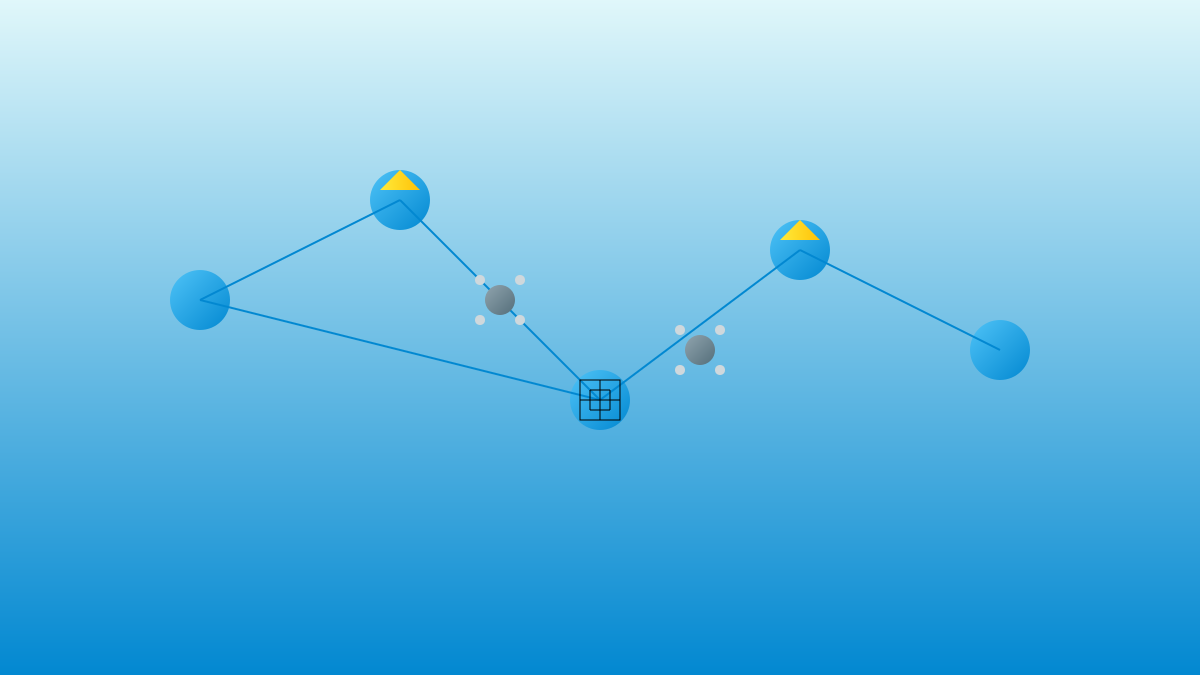
  1. Solar-powered Mesh Network Devices: Decentralized topology, self-healing nodes, no reliance on power grids, suitable for areas with weak power supply;
  2. Autonomous Drone Data Synchronization: Uses "store-carry-forward" mode to transmit non-real-time content (e.g., educational resources) across clusters;
  3. Offline-first AI: Models deployed on local edge devices, supporting translation, agricultural consulting, health Q&A, etc., protecting privacy without needing the cloud;
  4. Community Content Distribution: Localized content ecosystem, intelligent caching strategy to optimize storage resources;
  5. Inclusive Digital Services: Voice interaction, low-bandwidth optimization, multilingual support to ensure barrier-free use.
4

Section 04

Application Scenarios: Practical Directions with Transformative Potential

Potential Application Scenarios

SkyWeave has application value in multiple scenarios:

  • Remote Area Education: Local caching of course resources, AI teaching assistants for tutoring, drones syncing learning materials;
  • Disaster Zone Emergency Communication: Rapid deployment of nodes to establish temporary networks for coordinating rescue efforts;
  • Rural Healthcare: Offline AI-assisted diagnosis, drones transmitting case data to county hospitals;
  • Community Media: Local news spread via mesh networks, forming an independent information space.
5

Section 05

Technical Philosophy: Paradigm Shift from 'Connection' to 'Empowerment'

Technical Philosophy

SkyWeave's design philosophy shifts from "accessing the internet" to "building a useful local digital ecosystem". Based on four constraints: power (solar energy is essential), bandwidth (intermittent connection), cost (low equipment maintenance cost), and skills (no need for professional IT personnel), it chooses a "good enough" technical path instead of replicating the experience of developed regions.

6

Section 06

Challenges and Reflections: Key Issues for Implementation

Challenges and Reflections

SkyWeave faces four major challenges:

  1. Hardware Cost: Costs of solar equipment, drones, etc., need to be further reduced;
  2. Maintenance Sustainability: Need to train local technical backbone and establish long-term maintenance models;
  3. Content Ecosystem: Need to incentivize local content creation and supporting operation strategies;
  4. Policy Environment: Need to collaborate with local governments to solve compliance issues such as drone flight and spectrum usage.
7

Section 07

Conclusion: A Practical Example of Tech for Good

Conclusion

SkyWeave represents technical idealism, using innovative solutions to address social inequality, reminding us that technology inclusion requires deliberate design and effort. Regardless of success or failure, its exploration provides a valuable practical example of "tech for good" and opens up digital possibilities for neglected groups.

