Zing Forum

Reading

NeuroShape: An Artistic Visualization Tool That Converts Images into Neural Network Structures

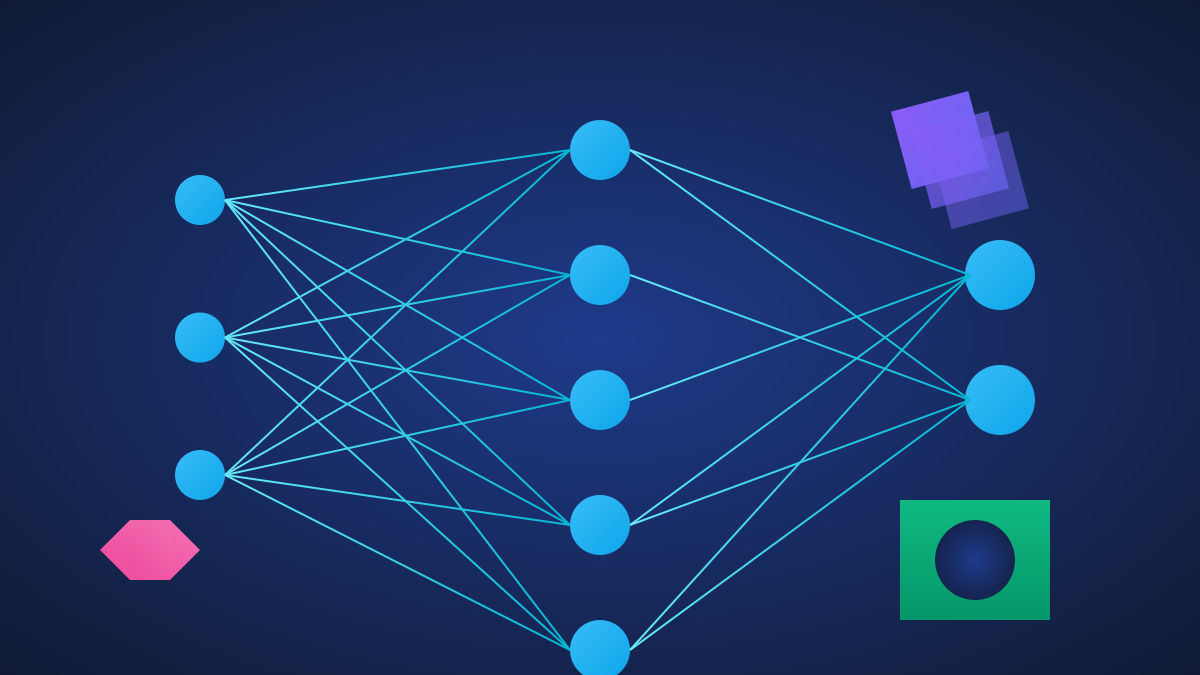
A web application combining machine learning concepts with generative art, capable of converting any image into a neural network structure visualization that mimics its outline.

NeuroShape神经网络可视化生成艺术CLIPThree.js图像处理机器学习背景移除Web应用
Published 2026-06-02 09:45Recent activity 2026-06-02 09:50Estimated read 5 min
NeuroShape: An Artistic Visualization Tool That Converts Images into Neural Network Structures
1

Section 01

NeuroShape: Introduction to the Image-to-Neural Network Structure Visualization Tool

NeuroShape is a web application that combines machine learning and generative art. Its core function is to convert any image into an interactive neural network structure visualization that mimics its outline. Developed by kelvinnng129, the project was released on GitHub on June 2, 2026. It has both technical value and aesthetic potential, and can be applied in scenarios such as education and design.


2

Section 02

Project Background and Inspiration Source

When learning machine learning, the developer discovered the aesthetic potential of neural network structure diagrams—layered nodes and interwoven connecting lines form a unique visual language. This led to the question: Can an image (such as a photo of a dog) be converted into a neural network structure of the corresponding shape? This idea gave birth to NeuroShape, which aims to transform technical structures into generative art.

3

Section 03

Core Functions and Technical Implementation Process

The image-to-neural network visualization process of NeuroShape is divided into four steps:

  1. Image Recognition: Identify the main object using the GPT-4o vision model or CLIP model;
  2. Background Separation: Remove the background using the rembg tool to get a clean silhouette;
  3. Shape Analysis: Slice horizontally to extract width and position data for each layer, determining the number and distribution of nodes;
  4. 3D Rendering: Generate an interactive 3D structure in the browser via Three.js.
4

Section 04

Technical Architecture and Toolchain

Frontend Tech Stack: Next.js (server-side rendering and routing), TypeScript (type safety), Three.js (3D rendering), Tailwind CSS (styling); Backend and AI Processing: FastAPI (backend API), CLIP (image recognition), rembg (background removal), Pillow/NumPy (image data processing), PyTorch/Transformers (deep learning inference).

5

Section 05

Three-Layer Fault Tolerance Mechanism Ensures Reliable Results

To ensure reliable results, a three-layer fault tolerance system is designed:

  1. GPT-4o: High-precision subject recognition and structure analysis, requiring users to provide their own API key;
  2. CLIP: Open-source and free alternative, providing reliable recognition without external keys;
  3. Geometric Shape Analysis: A fallback solution that classifies basic geometric shapes through silhouette pixels, ensuring visualization can still be generated when the first two layers are unavailable.
6

Section 06

Application Scenarios and Significance

  • Education: As a teaching tool, it helps students intuitively understand the layered structure of neural networks;
  • Design Art: Provides designers with a new way to transform technical aesthetics into visual works;
  • Technology Democratization: Combining open-source tools like CLIP and rembg to build professional AI applications in a short time, reflecting the trend of technology democratization.
7

Section 07

Summary and Outlook

NeuroShape successfully transforms abstract machine learning concepts into interactive visual experiences, proving that technical tools can both solve problems and create beauty. We look forward to more AI visualization projects in the future that present complex technologies to a wider audience in an intuitive and aesthetic way.

